October 2021

History of Humanism in Utah

Organized Humanism began in the United States as an effort to maintain the Unitarian Church as the leading “creedless liberal religion” in this nation. Over the years since the Unitarian Church was established as a creedless religion several efforts have been made by overzealous Unitarian leaders to create a “statement of belief.” During the late 1920’s the movement to establish a Unitarian Creed appeared close to gaining approval by the Unitarian hierarchy in Boston.

A group of Unitarian Ministers in Chicago, strongly opposed to the effort in Boston, organized to halt the creedal railroading by the easterners. They were ridiculed as “The Western Movement.” Reverend Ed Wilson was a proponent of the Humanist Philosophy and a Unitarian minister. He and four other Unitarian ministers formed a loose organization including Chicago University professors to publicize the Humanist Philosophy and urge the Unitarian Society to adopt it’s ideas rather than adopt an authoritarian religious creed. Dr. Wilson was a leading spokesman for the group and helped to write a defining statement eventually referred to as The Humanist Manifesto.

The Western Movement was a major factor in defeating the effort in Boston to write a Unitarian Creed of Belief. The task of composing a Humanist Manifesto took about three years. It went through serious discussions, several drafts, and revisions. Some prominent philosophers eventually refused to approve it, some because it was too bold, some because it was too soft.

The final compromised document was signed by thirty-three liberal religious and educational leaders and in 1933 was published for the first time in a Chicago newsletter, The New Humanist, edited and published by Ed Wilson. Here are some highlights from this document:

· In every field of human activity, the vital movement is now in the direction of a candid and explicit humanism. In order that religious humanism may be better understood we, the undersigned, desire to make certain affirmations, which we believe the facts of our contemporary life demonstrate.

· Today man’s larger understanding of the universe, his scientific achievements, and his deeper appreciation of brotherhood have created a situation which requires a new statement of the means and purposes of religion.

· We therefore affirm the following:

· Religious humanists regard the universe as self-existing and not created.

· Humanism believes that man is a part of nature and that he has emerged as the result of a continuous process.

· Humanists find that the traditional dualism of mind and body must be rejected.

· Humanism asserts that the nature of the universe depicted by modern science make unacceptable any supernatural or cosmic guarantees of human values.

· Religious humanism considers the complete realization of human personality to be the end of man’s life and seeks its development and fulfillment in the here and now.

· The enhancement of human life is the purpose and program of humanism.

· We assert that humanism will: (a)affirm life rather than deny it; (b)seek to elicit the possibilities of life, (c) endeavor to establish the conditions of a satisfactory life for all.

So stand the theses of religious humanism.

Ed Wilson continued his role as a spokesman for humanism, and his Unitarian ministerial career. In 1946 he was invited to be the minister of the Salt Lake City Unitarian Society. While here he continued his dual role as a Unitarian Minister and as editor of The Humanist magazine.

During his three years in the Salt Lake City pulpit his leadership in both capacities was instrumental in the acceptance of humanism within Unitarianism. This congregation was one of the first Unitarian Societies to adopt the Humanist Manifesto as an inspirational document. By the 1960’s, 80% of the US Unitarian membership identified themselves as humanists. Today that percentage is slightly less than 50%, but it continues to be the largest sub-group in the Unitarian Universalist Association.

Dr. Wilson remained as chief editor The Humanist Magazine for 16-years, from 1941 to 1956.He was one of the founders of the American Humanist Association and served as its executive director for 21-years, from 1949 to 1970. In 1952 he participated in the formation of the International Humanist and Ethical Union, uniting the humanist movement worldwide.

The illness of his wife was a factor in Ed Wilson retiring from active leadership roles in both the Unitarian Ministry and the American Humanist Association. Upon the death of his wife, he decided to return to Salt Lake City where one of his sons was a physician at the Veterans Hospital. He was instrumental in forming this local chapter of the American Humanist Association.

I had the privilege of interviewing him after we had organized the chapter. That interview is available here.

He was a brilliant scholar, thoughtful, intelligent and an excellent communicator. He talked primarily about his early life

Ed Wilson’s goal was to live to welcome in the year 2000. He wanted to be one of the few people who could be recognized for living in three centuries, the 1800’s, the 1900’s and two thousand. But his desires exceeded reality. He died shortly after our interview. Consequently, his personal voice regarding the struggle to form the American Humanist Association was never electronically recorded. It is available in this book published a few years after his death, but I would have been more than pleased to have had his personal observations of organizing the AHA recorded in the first person!

A few years earlier he did have an oral history interview at the University of Utah Marriott Library. In that interview he related some of the details about organizing humanism and he told Lorille Miller his ideas about how the words “religion” and “religious” have quite different implications. His comments reveal clearly, I think, how he felt comfortable being both a humanist leader and a Unitarian Minister. Here is an excerpt:

“The Humanist Association was intended to be an educational association, not a church or a denomination. We were not going to call it a religion but did want religious values to be included in its general approach to life.

“Religions set up a creed which people are required to affirm. The emphasis in their faith is on ‘right belief’…it is often dogmatic and rigid whereas ‘religious’ is a quality of life and includes wonder, awe, and commitment to ideals.”

Ed was the energizer in organizing this chapter of his American Humanist Association. He and seven others met in the chapel next door on a November evening in 1990 and voted to organize the Humanist of Utah. Our charter was officially granted by the AHA May 9, 1991. Our Articles of Incorporation as a non-profit Corporation were granted by the state of Utah August 3, 1992. The chapter’s original statement of belief and purpose read:

Humanism is a natural way of life that promotes living joyfully and compassionately in the present, using innate intelligence, science, the humanities and experience as the methods for discovering truth.

Our purpose is to offer an affirmative educational program based on developing one’s natural inner strengths in order to practice the art of living; to promote meaningful activities and compassionate services which champion Humanism; and to be an association where all can have a sense of belonging to a larger community that supports a positive philosophy of reason, integrity, and dignity.

Membership growth was slow but by 1996 one-hundred-and-forty people had paid dues to be recognized as members supporting humanist principles. The main characteristic shared by all humanists is ‘an inquisitive mind seeking rational answers to life, nature and the universe.’

Humanism is a broad category of ethical philosophies that affirm the dignity and worth of all people, their intellectual ability to determine moral values, their emotional strength to determine right and wrong based on human experience and evolution, rather than ancient Biblical dictates.

Humanism entails a commitment to the search for truth and morality thru reason rather than revelation, human means in support of human interests. In focusing on the capacity for self-determination, Humanism rejects the validity of transcendental justifications such as faith and supernaturalism. They respect reason and reject revelation as a source of discovering truth.

Humanism features an optimistic attitude concerning the capacity of people. Their ultimate goal is human flourishing, making life better for all humans. The focus is on doing good and living well in the here and now, and by their efforts leaving this world a better place. They believe the rewards of living the good life will be enjoyed during this life, not in a life after death.

At the conclusion of a recent panel discussion of several Utah religious leaders the moderator invited each of us to respond to the question:

“How would Utah be different if 70% of its citizens were members of your religion or philosophy?”

My response was:

1. Education would be tuition free thru college graduation.

2. Students would be encouraged to develop their innate talents and self esteem.

3. Sex education would be a subject of public education where students would learn the responsibilities of sexual expression.

4. Public housing would be available for the homeless.

5. Meals would be available for the hungry.

6. Medical services would be available for everyone.

7. Appropriate jobs would be available for the unskilled.

8. People would be required work no more than 8-hours a day, nor more than 5-days a week.

9. Public transportation would be affordable for everyone.

10. Electronic media would be required to present all sides of political and social questions.

Prisons would be operated for rehabilitation rather than punishment.

I feel fortunate to have been a charter member of this organization; to have had an opportunity to serve on the board of our national organization for 8-years; To have served as a certified Humanist Counselor and officiate for fifteen years; and most of all I feel a deep gratitude for having had the personal guidance and wisdom of one of the outstanding world leaders of humanism.

The characteristic shared by all humanists is an inquisitive mind seeking reasonable answers to the questions of life, nature, and the universe.

–Flo Wineriter


President’s Message

As this year is starting to wind down, my thoughts are with the situation in the world, our nation and our community. It’s interesting that we all thought last year was the worst due to the pandemic and that this year would be better than last. To some, it has been better, but for many it has been the same or worse. Whatever your thoughts on the state of the pandemic, it has most definitely been a game changer and that is tough for many. Many have had more time for thinking, self-reflection, searching, and even a quest for something more. As humanists, we believe in the importance of human values and dignity. We propose that people can resolve problems using science and reason. Rather than looking to religious traditions, humanism focuses on helping people live well, achieve personal growth, and make the world a better place instead. Lots of food for thought, if you are looking to further your growth or just want to refresh.

As I write this from my hotel room in Memphis, my thoughts are heavy with the rich history here. I am currently travelling across the country for a wedding and seeing very important places on my way. Today I visited many powerful places within the civil rights movement’s history. I walked where Martin Luther King spent considerable time, where he gave his speeches and ultimately where he was killed. There are literally no words. The energy that resides in these places transcend time. The community here, more than 50 years later, still embraces pieces of this time period and even have kept the styles and vibe alive and well in the city. There is a strong sense of helping keep the ideals alive and moving progressively forward toward equality and a better life for all. I have thought about sacrifice. Even though Dr. King was a religious man, his words and his work were for everyone. The ethics were spot on and in his immortal words, “The ultimate measure of a man is not where he stands in moments of comfort and convenience, but where he stands at times of challenge and controversy.” – Strength to Love, 1963. The turmoil around us all is tough. If you feel isolated and afraid, know that you are not alone. We have a community of strength in the knowledge and empowerment of ethics based on reason and our common humanity. We recognize that moral values are properly founded on human nature and experience. Now is the time to stand tall with your value system and share it with those around you. I admonish you to share the good news about what we believe. Live the life you have chosen and seek to move forward with helping the world be a better place, one step at a time.

MLK

I send good vibes to you all and wishes for safety and happiness during these tough times. My thoughts are with you and we, as a community, have a lot to celebrate by adhering with the American Humanist Association (AHA) ideals of “striving to bring about a progressive society where being ‘good without a god’ is an accepted way to live life. We accomplish this through our defense of civil liberties and secular governance, by our outreach to the growing number of people without religious belief or preference, and through a continued refinement and advancement of the humanist worldview.”

Thank you for fighting the good fight and for just being you.

Kindest regards
Melanie White-Curtis


I’ve Been Reading A Lot Lately

I have been reading more than usual because of the need to stay isolated during the pandemic. When the pandemic was getting really scarry, I wasn’t reading much at all. Being a person of high risk due to age and some health issues, I was too distracted with anxiety and was mostly pacing around and watching too much cable news about the horrors this virus is causing. But, after I got myself calmed down with the help of the Veterans Administration, reading became a good way to keep my mind busy.

Yet, even though reading, has been a good distraction, I still stayed informed on current events. Along with the pandemic, the actions or inactions of Donald Trump and his administration in regard to the COVID-19 virus and then his attempts to overturn the election certainly kept anxiety at the door. You would think that with all that has been going on in this country, with Trump at the center of it all, it would make a person shy away from books about the worst President ever. But no, I have three books about that evil man, one was given to me, and I haven’t read much of it yet. The other two I have read. First is a book by Mary L. Trump Ph.D., Donald Trump’s niece, titled Too Much and Never Enough, subtitled How my family created the world’s most dangerous man. Mary Trump is a clinical psychologist who is a good writer and does a good job of describing the ugly and dark history of their family. As the cover leaf states “she describes a nightmare of traumas, destructive relationships, and a tragic combination of neglect and abuse.” It’s well written and I recommend it as one of the best ways to gain an understanding how somebody can become as horrible as Donald Trump.

A more recent title about Trump is I Alone Can Fix It, by Carol Leonnig and Philip Rucker, both correspondents at The Washington Post. With the subtitle is Donald J. Trump’s Catastrophic Final Year. The book in my opinion is a riveting narrative. Superbly written in stunning detail it describes what was going on behind the scenes in the last year of the Trump administration. I don’t think I have ever called a non-fiction book as riveting as this one. As I read this book more quickly than I usually do I asked myself why. Then it occurred to me that it was partly because we had been living what they were describing in detail in a running narrative. Much of what they wrote about we knew about from the news and his endless “tweets.” It was compelling in a strange way to me as a story I already knew about but was eager to have the writers fill in the details. And the details give you pause to realize how badly the Trump administration mishandled the COVID pandemic and how close they came to subverting our democracy to keep Trump in power. Quite frankly, the subversion attempts are still going on to this day. I highly recommend this book and I’m sure it will keep you as riveted as I was.

—Bob Lane


Chaplain’s Corner

Professional Decent Human Being

Teaching World Religions is what made me a Humanist. Ph.D. coursework in Biblical Studies required me to get creative with my Mormonism but teaching World Religions made the whole floor of belief crumble into a beautiful agnostic mosaic. Once I was exposed to the grand history of religion, it became obvious that religion was both profoundly powerful and profoundly HUMAN.

With more experience teaching the course, I would motivate and stump students with two questions I’m going to share with you now.

1) What cultural institution is more powerful than religion?

2) If I wanted to be a professional good person, what job would that be?

We as humans and Humanists need to grapple with these questions. The question of effective approaches to well-being is one I am most passionate about, but I’ll come back to that later. Suffice it to say that I am troubled that the most impactful institutions are not the most ethical ones. Shocking right? (Take a glance at the US defense budget sometime)

In this Chaplain’s Corner I want to explore the relationship between religion and goodness. Because though many professions require goodness, only one *specializes* in goodness. A professional good person is… a minister. Traditionally, religious leaders are those who are understood as being specialists in knowing what is right and wrong, knowing how to live well, and helping you do it. I know I’m not the only one who finds it deeply disturbing that US culture has mostly outsourced goodness to religion.

I’ve had the privilege of working as a Humanist Chaplain, endorsed by the Humanist Society, for almost six years. I specifically sought out hospice and prison Chaplaincy because I wanted to see if I could serve the dying and imprisoned without relying on the idea of afterlife (so far it’s gone very well.)

I playfully and seriously call myself a “professional decent human being”. And this is where you come in, because as Humanists, you are also dedicated to decency. We all should be, right? But too often we get distracted. I have found that in general, we are as decent as we are incentivized and empowered to be, and overwhelmingly influenced by our contexts.

Two quick stories about goodness. One of my favorite parts of my job as Prison Chaplain is to train volunteers (I call prison “life skills with catastrophic consequences”). In one session a man said, “I don’t think I’m comfortable with that word you keep saying.”

I responded, “Um, you mean…. Defensible?” I had to admit I’m not surprised that he is not used to needing to account for his actions. Last year I was invited to debate some Evangelical Christians at the University of Utah on the proposition that God is required for morality (They preferred the more audacious claim that Christianity was required for morality, and I gently responded that I don’t know whether they want to engage in an ethical critique of Christian history). My succinct summary is that in order for morality to pertain, God does not need to exist. You do.

Traditionally “right and wrong” has been understood as “how God wants you to live,” but we’ve made a lot of progress in understanding what goodness means. My proposal is that goodness involves effective approaches to individual and collective well-being, which includes respecting self and others as whole people, conscious agents worth taking seriously. If you want to do some Googling, I resonate with Emmanuel Levinas’ theory of interpersonal ethics, combined with a pragmatic focus on function and outcome of our actions.

Of the many amazing conversations I have with my children, a favorite is when I asked whether it’s possible to do anything wrong in a video game. My youngest immediately piped up, “Playing video games can make you do things that are wrong in real life”. In seconds she intuited the principle that it is consciousness that makes something ethical. As best as we can tell, we can’t hurt a rock’s feelings. The greater the consciousness, the greater our ethical responsibility. My ethical formula is this: every action should be defensible to the ideal version of all those impacted by that action.

I distill my concept of spirituality down to two words: Show up. Life invites us to show up to the conscious experience, show up to ourselves, show up to each other. In my experience, we show up as much as we are incentivized and empowered to do so. As a Chaplain, I have the privilege and responsibility of showing up for people in their hardest moments, where life breaks open. My favorite thing about Chaplaincy is that it trains behavior and skills that are just good living, things we all should be doing for ourselves and each other.

And that’s why in the same way I am a professional decent human being, you all are amateur Humanist Chaplains. So as members of Humanists of Utah and humans in general, I look forward to showing up, humaning well, and living better.

I’d like to officially offer to be your Humanist Chaplain.

—Jared Anderson

To be continued next month…


September 2021

History of American Secularism

The Humanists of Utah have celebrated Thomas Paine Day in the past by holding a Thomas Paine Day in the fall of each year. This year due to Covid 19 restrictions the board has asked me to write an article about Thomas Paine in lieu of a meeting with a speaker. Thomas Paine is considered one of the founders of our nation. In this discussion I would like to include three other men associated with the formation of our country along with Thomas Paine: Thomas Jefferson, Benjamin Franklin, and John Adams.

As background, it is important to note that the American revolution was in large part a strong reaction against the state-sponsored Church of England and the “divine right” of the English monarchy. The colonists were not fond of Kings or of their God-given right to be dictators.

Now, contrary to the belief of most Christians in America, the founders of our nation were not religious in the sense that they would have you believe. The four founding fathers I will discuss were all deists. A deist is not a theist or an atheist. Their ideology held that God might have created the world but after he created it, it could, and did, run by itself. After the initial creation event, the deists contended that God no longer intervened in any temporal events, concerned himself with the affairs of man, or answered any personal prayers. Deists rejected any religious dogma or claims that any religion or any scriptural book; the Torah, the Bible, The Quran, The Bhagavad Gita, or any other book contained God’s revealed words.

Benjamin Franklin was born in Boston in 1706. He had been brought up a pious Presbyterian. After reading many different books, he began to have doubts about religion by the age of fifteen. He wrote, “Of several points, as I found them disputed in different books that I read, I began to doubt revelation itself. Some books against deism fell into my hands, and it happened that they wrought an effect in me quite the contrary stop what was intended by them. The argument for deists…appeared to me to be much stronger than the refutations.”

Benjamin Franklin traveled to Europe. While in Scotland he stayed with the well-known agnostic philosopher David Hume. Hume’s works including “An Enquiry Concerning Human Understanding” and “Dialogue Concerning Natural Religion” were widely read and deeply influential. Hume’s friends consider him a skeptic and his enemies considered him an atheist. Hume and Franklin became friends. On his return to America from Europe Franklin joined the earliest Masonic Lodge in America in 1734 and later became its president. In time he would become a strong influence on Thomas Paine.

Thomas Jefferson certainly qualified as a Deist if not an agnostic or atheist. This becomes clear from one of his most famous quotes.

“I have recently been examining all the known superstitions of the world, and do not find in our particular superstition, Christianity, one redeeming feature. They are all alike, founded upon upon fables and mythologies.” He went on to say, “Christianity is the most perverted system that ever shone on man…perverted into an engine for enslaving mankind…a mere contrivance for the clergy to filch wealth and power to themselves”.

Jefferson is known for writing his version of the Bible that kept all the teachings of Jesus intact but removed all the ‘miracles”. He believed that if we had a clean text of the Bible, one that included only the words of the real Jesus and not his miracles, it would help conquer bigotry and fanaticism.

Of the four men, John Adams was the least vociferous proponent of deism. Not as outspoken as the others, he did however carry on a long correspondence with Jefferson in which they mutually criticized religion. As the second president of the United States, Adams signed into law the Treaty of Tripoli in 1797. The treaty declared the government of the United States was not in any sense founded on Christianity. In one of his last letters to Jefferson, he mentions the historian Charles Francois Dupuis (1792-1809) who explained the story of Jesus as a “…classic myth, born at winter solstice, beset with difficulties, reborn from beneath the earth in spring.”

Thomas Paine (1737-1809) was an English-born American political activist, philosopher, political theorist, and revolutionary. His pamphlet “Common Sense” published in 1776 had a profound influence on the movement for independence in America. His pamphlet challenged the authority of the British government and the royal monarchy. The plain language that Paine used spoke to the common people of America and it was the first work to openly ask for independence from Great Britain. His 47-page pamphlet, proportionally the all-time best selling title in American history, was read by, or to every rebel in the American Revolution. After the American Revolution, the Revolutionary War, and the writing of our Constitution Paine traveled to France to participate in the French Revolution. He was very popular and was elected to the French National Convention. While in France he wrote his most famous work, “The Age of Reason”. The French revolution had a very turbulent and fractious ending, and he smuggled his book out of France in 1794 and barely left in time to save his neck.

President Jefferson invited Paine home and gave him passage on a national ship. Back home, his book, “The Age of Reason” was widely read and had a strong influence on a young nation based on a strong separation of church and state.

 Paine did not spare word when it came to religion. He wrote, “Every national church or religion has established itself by pretending some special mission from God…Each of the churches causes the others of unbelief, and for my own part, I disbelieve them all.”

He used the history of the Jews in his arguments: “The best evidence we now have respecting this affair of Jesus is the Jews. They are regularly descended from the people who lived in the times that this resurrection and ascension is said to have happened, and they say it is not true.” When asked about his religion Thomas Paine said, “The world is my country, all mankind are my brethren, and to do good is my religion.”

These deist founding fathers had a major influence in the writing of the United States Constitution. They carefully inserted a strong wall between church and state by way of the First Amendment of the Constitution. This constitutional amendment makes America the first fully secular nation ever conceived and brought forth upon this earth. As secular humanists we should be very proud of our country and its founders including Thomas Paine.

—Craig Wilkinson, MD
Board Member Humanists of Utah


President’s Message

I hope this finds you well and happy. We want to thank everyone who was able to come to the annual BBQ picnic earlier this month. We had a great time. It was intended to be our big launch back into the world of a bit of normalcy. We have plans of future events, meetings, and such. But due to the ever-changing nature of this pandemic, it is not to be yet. We, as a board, are watching very closely to the CDC recommendations and to our state health officials and what is happening here in our own communities. Currently, we are hesitant to “re-open” too quickly and risk putting folks in harm’s way. But, the good news is, we are not going dormant like happened last year. With all the heavy things we are witnessing and experiencing right now, as a people, it is hard sometimes to find bright spots, moments of happiness and clarity, and peace. So, instead of being able to congregate together in person, for now, we are going to be providing many different avenues for engagement. Lots of safe interaction, happy thoughts, good reading, and many virtual activities and speakers for you to connect with. We also have plans for safe activities in the near or not so near future. Again, we will be adhering to the guidelines presented to us and as always, you are free to use your best judgment, as well.

Friends, there is so much to be grateful for in these times of chaos and uncertainty. We are fighting a good fight. We are all in this together. We have strong values and morals to guide us. We have each other and this wonderful organization to lean to and draw strength from.

Humanist Philosophy in Perspective

Many have expressed interest in learning more about humanism, what it is and perhaps some of the history that got us where we are today. A great starting place is an article, “The Humanist Philosophy in Perspective,” from the American Humanist Association written by Fred Edwords who has been active in national humanism since at least 1990. https://americanhumanist.org/what-is-humanism/humanist-philosophy-perspective/

Our own HoU Website also has wealth of information and history surrounding humanism’s roots, core beliefs, and actions.

Brief History of Humanism

· Flo Wineriter, one of our most influential founders wrote this piece in 1993 (our chapter was founded in 1992): https://humanistsofutah.org/newsletter-archive/1993-newsletters/september-1993/#Humanism_A_Brief_History

Living and Dying – Humanism and US History

· In 2000 Wineriter opined on this subject again: https://humanistsofutah.org/newsletter-archive/2000-newsletters/october-2000/#Living_and_Dying_Humanism_and_US_History

The State of Humanist Organizations

· Richard Layton addressed this subject in his Discussion Group: https://humanistsofutah.org/newsletter-archive/2006-newsletters/april-2006/#The_State_of_Humanist_Organizations

I wish you: health, safety, and peace. I also am very excited to see you in all of the good news that is coming. Watch for it and plug into our FB page for daily goodies and information.

Kindest regards
Melanie White-Curtis


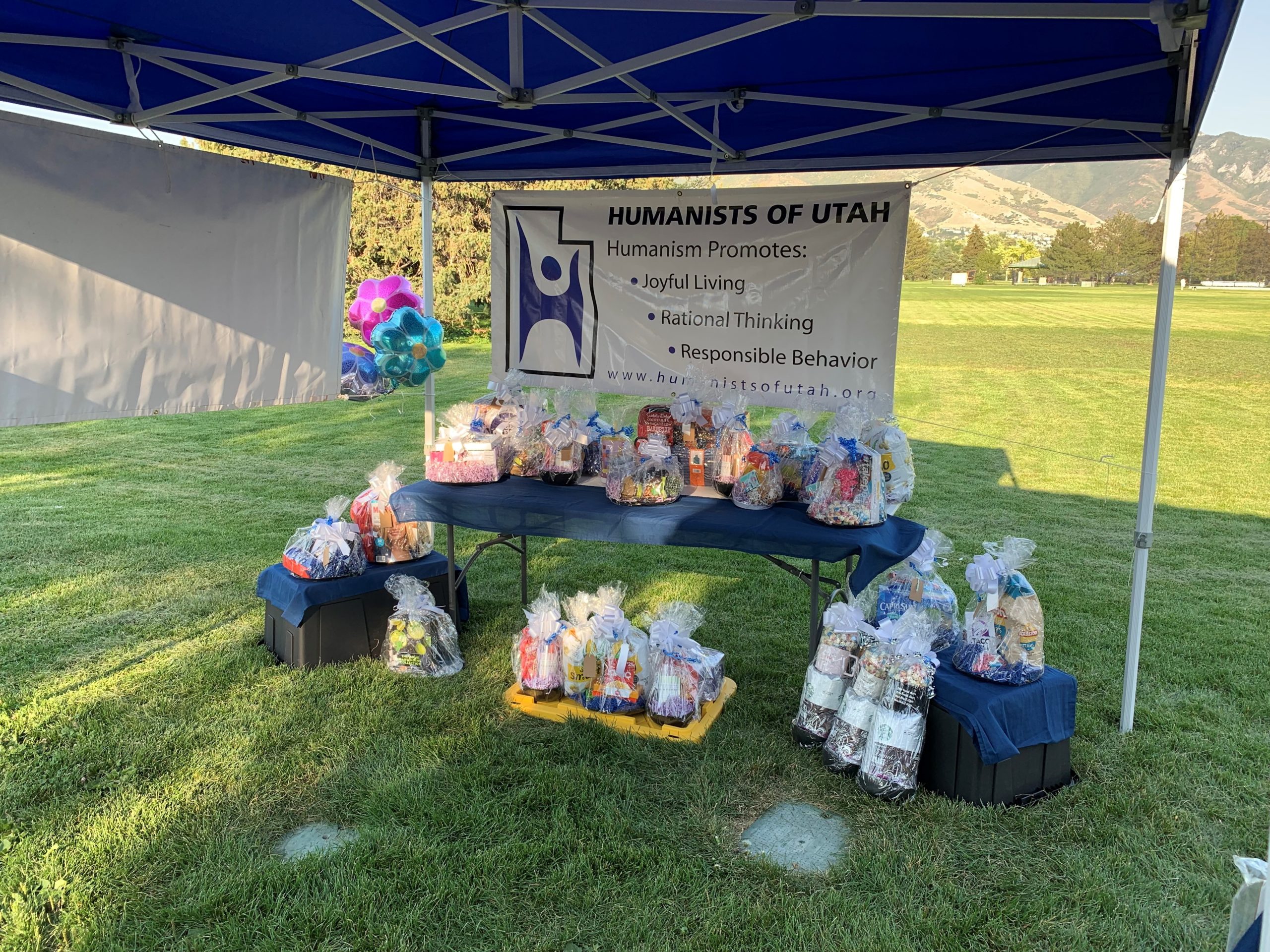
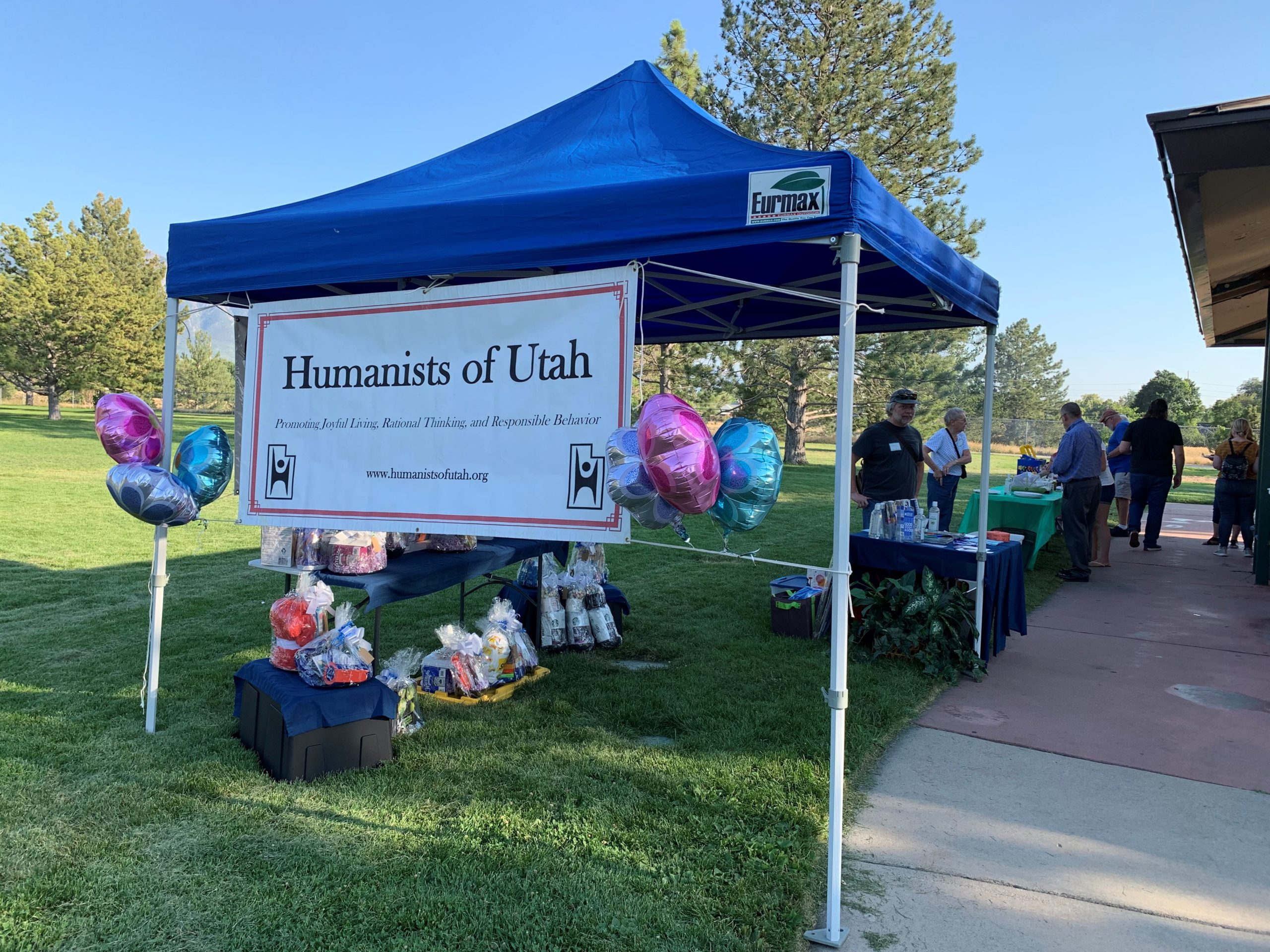
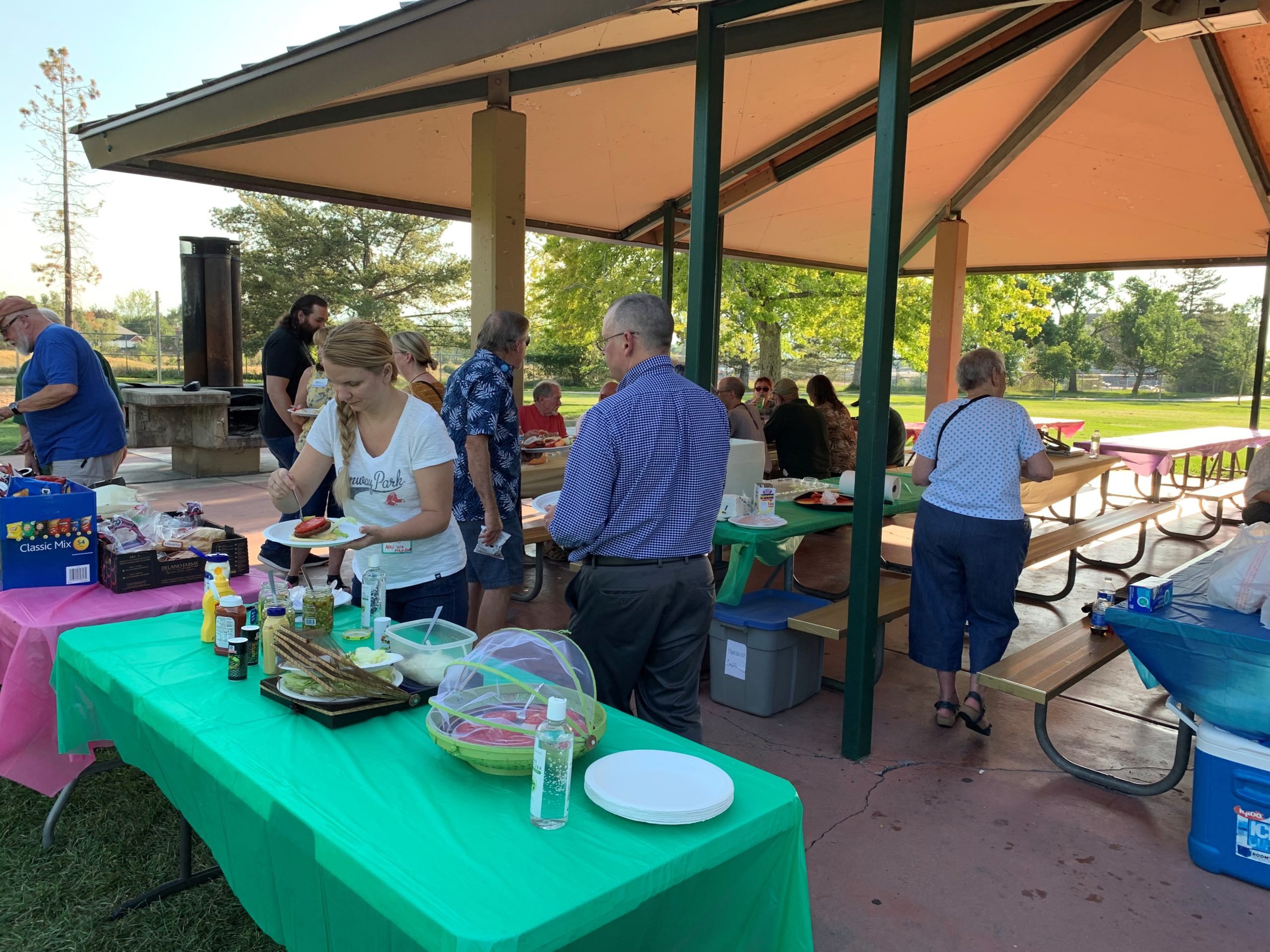
Pictures from the Picnic


Robert Frahm

In Memoriam

1936~ 2021

Robert Ray Frahm passed away peacefully Saturday, August 7, 2021, in the home he shared with Sally Jo Fuller in Sandy.

He was born March 4, 1936, in Granger, Utah to Stella Petersen and William Frahm.

After attending Cypress High School, he spent two years in the US Army during the Cold War, stationed in Greenland. Robert was employed for 45 years by Kennecott-Rio Tinto. His occupation is listed as Powerplant Control Room Operator. Robert was always fascinated with the large machinery and operations at the plant. Robert’s passion was watching Formula One and motorcycle racing events and TV shows where older model cars were rebuilt to their original design. Classical music was always on his mind.

Robert was preceded in death by both of his parents and his “best cook” sister, Bette Barton.

He leaves behind a daughter, Kimberly Mitchell of SanTan Valley, Arizona and the following nieces and nephews: Richard G. Barton, Julie B. Rasmussen, Tina B. Aramaki, and Michael Barton. Robert also leaves behind his most caring friend and domestic partner, Sally Jo Fuller.

We wish to thank Bruce Bailey, our neighbor, who came to his assistance many times these past few months. Also, we wish to thank the George E. Wahlen VA Medical staff and Superior Home Care and Hospice for their care over the past few years.

Robert was a lifelong Atheist and Democrat and proud of it.

—Sally Jo Fuller


John Barnes

In Memoriam

1931 ~ 2021

John Barnes was born in Kansas City, Missouri, September 15, 1931, but he grew up in Cheyenne, Wyoming. In about 1950 he was called into the National Guard.

In 1956 on to the University of Wyoming where he majored in Business Management attaining his Bachelor of Science Degree after four years. During this time, he met and married Joyce who was attending the University of Colorado’s State Teachers College. They have two daughters who live in California and Montana.

After college, John was employed as a Data System Analyst for The Martin Company in Littleton, Colorado, for five years. Then moved to the Salt Lake area where he worked for Hercules Aerospace as a Data System Analyst for the next thirty years until retirement in 1989.

John and Joyce have done some traveling, but mostly enjoy the local cultural events in Salt Lake City by regularly attending the symphonies, ballets, operas, and theater productions. A great pastime in reading magazine publications, such as; Discover Magazine, National Geographic, The New Yorker, and The Bloomberg News Newspaper.

John has been a member of the Humanists of Utah for twenty years and a Board Member for three years. He says that joining HoU, he has enjoyed the company of developing intelligence of the members. As to his sense of humor which he shares liberally, he believes that he acquired it mostly on his own.

—Sally Jo Fuller

Addendum – obit published in the Salt Lake Tribune:

John passed away August 25, 2021, in Salt Lake City, Utah of complications from COVID-19. Even though he was vaccinated, a combination of an underlying aspiration pneumonia and waiting too long to seek care proved too much for his body to recover. John was born to Leona and Sam Barnes in Jackson, Missouri. When he was around five years old, his parents moved him and his younger brother, Sam Jr. to Cheyenne, Wyoming. The boys grew up in Cheyenne, getting into brotherly mischief involving late night escapades, firecrackers and general rowdiness befitting two best friends, born exactly five years apart. John met the love of his life, Joyce Colburn in the late 1940’s while they were both in college. After getting married, they moved to Portales, New Mexico where John served as a mechanic in the Air National Guard, repairing planes used in the Korean War. Sidenote: he fudged his age in order to join the Guard! In Portales their first daughter, Ariel was born in 1952. After returning to Laramie to finish his degree, John and his family moved to Littleton, Colorado where he worked for Thiokol. In 1958, during a terrible blizzard, his second daughter Barb was born. Barb had a birth defect and needed to be rushed to a Denver hospital, but all the ambulances were out in the storm. So, John rushed his newborn baby, incubator and all, and the pediatrician to the hospital in his car for her to have emergency surgery. In 1961 John and his family moved to Salt Lake City, Utah after a job transfer to Hercules. He and Joyce proceeded to put down deep roots in Holladay, a suburb of Salt Lake. John enjoyed a long career as a systems analyst with Hercules. He was very involved in Toastmasters, was an avid skier, and competed in handball well into his late 70’s. John also became an accomplished private pilot, and enjoyed his time at Skypark in Bountiful, Utah as well as flying his family to visit relatives in Wyoming and Michigan. He also supported Ariel in obtaining her student pilot license before she could legally drive a car by herself. He also taught both daughters how to drive a manual shift on the floor or column, as well as how to change tires, oil and spark plugs. John and Joyce were devoted patrons of Salt Lake’s performing arts, supporting Ballet West, JazzSLC (GAM), Pioneer Theatre and the SL Acting Company. They were founding members of the Shakespeare Festival in Cedar City, only missing when illness prevented them from attending. Additionally, John was a member of the Humanist Society and the Unitarian Church. John also had a strong artistic streak, including painting, photography, woodwork, carpentry and stained glass. A devoted reader of anything to do with history or politics, John remained informed and able to converse about anything from European issues to local history, national events and politics. (Thank you Frost’s Books and Wellers). Following a terribly botched hip replacement surgery resulting in the loss of use of his right foot and ankle, John had to give up his home and connections with his valued wonderful neighbors. The silver lining was being able to move to Parklane independent living apartments where he made many friends and enjoyed all aspects of the community. To the dismay of many, he continued to drive, with his left leg and foot, however he did so without ever having a serious accident! (Don’t try this at home folks) While he did drive through the “old neighborhood” almost daily, he also found new ways to socialize, including stopping in at his local mechanic’s shop almost daily (thank you Slaugh’s Car Care) and being the liquor store runner for friends at Parklane. Preceding John into the greater realms of Love were his wife Joyce, his parents, brother Sam, and granddaughter Renee. He is survived by daughters Ariel Owen a retired educator (Walnut Creek, CA), Barb Barnes a conflict resolution facilitator (Helena, MT) Granddaughter Autumn Barnes, a podcast producer (Missoula, MT), Sister in-law Anita Barnes, Nephew John Barnes (Glore), Brother/Sister in-law Frank and Charlotte Colburn, Nephew Mark Colburn (Brenda), Nieces Cate Colburn-Smith (Chris) and Anne Colburn-Ehrhart (Tim) and de facto cousin Malin Foster (Cody, WY). The family wishes to extend deeply heartfelt appreciation to: The wonderful people living in and working at the Parklane community, Wendy Flath P.T. extraordinaire, Amanda Lambert now a family friend and our “boots on the ground” in SLC, Envision Home Health, Fred Gotleib MD a practical and wise physician, the amazing physicians and nurses at Salt Lake Regional Medical Center ICU who made this dreadful time one of healing, compassion and above and beyond care, especially Dr. Sara Scott, Dr. Justine Ly, Nurses Chad, Nick, Cheyenne, Jamie and Emily. We also are incredibly grateful to all of his friends including Sue and David, Margo and Bob, Chad and Mu, Cosette and Barb, Janet, Jud and Adele, Brad and Ryan, Scott, and their wonderful neighborhood family in Holladay. In his last days, John was full of gratitude and the grace of final farewells. Truly it can be said that his tender heart was fully restored as his last words were “Thank you, Thank you, Thank you.” Please be sure to tell a corny joke in his honor and consider making a donation to: The Junior League of SLC: 526 East 300 South SLC, UT 84102.

Published by The Salt Lake Tribune from Sep. 1 to Sep. 6, 2021.


August 2021

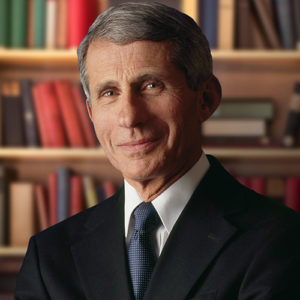
Anthony Fauci, MD – AHA Humanist of the Year!

(Washington, DC, July 1, 2021)

Anthony S. Fauci, MD

Today, the American Humanist Association (AHA) announced scientist and immunologist Anthony S. Fauci, M.D. as the 2021 Humanist of the Year. AHA Executive Director Roy Speckhardt said, “We are honored that Dr. Fauci will receive our highest award at the AHA’s 80th Annual Conference. His unwavering commitment to accessible, evidence-based information and his robust communication to people about public health issues is commendable and necessary, especially in this critical time.”

Dr. Anthony S. Fauci is the director of the National Institute of Allergy and Infectious Diseases (NIAID) at the U.S. National Institutes of Health, where he oversees an extensive research portfolio focused on infectious and immune-mediated diseases. As the long-time chief of the NIAID Laboratory of Immunoregulation, Dr. Fauci has made many pivotal contributions in basic and clinical research and is one of the world’s most-cited biomedical scientists.

In the US and throughout the world, he is respected for his efforts to address COVID-19. Throughout the global pandemic, his push for evidence-based solutions and emphasis on the importance of science and reason has been a guiding light in difficult times.

Dr. Fauci has identified as a humanist and mentions that he aligns with humanist values. He has said in recent interviews: “I look upon myself as a humanist. I have faith in the goodness of mankind.” and “I’m less enamored of organized religion than I am with the principles of humanity and goodness to mankind and doing the best that you can.”

Dr. Fauci is the recipient of numerous prestigious awards, including the Presidential Medal of Freedom, the National Medal of Science, the George M. Kober Medal of the Association of American Physicians, the Mary Woodard Lasker Award for Public Service, the Albany Medical Center Prize in Medicine and Biomedical Research, among others. He also served as the trusted advisor of seven U.S. Presidents.

Dr. Fauci’s remarks will wrap up the American Humanist Association’s 80th Annual Conference on the afternoon (EST) of July 25th. The Annual Conference will be held virtually on July 24th-25th, 2021 and, in addition to Dr. Fauci’s remarks, will feature interactive sessions, inspiring speakers, and opportunities to connect with fellow humanists.

—American Humanist Association


President’ Message

There are so many exciting things coming during this very hot summer! I hope you are staying cool, staying safe and enjoying your summer days. Our annual BBQ is coming on evening of the 12th at Sugarhouse Park. It is a free event with games, raffle prizes and lots of delicious food. We hope to see you and your families there. Bring a friend, we would love to meet them. We are taking count, so we can be prepared with plenty of food. Hop on to the FB page or group and let us know you are coming. I appreciate it. As a quick FYI, we will be starting our speaker series again and coming into the holiday season, we will have our traditional events too. I hope you are as excited as the board and I are, it is going to be a great way to round this year out.

We are witnessing many things in the political climate, as well. There is much hope and work to be done. I admonish you all to stay open minded and aware of what is happening and to vote the way you believe. It is truly important and is very helpful in furthering ideals that you believe in. Recently, I attended the American Humanist Organization Conference and was part of a wonderful group of folks that align in the same way that we do. It was awesome to hear of the work being done nationwide in helping support humanistic ideals, principles and fighting the good fight. I will be sharing many of these with you over the next few months too.

As always, I send my hope for happiness to you all. I am excited to see you at the BBQ and look forward to seeing you all in person again.

Kindest regards,
Melanie White-Curtis


A Plea For Peace

This letter to the editor was printed 20 years ago. Tawna Skousen is still an active HoU Chapter member.

We are moved by the alarming news and crisis our country is facing. This is a great nation founded in the belief that “all men are created equal” and that we are the “land of the free.” May each of us have the strength to assist in every way possible to help and comfort those who are suffering, hurting, and in fear.

Our nation is one of justice and due process and we seek humbly for wisdom, constraint, and patience as we search to bring to justice those responsible for these acts of terrorism.

May we reach out to all those affected by this tragedy, providing refuge for those who lost security, strength to those who have been weakened, and peace to those in turmoil.

In peace,
Tawna Skousen
October 2001


Summer BBQ

Note that Facebook RSVPs are appreciated but NOT necessary for attendance


Collective Failure

In a article by Leonard Pitts published by the Salt Lake Tribune about deaths from firearms, when I came to the point where he used the term “collective failure.” A simple two-word phrase, but a good one. It got me thinking about how it fits so many problems confronting humanity, and more specifically our society here in the U.S.

Collective failure is an apt term and a fitting description for my thoughts this month, which speak to the unfathomable number of human deaths and suffering caused by tobacco.

Using myself as an example, I can say that no relative, or friend has been killed by a firearm. Whereas at least five relatives in my parents’ generation, including my father, at age 60, died from smoking tobacco. I don’t mean to trivialize firearms deaths, it is a terrible problem, but by comparison, tobacco kills over 12 times as many people yearly than firearms do.

I also understand that shootings get more press coverage because they are terribly traumatic incidents and are newsworthy, especially when a mass shooting or a police shooting happens. Whereas the statistics about the deaths of over 1,300 people PER DAY in the U.S. from smoking tobacco doesn’t get the media very excited.

To paraphrase some statistics from the CDC, the leading cause of preventable deaths in the U.S. is tobacco smoking, which kills over 480,000 people per year. Which is more than the deaths from car accidents, alcohol, illegal drugs, AIDS, murder, and suicide combined.

It costs the U.S. over 225 billion in health care expenditures and more than 180 billion in lost productivity each year. In addition, smokers lose on average a decade of life, not to mention the pain and suffering they endure; such as one of my uncles struggling with emphysema for several years before it dragged him to his death.

We can understand how this continues to happen when we see that the tobacco industry spends 8.2 billion annually, which is 22.5 million per day on marketing.

We can nod in agreement when we hear the adage “money talks and bullshit walks,” when applied to tobacco. We can agree that there is collective failure here, both in society to deal with this problem as well as collective failure from the tobacco industry to own up to the fact that the purpose of their product is to extract money from their victims. These victims get addicted to their product – basically a poison that kills 480,000 people annually in the U.S., and 7,000,000 annually worldwide. Yet this industry cares nothing about the death and suffering their product causes.

I understand that a lot of jobs are at stake if we were to abolish tobacco, and I am always leery of banning anything, but, if a foreign country was somehow killing 1,300 U.S. citizens daily, we would be at war with them.

What I don’t understand is how anyone can consider themselves moral, ethical or a religious individual and still work for an industry that produces a product that causes pain, suffering and death.

—Bob Lane


July 2021

President’s Message

We are now in the full swing of summer—heat an all! It is an exciting time and one to look at through open cautious eyes. While we are past the craziness of the pandemic that we witnessed last year, we are not out of the woods yet. With this in mind, and following the guidelines and instructions of the CDC, state, and local authorities, we can move forward with in person activities and meetings. Everyone’s well-being is our first priority, so we will be adhering to safety protocols. Our first big event will be our Annual Humanist Picnic next month! All are invited, and there is no cost! We will be grilling, having games, it will be family friendly, and it is outside at beautiful Sugarhouse Park. See the flier on our website, our FB page and there will be. more details to come. In September, we will have our first speaker and will continue to have our monthly meetings.

We are very excited to see you all! It has been a rough year, but now is the time to come together as a community of friends, neighbors and fellow human beings and move on with the values we believe in and help build a better future for us all.

Kindest regards, and have a blessed day.

—Melanie White-Curtis
President, Humanists of Utah


The Meaning of Freedom

The Fourth of July is in a few days; we are nearly two weeks out from Juneteenth so I was thinking that a discussion of “Freedom” is appropriate. I remembered that one of my favorite expositions on the subject is a piece by Robert Ingersoll from our archives:

When I became convinced that the universe is natural—that all the ghosts and gods are myths, there entered into my brain, into my soul, into every drop of my blood, the sense, the feeling, the joy of freedom. Read the rest of the article by clicking this link: Richard Layton’s Discussion Group Report July 1988


Meeting Your Heroes Can Hurt

Andy Larsen, a Salt Lake Tribune reporter, says that in his exposure of basketball legend John Stockton’s support of the anti-vax movement, that one should never meet their heroes. It seems that Stockton has embraced the anti-vax movement. He is a major performer in a $79 anti-vaccine video series. Larsen notes that he idolized Stockton when he was growing up, thought that he essentially walked on water; he did the equivalent on the basketball courts. Now that Larsen has written may articles about the Pandemic, he could not be more disappointed than he is by the discovery of Stockton’s opinions.

I just learned today that Richard Dawkins had been stripped of his 1996 The AHA Humanist of Year honors. The AHA declared:

Regrettably, Richard Dawkins has over the past several years accumulated a history of making statements that use the guise of scientific discourse to demean marginalized groups, an approach antithetical to humanist values. His latest statement implies that the identities of transgender individuals are fraudulent, while also simultaneously attacking Black identity as one that can be assumed when convenient. His subsequent attempts at clarification are inadequate and convey neither sensitivity nor sincerity.

Consequently, the AHA Board has concluded that Richard Dawkins is no longer deserving of being honored by the AHA, and has voted to withdraw, effective immediately, the 1996 Humanist of the Year award—April 19, 2021

For most of my life I’ve held Bill Cosby as a personal hero. I believed that he was a 20th century Mark Twain. I read his book Fatherhood when my wife and I were starting our family. I bought that book as a gift to friends when they were expecting children. I am heartbroken to discover that he is a rapist; is there anything worse?

Is it wrong to appreciate good deeds, thoughts, and actions of someone who turns out to have a really nasty side? It seems to me that it should be okay, but there is part of me that is not so sure. My favorite T-shirt reads, “Science is the Poetry of Reality.” I have contracted to have this maxim carved into my tombstone. The quote comes from Dawkins. Do I need to throw out my shirts, change my tombstone? Actuality a two-person “boulder” that serves as a mausoleum to store ashes from two people.

The Bill Cosby Show was such a wonderful pursuit, a black family ala Father Knows Best dealing with the trials and tribulations of family issues that were always solved by love and understanding.

I am interested to hear any comments you may have. Please write email to webmaster@humanistsofutah.org or mail your input to Humanists of Utah, PO Box 1043, West Jordan, UT  84084.

Wayne Wilson


Humanist Humor

Re-Imagining John Lennon’s Imagine

Imagine there’s no Facebook,
It’s easy if you try.
No trolls to berate us,
Around us no more lies
Imagine all the crackpots
Silenced for the daaaayaaaay.

Imagine there’s no Twitter,
It isn’t hard to do.
Nothing to shill or cry for
And no retweeters, too.

Imagine all the people
Being kind to youuuuouuuu.
You may say that I hate screamers,
But I’m not the only one
Who hopes one day we’ll stop this
And the world will be more fun

—Stefan Pastis
Transcribed from “Pearls Before Swine”, 4/11/2021
Reprinted from PIQUE, 4/20/21


Hindu, Rabbi, and Critic

While traveling separately through the countryside late one afternoon, a Hindu, a Rabbi, and a Critic were caught in the same area by a terrific thunderstorm. They sought shelter at a nearby farmhouse.

“That storm will be raging for hours,” the farmer told them. “You’d better stay here for the night. The problem is, there’s only room enough for two of you. One of you’ll have to sleep in the barn.”

“I’ll be the one,” said the Hindu. “A little hardship is nothing to me.” He went out to the barn.

A few minutes later, there was a knock at the door. It was the Hindu. “I’m sorry,” he told the others, “But there is a cow in the barn. According to my religion, cows are sacred, and one must not intrude into their space.”

“Don’t worry, said the Rabbi, “Make yourself comfortable here. I’ll go to sleep in the barn.” He went out to the barn.

A few minutes later, there was a knock at the door. It was the Rabbi. “I hate to be a bother,” he said, “but there is a pig in the barn. In my religion, pigs are considered unclean. I wouldn’t feel comfortable sharing my sleeping quarters with a pig.”

“Oh, all right,” said the Critic, “I’ll go sleep in the barn.” He went out to the barn.

A few minutes later, there was a knock at the door. It was the cow and the pig.


All God’s Children Got Guns

I don’t know about anyone else, but during these ridiculously fraught times I need a laugh once in a while. So, a few weeks ago I watched the Marx Brothers’ classic Duck Soup. Absolutely hilarious. If you’ve never seen it, you must. Duck Soup is also an incisive satire on government and war. There’s a musical scene towards the end where everyone happily sings “Fredonia’s Going to War!”, including the lines, “They got guns; we got guns; all God’s children got guns.” In the United States today it’s hard to argue with those statements.

Which brings us to our current crisis in policing. Many people are saying that America’s towns and cities should “defund” their police departments. There doesn’t seem to be full consensus on exactly what “defund” means, but there at least seems to be agreement that we need to re-think our concept of public safety. This would probably include transferring some police functions and funding to alternative responses, e.g., mental health therapies, substance abuse treatment, job training, housing. This needs to be researched (using evidence-based analysis, of course) and implemented in order to enhance public safety for all people, including police officers themselves, regardless of race, religion (or the lack thereof), sexual orientation and gender identity.

There have also been calls to de-militarize the police (at least partially) as a reaction to seeing thousands of police on the streets of America who, with their body armor, high-powered weapons and military style vehicles, look more like an invading army than peace officers whose duty is to protect and serve the communities in which they work. It has been suggested even further that perhaps American policing should follow the U.K. model where most officers make their rounds unarmed. Only 5 percent of police in the U.K. routinely carry guns. The problem with this proposal is the ubiquity of gun ownership in the U.S. There are 393 million firearms in private hands in our country, which comes to 120 for every 100 people. (Quick aside: there are millions of Americans who don’t own a gun. So given the numbers, it means that there are individuals in this country who must own flat-out arsenals. What could possibly go wrong?) In the U.K. there are approximately 1.8 million firearms in public hands, 1.3 million of which are licensed shotguns used for hunting. This is about 2.5 guns, including the shotguns, for every 100 people. It doesn’t seem realistic to expect our police to follow the U.K model and go without guns while our country at large is armed to the teeth.

It is also not surprising that police in this country rely on their weapons way too often. If they expect every citizen with whom they interact to be armed, the data shows that they just may be right. For years we have chosen to ignore the out-of-control gun violence that wounds our nation in so many ways. Over reliance on firearms (and force in general) by the police is just one of them. So, as we re-think public safety in this country, which is a good idea, let’s not forget that reducing the number and lethality of firearms in public hands must be part of the solution.

—Jonathan Engel
Reprinted from PIQUE, 6/30/20


Here for Climate?


June 2021

Altruism

Now is the time we can all vow to make the world a better place one day at a time by being our authentic selves.

Each of us is capable of helping the world. Often, we think that it is impossible to make a difference without unlimited funding or free time. But all it takes is a few minutes each day and you can go at your own pace. When we vow to make the world a better place one day at a time, the true significance of small, good deeds reveals itself to us. We can see that we can be of service in small acts of kindness, helping those around us or doing something big, if we choose. The warmth we feel when we help the world is only a tiny part of the affirmative transformations that take place when we make altruism a part of everyday existence.

We make our homes, workplaces, communities, and countries better and brighter when we think positive thoughts that echo outward, give donations of time or money, smile at everyone we meet, and lend those in need of aid our assistance. As we learn, we inadvertently improve the universe because we can only be deeply involved when we are informed. Even enthusiastically sharing ideas with others generates positive energy that then serves as the motivation for more tangible change. Selfless and helpful deeds remind us that we exercise some degree of control over a world that can seem chaotic at times. Even the smallest of such deeds is a demonstration of the fact that we can change the world in a positive way. So much negative energy is generated by the suffering, pain, and close-mindedness we are regularly exposed to, but we can counteract it in a constructive way by thinking and acting altruistically when opportunities to do so arise.

Helping the world often takes no more than a moment, just a wish for the world is a beautiful gesture and can be done by even the busiest of people effortlessly. The gift you give each day need not be grand or attention-worthy because the broader benefits are the same no matter the literal repercussions. Once a day, you can affect reality, and you can reap the rewards of knowing that you are making the world a better place, day by day, not only for others, but also for yourself too. Have fun!

Kindest regards, and have a blessed day.

—Melanie White-Curtis
President, Humanists of Utah


President’s Report

We are very happy to announce that we are going to be starting in person meetings next month, in July! Our calendar is currently under construction but is rapidly filling up with fun things, like volunteer opportunities, the summer BBQ, monthly speakers, and our HumanLight Celebration at the end of the year.

It feels like it has been forever since we have been able to meet in person and our board is very excited to see you all soon! We will have new updates soon on our Facebook page and social media as they become available. Next month’s newsletter will announce most of the activities for the rest of this year.

In 2022, we will be hosting many of our larger events like Darwin Day, our booth at the Pride Festival and other things. This will be possible because of general population compliance to masking, social distancing, and perhaps most notably how many people are being vaccinated. There are still a lot of people, notably the younger set for whom the vaccines are just becoming eligible for the jabs.

In an abundance of caution, we will be offering masks, social distancing, hand sanitizer to help us all feel secure and stay safe.

My beloved humanists, it has been an extremely long year plus of misery. I know we are all weary but have been fighting the good fight on the side of science, rational thought, and all the different ways that we individually participate in making the world a better place. It is still, oh so important for us to continue. It is working! I find John Lewis to always be inspiring by urging us to get into Good Trouble. This is an important message and I send you into June with his immortal words:

Freedom is not a state; it is an act. It is not some enchanted garden perched high on a distant plateau where we can finally sit down and rest. Freedom is the continuous action we all must take, and each generation must do its part to create an even more fair, more just society.

We miss you. We are excited to see you soon. We are still here going strong and are preparing to launch out to help create good trouble and make a difference for the betterment of our world and our people.

Kindest regards, and have a blessed day.

—Melanie White-Curtis
President, Humanists of Utah


Humanist Humor

The Gospel of OOPS!

The Gospel of OOPS!

A humanist recently had to buy an older used car. He took it to his mechanic and friend of 25 years for his evaluation, who said that the car was in good condition. The humanist bought it. Shortly thereafter, the car broke down, and it was taken back to the mechanic. The mechanic apologized and said that he felt very “guilty.”

“I don’t believe in guilt!” said the humanist. “I believe in The Gospel of OOPS! As in OOPS! I made a mistake and I’d better fix it.”

“OOPS! Why OOPS?” asked the mechanic, not believing what he heard.

“Well, it’s like this,” the humanist went on, “Once you believe in guilt, then comes sin, repentance, salvation, judgment day and so on, it just never ends. OOPS! does it all.”

“Okay. No sin, no guilt, just OOPS! Right!” said the mechanic as he happily began to fix the car.

—Bob Green


Kiss the Ground

~Film Review~

Kiss the Ground is a documentary narrated by Woody Harrelson and is a good presentation of the central idea of regenerating the soils of the earth. Consider the fact that healthy soils are filled with tens of thousands of organisms and that soils hold a lot of CO2 and moisture. They also help to moderate the weather on the large scale and on the small scale. There is a lot to glean from this documentary and I suggest that you watch it and that perhaps HoU consider host a showing.

One of the main themes of the documentary is that tilling or ploughing the soil is harmful and that tilling along with the use of pesticides kills the soil and causes erosion and desertification and they state that since pesticides were ramped up in the 1970’s we have lost one third the earth’s soil. Plus, the fact that this has been going on long before the 1970’s. They state that during the dust bowl of the 1930’s some 200,000,000 acres of soil were severely damaged, and that history shows that where soils were ploughed throughout the world in ancient times, they evidentially turned to desert. The predictions are, that at the rate we are going, the earths soils will be depleted in 50 years. So, there is no time to waste.

They go on to advocate the regeneration or healing of the soils which will help with the CO2 problem. The method is basically quite simple and that is to stop killing the soil by tilling it up plus and learning to use a diversity of species so the soil is alive and productive all year round.

When we discuss environmental issues such as pollution and climate change, we need to remember to look at all the various factors as to what is causing the problem. That can be daunting as there are numerous factors when looking at a global problem like climate change. But one of the facts is that the earths soils are a big part of the climate change equation that needs to be addressed along with air pollution and other factors.

Speaking of facts, I’m reminded of one of my favorite quotes. It is written by Robert A. Heinlein one of my favorite science fiction writers. One of his characters named Lazarus Long has a notebook with an entry that reads.

“What are the facts? Again, and again and again—what are the facts? Shun wishful thinking, ignore divine revelation, forget what the “stars foretell,” avoid opinion, care not what the neighbors think, never mind the unguessable “verdict of history”—what are the facts, and to how many decimal places? You pilot always into an unknown future; facts are your single clue. Get the facts!”

—Bob Lane


The Future of American Liberalism

This piece was originally published in our July 1993 newsletter