One of our most popular historical features has been members sharing their own Personal Roads to Humanism. You may find it interesting to compare and contrast with your own personal experiences you encountered on your own Journey. Two such Journeys are included in the newsletter as a sample. You can see them along with 20 other versions by following this link.
Since I was born in 1985, the United States has not been a particularly ideal place to grow up and become an adult. Being raised in a devoutly conservative LDS/Mormon working-poor family, I became a first-generation college student at 18 by taking on far more debt than I feel I will ever be able to repay. I left the LDS/Mormon faith tradition at age 21, became a humanist by reading about the histories of world religious traditions, and eventually also became a Buddhist, through personal study, and joined the Unitarian Universalist Association (UUA) as an avowedly religious humanist who believes deeply in the capacity of human beings to create a better world, together.
I am not a particularly ‘preachy’ religious humanist/atheist, as I value many aspects of religious traditions and practices found around the world and throughout history—I do not tend to care so much what others believe but find how we act a much more relevant and compelling measure of whether that person is someone I can respect, trust, and work with to make this world better. Since experiencing my ‘crisis of faith,’ I also then experienced other ‘crises of identity,’ realizing that I was in fact liberal – not conservative; and that I was queer, not straight!
These perspectives put me in a complicated sort of non-category, as I would both consider myself part of ‘the nones’ and others in the U.S. who do not identify with any religious tradition/community, as well as an active Buddhist and Unitarian Universalist. I do not believe in a god/gods, but I do have faith (in humanity), and I am an active member and participant in my local UU church community.
As we are all reflecting at the beginning of this new decade, what will happen in the next 10 years, in the U.S., globally, and in our own personal lives—encourage everyone to take a moment and reflect not only on what will be happening this decade, but on what has happened in the past five. Who is it that has been predominantly in charge of dictating what is and is not taught as ‘the history of our country’ and ‘the history of our world?’ And if the stories that we have been brought up learning are turning out to not be as true as we once believed, what can we, each and every one of us, do to lift up the voices and perspectives of Black people, Indigenous people, and all people of color?
I hope you will consider taking time this year (and this decade) to learn the histories of the LGBTQIA+, BIPOC, and other marginalized groups of people, here in the U.S. and elsewhere around the world, so that we can all start learning our actual collective history, together. As we chart our way forward into the 2020’s, 2030’s, and beyond, we need to know where we all came from, if we are to have any hope of altering our course and charging forward in a new and better direction.
—Elaine Ball
Elaine is a former member of the HoU Board of Directors. She moved to Vermont following her dreams. Every time I interact with her I always let her know that we would welcome her back here with open arms in a heartbeat.
Quiet Change
Change can enter our lives quietly, and this change can be just as important as change we have worked hard for.
We all see things about ourselves, our relationships, and our world that we want to change. Often, this desire leads us to take action toward inner work that we need to do or toward some external goal. Sometimes, without any big announcement or momentous shift, we wake up to find that change has happened, seemingly without us. This can feel like a miracle as we suddenly see that our self-esteem really does seem to be intact, or our partner actually is helping out around the house more. We may even wonder whether all of our hard work had anything to do with it, or if it just happened by way of grace.
As humans, sometimes we have relatively short attention spans, and we can easily lose track of time. We may worry about a seedling in a pot with our constant attention and watering for several weeks only to find ourselves enjoying the blooms it offers and wondering when that happened, and how we didn’t notice it. Nature, on the other hand, has infinite patience and stays with a thing all the way through its life. This doesn’t mean that our efforts play no part in the miracle of change–they do. It’s just that they are one small part of the picture that finally results in the flowering of a plant, the shifting of a relationship, the softening of our hearts.
The same laws that govern the growth of plants oversee our own internal and external changes. We observe, consider, work, and wonder, tilling the soil of our lives, planting seeds, and tending them. Sometimes the hard part is knowing when to stop and let go, handing it over to the universe. Usually this happens by way of distraction or disruption, our attention being called away to other more pressing concerns. And it is often at these times, when we are not looking, in the silence of nature’s embrace, that the miracle of change happens.
I once heard that all it takes is 20 seconds of insane courage to do anything that feels impossible. The hardest part is starting, so 20 seconds breaks that barrier and gets you right into the process. Sometimes, the hardest part is just to let go of what you cannot change. Ironically, that is when change usually comes.
Change carries with it empowerment too. Whether it is change that comes quietly into your life or whether it was planned, or just a happy accident—view it with an open mind and enjoy the ride. It is worth it.
Kindest regards, and have a blessed day.
—Melanie White-Curtis President, Humanists of Utah
Reviving A Community Tradition
Almost all cultures have used storytelling to pass down family history, using the power and energy of the human voice.
Ever since our ancestors could first communicate, we have gathered to share our stories. We have passed along creation tales and tragic stories of love lost. We have repeated accounts of real heroism and simple stories of family history. When our forebears lived closer to the land and to each other, the practice of storytelling was imbued with ritual and occasion. Members of the tribe would often gather around the fire to hear their genealogy recited aloud by an elder or master storyteller. Listeners could track how their own lives, and the lives of their parents, interwoven with the lives of the other tribe members, as everyone’s ancient relatives once played out similar life dramas together. It connected us to one another. It gave us roots in who we are and where we come from.
As a custom, some cultures’ storytellers repeat the same tale over and over because they believe that each time you hear it, you come to the story as a different person and view the plot and characters in a new light. Hearing the story over and over is a way to gauge where you have been and where you are now on your path of personal evolution. It also helps the younger generation learn the stories so that they can pass them to forthcoming generations, keeping the history alive.
When we hear others tell stories, we can laugh at their humorous adventures, feel the thrill of exciting encounters, see parts of ourselves in them, and learn from the challenges they face. Though most of our formal traditions of storytelling are lost, it does not mean we have to be without. We can begin new practices in our own families of listening to one another, of honoring our own journey, and witnessing the journeys of those around us. We can revive the fireside communal by gathering around the campfire or hearth with family and friends, sharing in stories. By building new practices of storytelling, we give ourselves and the ones we love an opportunity to draw ever closer in our shared human experience.
With technology, our communication styles and efforts have drastically changed, written word surpasses spoken word. We are quick to respond rather than think first and communicate deliberately. Communication is truly an art form. What suits you best? How do you want to be portrayed or remembered? Have you passed on stories from your life to others? We move fast and furiously in this life, as of late, can you slow down and reflect on your stories and who you would like to hear them?
Kindest regards, and have a blessed day.
—Melanie White-Curtis President, Humanists of Utah
Not the Train?
We are starting the hear the refrain, “there is a light at the end of the tunnel!” The nagging worry is, “what if that light is the train?” I received my COVID vaccinations in September and October as part of the Pfizer Phase III Safety and Efficacy trial. I just found out in the middle of January that I did get the vaccine and not the Placebo. My wife, Cecilia, works at Lone Peak Hospital and she got her second jab January 20 and so we are both post-inoculation long enough to reasonably expect solid immunity against the Pandemic Virus. It is such a feeling of relief to go out in public, still following mandated masking and distancing norms, but NOT worrying about being infected. It truly is a great feeling of freedom. I hope that you all are also either fully vaccinated or in the process.
(healthy sigh of relief)
—Wayne Wilson
President’s Message
Hello Beloved friends,
As we enter the second month of 2021, it is already a big time of reflection. So much has happened this year. I have been thinking a lot about the state of our country, the past years, and the hope for the future. So much movement from both sides of aisle in our government has created chaos that for many is just overwhelming. We are living in unprecedented times for sure. I do not know about you, but I am tired of hearing that phrase because it has been so accurate in the accounting of the past four years. It will also be relevant for the next while too. We are just plain living and witnessing history. With a panQdemic and all that it entails, it has been hard to live our humanism the way we are accustomed to. We are having to be creative in our reach and basically, bring it back home. I admonish you to investigate your lives and see how you are doing it. Do you live by example? Are you reaching out to those closest to you – within the safe parameters for social distancing? Are you utilizing social media or other outlets to create harmony and peace rather than chaos and dissent? Are you just holding on for dear life? There is no right or wrong, just your own personal experience. But as time has told and will continue to tell – we all need community to draw strength from. Our humanist community is the same. We need each other. Check out our FB page. Share your stories there, funny pictures or other things that we can all draw strength from. It is part of our legacy and right now while we are physically far apart—we can still be connected as much as we would like.
We have witnessed the call to action for the insurrection that has occurred right here on US soil. It was awful, disgusting and unfortunately – not surprising given the temperature that was created to insight it. We have the power to call to action the exact opposite of it. A call to peace. A call for science. A call for truth. A call for Goodness and Hope.
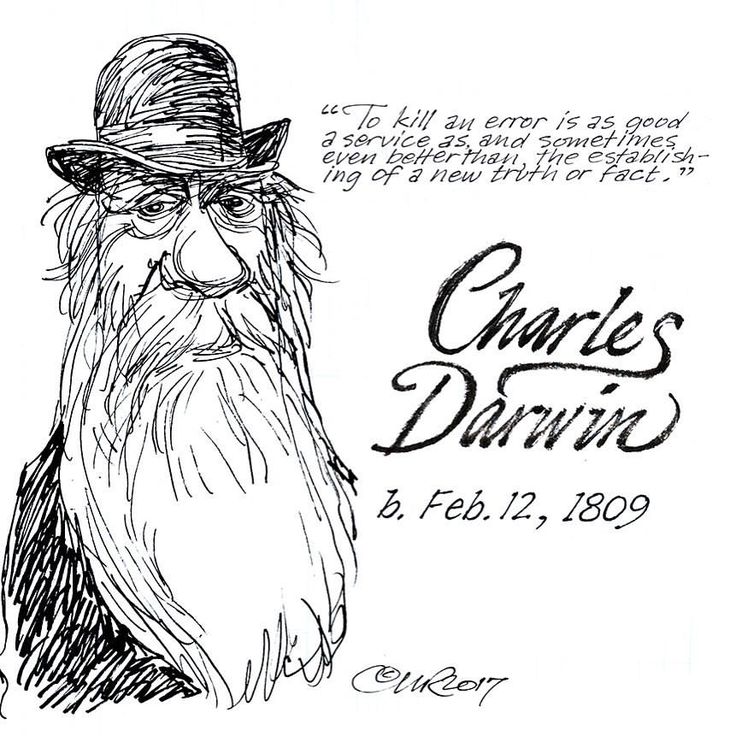
Charles Darwin’s birthday is in a few days. I am so sad that we are not able to throw the party we have done for the past decade plus. But our safety is more important this year. So in lieu of it, we are including content from past celebrations in this newsletter.
I wish you the best my friends, hang in there. We are brave, we are strong, and we fight for what is true and fair.
Kindest regards, and have a blessed day.
—Melanie White-Curtis President, Humanists of Utah
Darwin Day Remembrance
HoU’s First Darwin Day 2008
What Would Darwin Do?
David N. Campbell is a retired university professor. He is founder and past president of the Center for Inquiry Community of Pittsburgh, Pennsylvania. Currently, he becomes Charles Darwin for a weekly cable television show and for live performances. He prepared for this over a three year period, reading everything Darwin wrote that was available, including the four volume, From So Simple a Beginning edited by E.O. Wilson. He read Darwin’s On the Origin of Species three times. The article “What Would Darwin Do?” is a synopsis of some of the main points he makes during his presentations.
Quoting from the article: “When people proudly announce, as so many do, ‘I don’t believe in evolution.’ I politely reply, ‘Neither do I. No one believes in evolution. Evolution is science. It is not about believing in anything. We either know and understand–which is why you have these electric lights, and can expect to live beyond the age of 40–or we are in the process of knowing and understanding.’” In just a few words the author summarizes my philosophy of life. I think most humanists, agnostics, and scientists would agree with Darwin. The only message we can hope to pass on after our demise is what science has achieved, how it has transformed all our lives, and how much more there is to know and understand. There are no true alternatives, just a desperate longing for some hope to be spared, to be exempt from the reality we have finally come to know.
Darwin’s life was a transformation from a more standard philosophy of life to that of a scientist. Many people do not know that he completed a degree in theology before he became a naturalist, and before he journeyed around the world on the ship HMS Beagle. He, himself stated that early in the voyage of the Beagle he talked with his shipmates about his natural science studies from a biblical language, but by the end of the voyage he used a more “naturalistic” language.
Darwin struggled with his own religious hopes and yearnings for many years. Quoting again from the article: “There must be ‘something’ beyond this world. There has to be a creator, a mover.” Darwin went through this questioning acutely when his precious Annie died in his arms at age ten. Darwin wrote, “After that, I no longer accompanied Emma to church. I knew for sure then that there was no loving benefactor anywhere in this world or the universe. I was just beginning to understand. What obviously existed was the struggle to survive that I had observed.”
The article ends with Darwin’s admonishing us about others. “I know firsthand, as do all scientists, that it is not easy thinking, and perhaps we should consider the possibility that we can never expect everyone–or even most–to think in this fashion.
I would end with the admonishment; we need to expect others to think rationally, we really have no other choice.
—Craig Wilkinson, MD
What a Month it Was
For me January was a month with some good news mixed in with all the mayhem. It felt good early on as Amy and I were watching and waiting for President Biden to get sworn in. It gave us some real hope that some good things were going to start getting gone. We were also delighted to hear from John Kerry, who will be heading up the efforts on climate change. In his appearances on MSNBC that I have seen, he has explained and iterated quite well the many ways we can move into a better, cleaner more efficient future that will also provide a lot of good jobs in clean energy infrastructure. It also gave us some hope when Georgia voter changed the Senate majority to the democrats by voting in two democrats as senators.
Plus, since the January 20th we have had the pleasure of a daily briefing from the White House. After nearly four years without one we kind of forgot what it was like to have truthful information relayed and questions answered.
We were happy that Amy got her first COVID-19 vaccine shot and the V.A. hospital made me an appointment for Jan. 30 for my first shot. It helps to relieve the anxiety a little.
But then there was the insurrection at the U.S. Capitol building incited by Donald Trump and his boot licking Republican followers. But I really do not want to rehash what happened except to say that I consider them all traitors, seditionists, and just plain criminals. Take your pick or possibly all the above. Instead, I thought I would relay a couple of items that show just how really stupid some of if not most of these people are.
One you may all be aware of is the U.S. Republican Representative who says that the shooting at Sandyhook, Las Vegas, and elsewhere were fake. She also believes that the wildfires out west were caused by Jewish space lasers.
But someone I know of locally has related that “Donald Trump won the election and is still president but is governing from Florida and that all the stuff you see about President Biden is fake and is being produced at a sound studio somewhere.”
That is just bat shit crazy. How the hell do you have a rational discussion with someone that stupid. You really cannot.
We must be clear about a few things. On the political spectrum between the far-right and the far-left, conservative or liberal, republican or democrat we know who is to blame. It is not liberals who have tried to disenfranchise voters, who have called the election a fraud without any evidence, who have stormed the Capitol with intent to kill, who continue to threaten anybody who disagrees with them, who still suck up to the biggest liar and worst president ever. It is people on the right side of the political spectrum plain and simple.
Getting back to climate change, the American Humanist Association sent me an email awhile back regarding Climate change and their efforts and ways for us to help and donate. I will donate through them along with a few other organizations. I trust them to put the money to work where it will do the most good.
Even when it seems like you have nowhere left to turn, there is a solution waiting for you. Always.
The journey that each human being makes through earthly existence can have hardship as often as it is touched by joy. When we encounter adversity, the stress we feel can erode our optimism, eventually convincing us that the issues we face cannot be overcome and are part of our identity. In truth, there is no situation so dire, no challenge so great, and no choice so bewildering that it cannot be overcome. Though we may believe that all avenues have been closed to us or that our most conscientious efforts will come to naught, we are never without feasible options. Remember, you are brave, strong, and capable. The best course of action may be veiled in doubt, but it is there. When we are honest with ourselves with regard to this simple fact, we can overcome anything because we will never stop looking for a solution to the challenges before us. Be brave. Be strong. Be curious and find the solution.
Self-trust paired with a sturdy plan is the ultimate antidote to adversity’s tendency to inspire confusion in the human mind. As difficult as the obstacle seems, it is no match for the love of a supportive universe that has been a part of your life since the day of your birth and will be with you forevermore. Try not to be misguided by your fear as this gives rise to the notion that there are problems without solutions. If you believe in your capabilities and dedicate yourself to the creation of some form of resolution, you will be surprised to discover that paths that were once closed to you miraculously open. Even if all you can do is change your perspective to turn a struggle into an opportunity to grow, you will have found the hope that is an inherent element of all hardship.
Remember that your destiny is a product of your own creation. Even when it seems you have nowhere left to turn, there is a solution waiting for you. You are in control. The only insurmountable obstacles are the ones you create in your own mind—and these can only exert power over you if you let them by not trying to find the solution. Uncertainty will always be a part of your existence, but perseverance and mindfulness will never fail to see you through to the other side of hardship where joy can thrive. Try and remember that no matter what life places at your feet, there is absolutely no situation that cannot be resolved with time, love, and friendship. Even if that means involving your personal tribe to help. I send you love, hope and peace into the new year. You got this!
—Melanie White-Curtis, President, Humanists of Utah
President’s Report
Blessings humanists and all our fellow friends and neighbors. 2020 has been a doozy of a year that has changed our planet for sure. It has moved us, as a human race, to take a hard look at things and reflect. It has been life altering for most and definitely inconvenient for everyone. But, that said, it has given us so many opportunities for growth, change, compassion, reflection, rest, and other beautiful attributes during this storm. I hope you have found comfort in things that may have been forgotten, like relationships, home, cooking, cleaning or whatever you did not have time for before. A slower pace has been a blessing, even if it did not seem like it.
During this year, our beautiful group has undertaken some very big changes. The biggest one of all is the fact that we were no longer able to meet in person and we were not prepared to shift to a virtual, technological transition quickly. Thank you for hanging in with us…. it is coming and we are learning so that we can continue the good fight in this new dynamic we are building.
As with many people in the world, our president, Jeff Curtis, has had major health issues and has stepped down from his position as president to focus on getting better and will be in a more advisory role on the board of directors. I, being the Vice President, will be stepping into the President role for 2021 so we can maintain our vision that was set by the Board a few years ago and we can continue the momentum of our virtual changes and evolution. We, as a board, have stayed the election for one years’ time, due to most of what we had planned being rolled into 2021 due to the COVID -19 pandemic that stopped it all this year.
I am very proud of this group and for the resilience we have showed and that you, as humanists have proven, this year during elections and in helping those in need. We are going to take this group to the next step and will be heavily focusing on humanitarian aspects, ways to help our neighbors, our country and our own families and selves. We are optimistic that 2021 will be a year of growth, of compassion and that we will rise like a phoenix from the ashes of 2020. It served it’s purpose. But now is the time to rise into who we really are as people. I admonish you, to reflect on your personal goals for 2021. What are they? Who will they help? How active do you want to be in your community when it is safe? What does your self-care look like? All of these things are important.
In the coming weeks, we will be sending out a survey so we can update and digitize our records. This is just for us to better serve you. It will be kept within the organization and only a few key people have access to it. You will not be spam blasted, upsold, or pandered to.
We would love your participation, your ideas, and for you to feel that you can lean into this group for support, friendship, and love.
I wish you the very best in 2021 and moving forward. Be brave, be safe and be well.
—Melanie White-Curtis President, Humanists of Utah
How Does Complaining Affect You?
When we spend all our time complaining, we are in essence in constant destroy mode rather than building mode. This has been a test on most of us this past year.
We all know someone who has elevated the process of complaining to a high art. Sometimes funny, sometimes exhausting, these people can find a problem just about anywhere. In its more evolved form, complaining is simply the ability to see what is not working, in one’s own life or in the external world, and it can be quite useful if followed to its natural conclusion—finding a solution and applying it. However, many of us do not get that far, and we find that complaining has become an end in itself. In small doses, this is not a big problem, but if complaining has become a huge part of our identities, it may be time to take a good look at how we are spending our energy. Are you a glass half full or half empty kind of person?
Complaining is a person’s way of acknowledging that they are not happy with the way things are. In a metaphorical way, when we complain or criticize, we are tearing down an undesirable structure to make room for something new. But if all we do is tear down, never bothering to summon the creative energy required to create something new, we are not fulfilling the process. In fact, we are at risk for becoming a stagnant and destructive force in our own lives and in the lives of the people we love. Another issue with complaining is that we sometimes tend to focus on other people, whom we cannot change, as a way of deflecting attention from the one person we can change—ourselves. So, transforming complaining into something useful is a twofold process that begins with turning our critical eye to look at things we can do something about, and then taking positive action. This takes a concerted effort to flip the perspective. Be prepared to work at it.
When we find ourselves complaining, the last thing we need to do is get down on ourselves. Instead, we can begin by noticing that we are in the mode of wanting to make some changes. But rather than lashing out at somebody or an organization, we can look for an appropriate place to channel this energy—not our neighbor’s house, but possibly parts of our own. Finally, we can ask ourselves the positive question of what we would like to create in the place of whatever it is we want to tear down. When we do this, we channel a negative habit into a creative process, thus using our energy to change the world around us in a positive way. I like to add, “but what if….”and then add a solution to the end of my complaint. No matter how absurd it may sound. Sometimes I will throw out the most ridiculous idea at the end to make it funny but moreover to switch the negative vibe to a positive one. Have fun catching yourself and see how to be brave and flip the dialogue. It can be life changing.
—Melanie White-Curtis President, Humanists of Utah
New Year, New You!
When you look back on 2021 a year from now, what do you hope to see?
Will this be the year you make some changes to help our planet? The year you divest from fossil fuels and embrace sustainable spending? Will you be changing your diet to incorporate a healthier lifestyle? Will you volunteer time and energy in helping your community be a better place to live? Whatever that means to you?
Dear Friend, 2021 will be what you make it. You have the power to change things. Give yourself a list with a few things, make a simple plan on how to start and just do them. Be brave. Steps forward in your goals can be small or huge. There is no right or wrong answer. You got this! You can do it. I believe in you.
And whatever you choose to do this year, we wish you a great one.
—Melanie White-Curtis President, Humanists of Utah
Pandemic Continues
Hello freethinkers, hope your holidays have been enjoyable. I don’t have a lot to say this month without whining like I have been lately. But I wanted to wish everyone a Happy New Year. It is still going to be a tough year to come with the pandemic and all. But for me, the best thing about this year has been that we have voted out Donald Trump and the rolling out of the COVID-19 vaccine.
I am hoping the V.A. will be able to get me vaccinated as soon as possible, that will ease my anxiety a great deal. The V.A. is quite efficient and is set up to do vaccinations, unlike the dysfunctional distribution of the vaccine by the Trump administration. But here I go whining and complaining again. But I cannot help it. The count down until January 20th feels like it is going agonizingly slow. Poor old Donald is starting to look rather pathetic in his attempts to stay in office.
To change the subject, I want to say I hope we get some meaningful precipitation soon. It is distressingly dry out there. Enough so that the next time it is above freezing for a couple of days, I am tempted to do some watering. As, hopefully, this pandemic starts to ease up, we can get back to focusing on climate change. It was encouraging to see the new president state the need to address climate change immediately. It is a global problem, it’s a national and local problem, and it effects all humans. Climate change is where I think I can be of some help by being an advocate for action and by contributing financially where it will do the best good. Our humanist chapter is one way to get the word out and find groups to support. I am going to renew my efforts in this area. Like they say time is running out.
Once again, Happy New Year, stay safe, wear a mask, stay home (for now) and we will see you sometime this coming year.
—Bob Lane
Chaplin’s Corner
Darkest Night: A Solstice Vigil
As 2020 ends, for most of us, the sense of relief is actually literal. This year has been HARD. It has been overwhelming, scary, lonely, and rough. Moving forward through this vigil can be repeated in helping you start 2021 with a positive mindset, full of promise, hope and starting fresh. We wish you all a very happy holiday season and the very best for the coming year! Cheers!
The Winter Solstice, the longest night of the year, is a fitting time to sit with the darkness and challenge, to face it, name it and honor it. What we face, what we name, what we have relationship with. We can master and integrate.
As 2020 ends, for most of us, the sense of relief is actually literal. This year has been HARD. It has been overwhelming, scary, lonely, and rough. We wish you all a very happy holiday season and the very best for the coming year! Cheers!
Jared Anderson, Humanist Celebrant created a vigil that you can participate in. You will find it on our website under Resources then Videos. It takes about 20 minutes; you can use the following props:
A Candle for each person
A lighter of some sort
Small pieces of paper and pen
A surface you can safely burn paper on
Moving forward through this vigil can be repeated in helping you start 2021 with a positive mindset, full of promise, hope and starting fresh.
Please note: There was NOT a November issue of this newsletter published
Got Polio?
This piece was published in the Salt Lake Tribune Letters to the Editor section on December 3, 2020.
On May 8, 1980, the World Health Assembly officially declared that smallpox had been eradicated! This was arguably one of the greatest scientific achievements of humankind. Since then a significant number of other infectious diseases are disappearing; think polio, measles, mumps, chicken pox, several flavors of hepatitis, meningitis, pertussis, tetanus, etc. have been eliminated in modern countries. Public Health constraints and Vaccinations are the two most effectively used weapons to defeat scourges of microbial mayhem.
It appears likely that several COVID-19 vaccines will become available soon. One thing that has not been widely discussed yet is the fact that immunity does not happen the instant you roll up your sleeve after receiving your jab. In fact, immunity does not happen for several weeks and includes a booster shot three to four weeks after the original jab. This means we will all be under Pandemic Procedures for several months once the new vaccines are approved for distribution.
Bottom line: buckle (er, mask) up, get in line for your immunizations as soon as your demographic is eligible, maintain social distancing, and follow good public health hygiene practices until further notice. Party Time will come, we just need to be diligent and patient for a few more months.
—Wayne Wilson
An Experiment in Gratitude
Awareness of gratitude will allow you to savor and, above all, appreciate your life with renewed grace.
Sometimes we forget to take the time to recognize the richness that defines our lives. This may be because many of the messages we encounter as we go about our affairs prompt us to think about what we do not have rather than all the abundance we do enjoy. Consequently, our gratitude exists in perpetual conflict with our desire for more, whether we crave time, convenience, wealth, or enlightenment. Yet understanding and genuinely appreciating our blessings can be as simple as walking a mile in another’s shoes for a short period of time. Because many of us lead comparatively insular lives, we may not comprehend the full scope of our prosperity that is relative to our sisters and brothers in humanity.
If you find taking an inventory of your life’s blessings difficult, consider the ease with which you nourish your body and mind, feed your family, move from place to place, and attend to tasks at hand. For a large number of people, activities you may take for granted, such as attaining an education, buying healthy food, commuting to work, or keeping a clean house, represent great challenges. To experience firsthand the complex tests others face as a matter of course in their daily lives, try living without the amenities you most often take for granted. This can be a great experiment to undertake with your entire family or a classroom. Understanding working poverty can be as easy as endeavoring to buy nutritious foods with a budget of $100 for the week. If you own a car, relying on public transportation for even just a day can help you see the true value of the comfort and conveniences others do without. As you explore a life without things you may normally take for granted, ask yourself for how long you could endure.
The compassionate gratitude that floods your heart when you come to fully realize your abundance may awaken pangs of guilt in your heart. Be aware, however, that the purpose of such an experiment is to open your heart further in gratitude and compassion. This awareness can help you attain a deeper level of gratitude that will allow you to savor and, above all, appreciate your life with renewed grace.
Have a blessed day. Kindest regards,
—Melanie White-Curtis
Ending the Year From Hell on a Good Note
No one will dispute that 2020 has been rough. Let us end this year on a positive note.
I send you love, kindness and hope for your holiday season and a solemn wish for safety and renewal going into a new year.
We are ending a rough year, trying to breathe during a pandemic that is running rampant on this planet and especially in our country and facing a new year with hope and many possibilities. We are all having to face our belief systems, our courage and how each of us fit into this human condition and how to help.
We are social creatures by nature. With the holidays upon us, please be mindful of wearing your masks, social distancing but more specifically staying safe for yourself and others—even if this means paring down your celebrations this year so that we can get a grip on this virus as a community so that we all will be able to enjoy many years to come.
2021 is going to be a new year of change, of hope, of a new leadership in our country and of renewal. The Humanists of Utah Board have been working diligently to move to a safe online environment until it is safe to meet in person again, and we will be much more visible in the new year. This year has been a year of adjustment, reflection, and flexibility.
Have a beautiful holiday season and stay safe!
With Much love,
—Melanie White-Curtis
Seeing Good in All
There is a perceptible energetic shift that takes place when we choose to see the good in all.
Our perception shapes the lives we lead because the universe adjusts itself almost instantly to our expectations. When we look for negativity, we are bound to come across it in abundance. Conversely, we create positive energy when we endeavor to see the goodness around us. As easy as it is to criticize the people and situations that frustrate or hurt us, we do ourselves a disservice in the process. It is important to see the good in all as there are blessings hiding in every aspect of our outer-world reality, and the potential for grace exists in all human beings. When our lives are flooded with challenges, grief, and pain, we may be tempted to believe that some individuals or incidents are simply bad. But if we look for the good in all, good reveals itself to us, easing our doubts and reminding us that the universe is a place of balance.
There is a perceptible energetic shift that takes place when we choose to see the good in all. The unnecessary tension that came into being when we dwelled on negativity fades away and is replaced by sympathetic tolerance. We can forgive those that have wronged us because we recognize in them traits we admire, and we may even discover that we can bring out the good in one another. Though loss still grieves us, we recognize the beginning of a new phase of existence that abounds with fresh opportunities. Each new challenge becomes another chance to prove ourselves, and we learn to show great patience in the face of difficulty. There are few pleasures greater than gazing outward and seeing beauty, wisdom, and harmony. These are the attributes of the universe that help us to cope when we encounter their opposing forces.
Since you create your own reality, you make your world a better place each time you acknowledge the good in your circumstances and in the people you encounter. As you draw attention to the positive aspects of the world around you, your understanding of the affirmative nature of all existence will grow. There are few lessons you will learn in this life that will prove as instrumental to your happiness and satisfaction. In appreciating the all-pervasive goodness that exists in the universe, you internalize it, making it a lasting part of your life.
—Melanie White-Curtis
It Is Hard
I began this article in late October, just before the election. Now that it is over, I am thankful that Joe Biden was elected. I find that his asking for 100 days of mask wearing and the announcement that vaccines will soon be launched is cause for hope that things are changing for the better. We need to remember that there is still a long, hard road ahead. I hope that these changes will allow us to get together in the coming year to enjoy each other’s company—something I think we have all missed.
As of this writing, the pandemic is at its worst since it began, and the inept and incompetent government response continues.
I would like to share something I have been doing as part of my “mindfulness exercises.” Carl Sagan is one of the most influential people in my life, along with the late Dr. Donald R. Currey of the University of Utah Geography Department. Professor Currey’s teachings helped me gain a deeply satisfying knowledge of the planet Earth. To this day, I take pleasure when viewing the landscape and understanding how it got that way. Studying with Professor Currey while he was mapping the shorelines of Lake Bonneville and while doing my own studies of Alpine and Periglacial geomorphology has left me with knowledge I cherish to this day.
While I never met Carl Sagan, he made the cosmos come alive for me, and his statement in his series ‘Cosmos’ “we are a way for the cosmos to know itself” was inspiring for me. It made me think that it was cool to think of myself as a piece of the consciousness of the cosmos—we make it self-aware. It also gave me a feeling of awe that I exist at all in the cosmos, let alone exist at a time on Earth when we can understand and observe a great deal of the universe.
Several years ago, I was fortunate enough to meet Ann Druyan ,Carl’s widow, at a Center for Inquiry Humanist Conference in Amhurst, New York. During an open house for the Center’s new building, I had the delightful experience of “rubbing elbows” with Richard Dawkins, Lawrence Krauss, astronomer Jean-Claude Pecker, and Sam Harris. During a moment with Ann, I apologized for being one of those who must ask her about Carl a lot and told her that many people probably do not know of her own accomplished life. She laughed, thanked me, and said that she was happy continuing Carl’s efforts to popularize science. She also said that if he were still around, he would have been there at the conference; that we were “his kind of people.” I savor that moment to this day.
It has been awhile since I have opened any of Carl’s books, but I am starting to now. They are a great way to take my mind off of stressful goings on. His book, The Demon-Haunted World (clickable link to book review), while published in 1996, is still spot on about the dangers of anti-science and pseudoscience. It is worth reading or re-reading.
In closing, the recent news that the Salt Lake Tribune is ending its daily printed edition really bummed me out. I have always enjoyed the morning paper with a cup of coffee. Checking out the editorial page, smiling over the funnies, and doing the puzzles with a pencil has been a nice morning routine. Going to have to get used to seeing it on a screen, I guess. Hope to see you as soon as we can be safe.
—Bob Lane
Solstice
Originally published in January 1996
Imagine our ancestors sometime between 30,000 and 200,000 years ago gazing at the sky considering the solstice. Then, as now, there must have been two basic approaches to nature: fear and wonder. Unfortunately, fear is the stronger emotion. Its legacies include myth, superstition, religion, and authoritarian governments and rulers.
Those who stood in wonder were able, through empirical observations, to explain the natural phenomenon of the solstice. The progeny of wonder are the arts, the sciences, and the humanities.
It is unlikely that most people approach the unknown exclusively with either fear or wonder. We all have a different mixture of these two basic emotions. Our challenge is to try to suppress the fears, and then experience and explain the wonders.
Joyce Barnes was a longtime member of Humanists of Utah who served on the Board of Directors for several years. Joyce grew up in Colorado. On graduation from high school, she went to the University of Northern Colorado on a piano scholarship and played for spending money at weddings and funerals. She married John in 1951 and moved to Clovis, New Mexico, in 1952 where she student-taught while John was in the army; then to Laramie in 1953, where she couldn’t teach because she was married to a “transient,” i.e., a student, but earned her own degree in Colorado; then to Denver, where she taught third grade for three years; and finally to Salt Lake City in 1961, where she worked for the Granite School District until her retirement in 1993. She taught music at Central Junior High for three years and then requested to work in special education with the disabled. While working and raising two daughters, she earned an M.S. in special education from Utah State University, after which she was soon transferred to the district office where she developed the curriculum for special ed. A few years later she became Granite School District Director of Student Support Services with a staff of 500 and a budget of $30,000,000. She soon earned an Ed.D in public school administration in a new program at BYU, where she had the novel experience as a Unitarian of signing the student code and living in a dorm, but slipping off campus for a cup of coffee.
Upon retirement, she became a mediator privately and for court adjudicated divorce and family conflicts. She was a volunteer mediator for Juvenile Court. She served as adjunct faculty for special ed at the U., USU, and SLCC. She has served as chair of the Legislative Coalition for People with Disabilities and serves as a member of the East Valley Advisory Board for Salt Lake County Parks and Recreation. As a self-professed political junkie, she served as Voter Service Chair for the League of Women Voters, arranging debates and preparing voter guides and finding it hard to remain nonpartisan, and as the Utah representative for the Children’s Advocacy Network, advocating to state and federal legislators for both gifted and disabled youth and adults.
Most of this biographical information was written by Earl Wunderli
Octobers Past
This issue looks back to Octobers in 2015, 2010, and 1995
Debating the Constitution in Philadelphia
October 2015
Would our Constitution have been written in 1787 if Institutional Slavery did not exist?
Professor Jeremy Pope from the Political Science Department of BYU presented our Founders Day lecture. He started by discussing George Washington’s “first farewell” which was titled Circular to the States, the third sentence reads, “if their Citizens should not be completely free and happy, the fault will be entirely their own.” In the end the loose federation of the states proved to be too little to guarantee the safety and prosperity of group so a Constitutional Convention was convened. This was not an easy thing to do, why did they establish the government that they did? On February 21, 1787, the Continental Congress resolved that “…it is expedient that on the second Monday in May next a Convention of delegates who shall have been appointed by the several States be held at Philadelphia for the sole and express purpose of revising the Articles of Confederation.”
Some of the main players included William Paterson of New Jersey who was a successful advocate for the rights of the small states. James Wilson from Pennsylvania advocated a strong and independently elective executive. Roger Sherman from Connecticut who had helped with the drafting of the Declaration of Independence, proposed the Great Compromise. Gouverneur Morris from Pennsylvania did the actual drafting of the constitution. Alexander Hamilton was a powerful friend of stronger government. George Mason from Virginia, while a major player, did not sign the final document as it lacked a bill of rights. John Rutledge from South Carolina strongly defended slavery at the convention. Benjamin Franklin from Pennsylvania, while his age prevented as much participation as some, endorsed the constitution and backed it with his prestige. George Washington left retirement to risk his reputation on the enterprise. He only made two speeches, but he presided over the convention and consistently supported the document.
Socializing was an important aspect of getting the document completed. The delegates spent a lot of time at taverns and eating together. An actual surviving bill from City Tavern shows that they ordered about two and a quarter containers of alcohol per delegate for one evening; wines, claret, whiskey, porter, hard cider, beer, and alcoholic punch were all listed. These conversations were less formal than the ones in Constitution Hall but were the source of many significant compromises. Among the significant agreements were Proportional Representation, Federalism, and Executive Independence. There were roughly three groups of states: the (physically) Small States which wanted little if any reform but favored a stronger executive. The Deep South, who wanted to change federalism and representation to favor slave-holding states, but did not want to make a powerful executive. Finally the Core Reform States who wanted to change everything, but they didn’t all agree on exactly how and what.
They set an example that could help us today. Slavery was of paramount importance, much that is good in the Constitution came about because of the slave interest. The founders did NOT agree on everything but they were able to compromise and forge one of the greatest political documents in history. Two statements from participants illustrate this:
“On the whole sir, I cannot help expressing a wish that every member of the Convention who may still have objections to it, would with me on this occasion doubt a little of his own infallibility, and to make manifest our unanimity, put his name to this instrument.”
—Benjamin Franklin
“It has been frequently remarked, that it seems to have been reserved to the people of this country to decide, bytheir conduct and example, the important question, whether societies of men are really capable or not, of establishing good government from reflection and choice, or whether they are forever destined to depend, for their political constitutions, on accident and force.”
—Alexander Hamilton
The most thought provoking and challenging concept of this lecture was that without slavery the Constitution likely would not have been written. It is ironic indeed that so much good could be spawned by something as heinous and revolting as slavery.
—Wayne Wilson
Women’s Influence in Humanism and Society
October 2010
Flo Wineriter
Beverley Earls said, “One day I would like to write a book about the contributions humanist women have made not only to humanism but to modern civilization.” Those words of Ms. Earles, professor of Religious Studies from Victoria University of Wellington, New Zealand inspired me to prepare this presentation tonight.
I spent the summer thinking, reading, and writing about the women in the humanist movement and the influence they have had in expanding public knowledge about our philosophy and the impact they have made on the advancements improving our lives and our society. Of the hundreds of women who have made significant contributions I have chosen fourteen to share their influence with you.
First, I would like to mention that my LDS excommunication hearing was a personal experience of how women and children have been treated as second class citizens. The presiding male at the hearing asked me if I wanted my wife and children included in my excommunication? I replied, “No, I cannot speak for my wife and children.”
Dora Russell, a British humanist and the second wife of philosopher Bertrand Russell, wrote, “At conferences of humanist organizations one notices that the head table often bears a remarkable resemblance to the Politburo, all males within a certain age group.” She went on to say, “Something that women have to say is being left out of everything in the world and there can be no humanist world without it.” BBC broadcast a television documentary naming her as one of the six great women of our century.
Annie Laurie Gaylor, cofounder of the Freedom From Religion Foundation, has authored several books exposing sexual abuse of children by religious leaders. In 1977 she let a protest against praying at the University of Wisconsin graduation ceremony. She has an unceasing devotion to recording the convictions of women who have challenged the efforts of religions to dominate society.
Mary Wellstonecraft (1759-1797) was a free thinking deist and the first influential women to write about the need for gender equality and recognizing reason and rationality as the highest human virtue. She published two major books that influenced the struggle for human equal rights.
Frances Wright (1795-1852) Pioneered anti-slavery and was an early advocate of free public schools. The clergy of her day portrayed her as “The red hot harlot of infidelity, a bold blasphemer, and a voluptuous preacher of licentiousness.”
Margret Knight (1903-1983) authored three books on humanism and delivered humanist lectures on BBC. During her broadcast she said, “…there is no ground for the common claim that Christianity is the source of all that is best in our culture. The true roots of our civilization lie in the classical Greece and Rome.” Following her broadcast a London newspaper wrote, “Woman psychologist makes remarkable radio attack on religion for children.” Another British newspaper wrote: “Don’t let this woman fool you. She looks just like the typical housewife; cool, comfortable, harmless. But Mrs. Margaret Knight is a menace, a dangerous woman. Make no mistake about that.”
Vashti McCollum, it was her lawsuit to stop religious instruction on public school property that led to the landmark Supreme Court decision in 1948 to halt religious indoctrination in public schools.
Mary Morain co-authored Humanism as the Next Step in 1988, a book that clarifies the humanist philosophy that there is intrinsic, inalienable value in every human being. She was named “Humanist of the Year” by the American Humanist Association in 1994.
Lisa Kalverlage, immigrated to the United States from Germany after World War Two with a mission to bring greater understanding of the horrors of wars. In 1966 she participated in an anti-Vietnam war demonstration, was arrested and sentenced to 90-days in jail. She is currently a leader of the humanist chapter in San Jose, California.
Barbara Wooten, British Feminist humanist, vocal opponent of Christianity and Communism, refers to both as two of the greatest superstitions of the western world.
Margret Sanger, humanist leader credited with making a major contribution to the sexual freedom of women. She filed the lawsuit that led to the overturning of the Comstock laws that give women the right to birth control information. She was recognized as “Women of the Century” in 1966.
Sonia Johnson, following her excommunication from the Mormon church for her leadership role in supporting the Equal Rights Amendment was asked by a reporter if she had acquired any non-Mormon habits she replied, “Yes, I have acquired the habit of free thought.”
Barbara Walker, Honored by the AHA as “Humanist Heroine of the Year” 1973. In her acceptance speech said, “Violence can be controlled by bringing us all down to earth in the practice of enlightened humanism.”
Bette Chambers, was a board member of the American Humanist Association for several years and served at President of Board during a crucial period of turmoil. Her leadership calmed the dissension, restored a respectful atmosphere, and began a period of healthy membership growth.
The examples of feminist humanist leaders I have shared with you tonight illustrate the significant contributions women have made to the social and cultural progress of society in general, the humanist movement in particular, and the validity of the world wide feminist movement.
—Flo Wineriter
Fables, Fantasies, and Fairy-tales
October 1995
So now the Emperor walked under his high canopy in the middle of the procession right through the streets of his capital city. And all the people standing by and those at the window cried out, “Oh, how beautiful are our Emperor’s new clothes! What a magnificent train. And how gracefully the scarf hangs!” In fact, no one would admit that he could not see these clothes which everyone seemed to think so beautiful for fear he would be called a simpleton or unfit for office.
Never before had any of the Emperor’s clothes caused so much excitement as these.
“But the Emperor has nothing on at all!” said a little child.
“The child tells the truth,” said the father.
And so it was that what the child said was whispered from one to another until all knew and they cried out altogether, “BUT HE HAS NOTHING ON AT ALL!”
The Emperor felt very silly, for he knew that the people were right, but he thought, “The procession has started and it must go on now!”
Nancy Fletcher
Hans Christian Andersen’s famous fairytale, The Emperor’s New Clothes, is as appealing and applicable today as it was in Denmark in the 1850’s. Somehow, we mortals get a sense of satisfaction seeing an arrogant leader exposed as a result of his own vanity.
Andersen had a knack for seeing through people and getting to the heart of matters, and his talent is reflected in his children’s stories, many of which teach valuable lessons that when learned early are able to stay as habits of the heart throughout life. For example, in the Emperor’s tale, he unveils the human susceptibility to be easily deceived, and our predisposition to social conformity. If we learn to recognize our inclinations early in life, then we will be able to catch and correct them sooner.
Andersen delightfully presents the innocence of a child as being an essential human quality for telling the truth. If we can learn to always reserve part of “our child within” for those times when we need to be open and honest, then perhaps we’d have a bit more integrity.
Another lesson pertains to the Emperor’s denial of being caught unattired, and proceeding on as if nothing had happened. We admire him for trying to maintain his dignity, but his facade is a reminder of some leaders today who refuse to face the truth out of fear, so they continue on with their own procession of myopic myths in order to maintain their positions of power and authority. From this we can learn to have periodic “reality checks” to see if we want to be part of a mythological problem, or be part of a different kind of solution.
What is it that attracts people of all ages to fables, fantasies, and fairytales? Feminist author Clarissa Estes believes, “Back in the recesses of our mind is a secret desire for life to arrange itself as a fairytale.” That’s probably why the movie, Sleepless in Seattle, became so popular. Stories with happy endings meet a human need–the need for hope, and the need to feel that the world can sometimes be a congenial place where everything works out well. Good stories also provide an indirect way to learn some of life’s lessons, because when we identify with certain characters, we get to discover our own truths, which can lead to positive changes. Reading tales can also compensate for our particular feelings of inadequacy and make us feel whole. We tend to fill in our own gaps with the good qualities of story characters when we identify with them. Who couldn’t identify with the charming spunk of Ann of Green Gables, or the unwavering integrity of Atticus in To Kill a Mockingbird.
Reading tales with challenges and noble ideas can also have a curative effect on us.
“Stories are the simplest and most accessible ingredient for healing.” (Estes) By vicariously stepping into a story character’s role, there’s a possibility of curing our own ailments, because we gain insight on how to change our own behavior. In a sense, reading can become “bibliotherapy.” Whether its learning to be more assertive, to control one’s temper, or to show respect for people’s feelings, we can still change our behavior.
Joseph Campbell, renowned professor of mythology, believed stories offer people of all ages models for living a good life, but that the models must be meaningful to have any positive effect. He felt our present moral order had to catch up with the moral necessities of life in the here and now. “The old time religion belongs to another age, another people, another set of human values, another universe. We need myths that will identify the individual not with his local group, but with the planet.” A good myth, or story, then, must not be provincial in nature, such as reflected in the belief of being “one of the chosen people,” or belonging to the “one and only true church” but must speak to the unity of all people and the wellness of the earth. The tales can be old or new, just so the plots have unifying motives and/or a global message.
Without developing an active imagination and hopeful fantasies, people of all ages might not have the strength to meet the dragons of life. “Good tales give our anxieties form and show us the ways to overcome our monsters. If our fear of being devoured takes the tangible form of a witch, it can be gotten rid of by burning her in the oven,” said child psychologist Bruno Bettelheim. In other words, a child can learn to deal with the mean-spirited people in life by symbolically shutting them away until he or she can learn, through experience, more and productive ways to deal with troublesome characters.
Fairytales and other stories bridge the gap between childhood and adulthood. “Before a child can come to grips with reality, he must have some frame of reference to evaluate it.” (Bettelheim) Good books speak to a child’s mind, and in such a way he or she can understand. Stories offer beneficial emotional lessons which can shape brain circuits in more productive ways. Research also verifies that “adult brain circuits can change just as well as children’s.” (Daniel Goleman, 1995)
Childhood is especially a time when fantasies need to be nurtured because that’s when the creative venture begins. It’s also a time when life can be overpowering for some little ones. Good stories can be a respite for tenuous circumstances because they help reassure a child about a just and happy outcome. For example, a selfish Emperor (who might represent father) is publicly humbled; the wicked witch (mother?) gets shoved into an oven; The Wizard of Oz (an authority figure) is exposed as a charlatan; the ugly duckling (an insecure child) turns out to be attractive; and the sky in Chicken Little’s scary world really can’t fall.
Good tales can help people of all ages become mentally healthier and happier human beings, but childhood is the ideal time to begin telling or reading stories because that’s the time when children learn the most. Caregivers can facilitate the process early by creating an emotionally stable foundation which includes choosing good stories, and by asking the right questions about the stories. Bettelheim said, “Asking , ‘Is it true?’ is not as important as wondering with a child, ‘Do you think the monster was good or was he wicked?” This type of questioning will promote self-discovery and self-confidence. Leisurely helping children to think for themselves will eventually guide them toward a sense of reality and a mature adulthood which just might help them to “live happily ever after” or at least reasonably so.
—Nancy Moore
Editor’s Note: Nancy Moore was one of our chapter’s early leaders. Much of what our chapter is, is a direct result of her efforts and influence.