December 2023

President’s Message

Dearest Friends,

Warmest wishes as we head into the holiday season and the end of 2023. With this time of year, there are many emotions and feelings that each of us experience: often good but sometimes not so much. Please keep in mind all that are in your social circles who might be struggling. All of us are, in our own ways, but now is a time of year that can be really tough for some. Find ways to reach out: a note, a call, a message or even something more.

I want to express my gratitude to you all and to send my well wishes to you as well. I hope that 2023 can close out the way you would like it to and for there to be hope and prosperity to each of you in 2024. The world is in tremendous transition (obviously) and there is much to be hopeful for. Now is the time for the “Good Trouble” that John Lewis spoke of. It is also the time of being a “helper” as Mr. Fred Rogers encouraged us to find in times of crisis. Find your voice, the world needs you. 

As always, I see you and see your value to this world, this community, to our Humanist organization and to the bigger whole of how we are genuinely trying to make the world a better place. You have my commitment to continue using my voice even until it shakes, if necessary. 

Seasons greetings and we would love to see you at our Humanlight celebration this month. It will be wonderful time for renewal, connection and friendship. Bring a friend with you. 

Kindest regards,
  Melanie White-Curtis,
President


HumanLight


  HumanLight is a Humanist holiday celebrated annually on 23 December, created to provide a specifically Humanist celebration during the western world’s holiday season. The New Jersey Humanist Network founded the holiday in 2001 for secular people to commemorate the December holiday season without encroaching on other adjacent holidays such as Christmas and Winter Solstice. It was recognized by the American Humanist Association in 2004.

   HumanLight is a secular holiday that focuses on “positive, secular human values of reason, compassion, humanity and hope”.

HumanLight at Wiki  

Start your own traditions:  food, candles to symbolize reason, hope, compassion, and humanity, and service projects.


Go Exploring!

The Humanist                 WEBSITE: The Humanist   

                             PODCAST: The Humanist Podcast

THE HUMANIST applies humanism—a natural and democratic outlook informed by science, inspired by art, and motivated by compassion—to broad areas of social and personal concern. In pursuit of alternative ideas, the Humanist airs opinions that may not necessarily reflect those of the editors or the publisher, the American Humanist Association (AHA).

Free Inquiry                    WEBSITE: Secular Humanism

                          PODCAST: Point of Inquiry 

FREE INQUIRY is “the hard-hitting bimonthly journal of the Council for Secular Humanism. From world-class columnists to thought-provoking cover features to commentaries from every branch of the secular humanist movement, FREE INQUIRY has it all … and 70 to 80 percent of each issue is never posted online.”

Skeptical Inquirer              WEBSITE: Free Inquiry

SKEPTICAL INQUIRER is published by the Committee for Skeptical Inquiry (CSI). Its mission is to “critically examine paranormal, fringe science, and other claims.” Some of the founding members of CSI include scientists, academics, and science writers such as Carl Sagan, Isaac Asimov, Paul Kurtz, Ray Hyman, James Randi, Martin Gardner, Sidney Hook, and others.

Skeptic (magazine)           WEBSITE: Skeptic

SKEPTIC is a publication of Michael Shermer’s Skeptics Society. “Some people believe that skepticism is the rejection of new ideas, or worse, they confuse “skeptic” with “cynic” and think that skeptics are a bunch of grumpy curmudgeons unwilling to accept any claim that challenges the status quo. This is wrong. Skepticism is a provisional approach to claims. It is the application of reason to any and all ideas — no sacred cows allowed. In other words, skepticism is a method, not a position. Ideally, skeptics do not go into an investigation closed to the possibility that a phenomenon might be real or that a claim might be true. When we say we are “skeptical,” we mean that we must see compelling evidence before we believe.


Come and See It!  Climate of Hope and Jane Goodall

New permanent exhibit open at the Natural History Museum of Utah

New special exhibit opens early December: Becoming Jane (Jane Goodall Story)

Natural History Museum of Utah


Climate Warming News

   My normal routine is browse news.google.com to check world news. Rarely are there any

encouraging words on the subject of climate change. Canary Media reported that Portugal, a country of 10 million, ran for six days in a row between October 31 through November 6 on renewable energy. The country has no nuclear capacity and has no plans to build any. Portugal shut down it’s last coal plants in 2022 and has imported fossil gas a backstop for on-demand power. 

Jane Goodall

   How did Portugal manage to achieve this milestone? First, they committed to the Paris Agreement to be fossil fuel free by 2050. Next, they chose to begin building renewables early and often. Their geography naturally has a lot of hydro and wave power. They have updated aging water and air generators and are working on innovative ways to fully eliminate the need for petroleum based electrical generation.

   Other news reports detail how public and private enterprises are finding new and innovative ways to capture and store, or in some cases actually use carbon dioxide.

   I think there is hope that humankind might find a way to at least mitigate the damage of burning fossil fuels. We just need to keep working together with the rest of the world on solutions that will benefit everyone.

Canary Media

—Wayne Wilson, HoU Board


Path to Mid-East Peace

Once again the religious are rapidly pulling us into war. It’s easy to condemn Hamas as reactionary theocrats, but much the same can be said of Netanyahu’s coalition.  A quote from Edward Said from 1979 resists the zealots and points the way to getting along:

“No human being should be threatened with ‘transfer’ out of his or her home or land; no human being should be discriminated against because he or she is not a fan of X or Y religion; no human being should be stripped of his or her land, national identity, or culture, no matter the cause.”

Submitted by Lauren Florence, Board Member

“The resumption of hostilities in Gaza is catastrophic.  I urge all parties and states with influence over them to redouble efforts immediately to ensure a ceasefire on humanitarian and human rights grounds.” 

Volker Turk UN High Commissioner on Human Rights.


Greater Good Science Center

The Greater Good Science Center (GGSC) at the University of California, Berkeley, is dedicated to the exploration of human well-being, compassion, and the promotion of a more meaningful and fulfilling life. Established in 2001, the GGSC brings together experts from various fields, including psychology, neuroscience, and sociology, to conduct groundbreaking research on the science of happiness, resilience, and altruism. At its core, the center is committed to advancing the understanding of the factors that contribute to a flourishing and compassionate society. Through a multidisciplinary approach, the GGSC not only conducts cutting-edge research but also translates its findings into practical tools and resources that individuals, educators, and organizations can use to cultivate well-being in their lives and communities. By bridging the gap between scientific research and real-world application, the Greater Good Science Center continues to play a pivotal )role in fostering a world where the pursuit of happiness is intertwined with the promotion of social good.

(This GGSC description was generated by ChatGPT on 12/03/23)

The GGSC offers a free 8 week online course about happiness, as well as podcasts, articles, and other sources of information, at Greater Good Science Center.


Meet your HoU Board Members!

Wayne Wilson

I have experienced several epiphanies, aha moments of clarity, in my lifetime. The first was by far the most
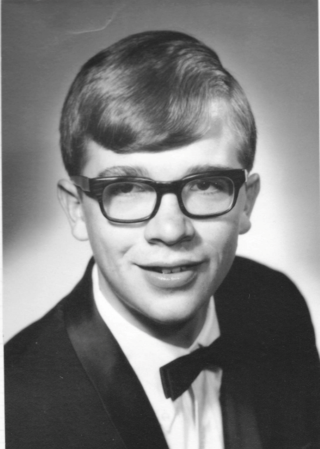
Ready to Graduate High School
Ready to Graduate from High School

influential and long lasting. I was raised in Utah County in a tightly knit Mormon household which taught me that the LDS doctrine was everything a person need to live a happy successful life. Late in my senior year of high school I was walking from the seminary building and the school between periods when the thought occurred to me that there might be alternate explanations to life. This led to a decade long period of discovery and soul searching. Ultimately it led to requesting that my membership in the LDS church be terminated. That took another decade plus.

During this time, I read a lot and did a lot of soul searching. Eventually, I read about humanism and decided that the philosophy was a moral rudder that I could happily adopt. What were the chances that there would be any more humanists deep in the heart of Utah? On January 18, 1992, the Salt Lake Tribune published an article in the Religion section that reported on Humanists of Utah, an active and growing humanist group! I attended the next general meeting and was glad that I brought my checkbook with me because I joined on the spot and have been actively involved in the chapter ever since.

Leona Blackbird

   I came on the board in 2001, when they needed a treasurer.  I filled that position until 2023.  Wayne said I’ll be elected as secretary when we have elections in December. My husband, David Blackbird, was a member of HoU before I married him.  He read Lamont Corliss’ book and said that it sounded more like me than him.  I read it and went right to the computer and joined the AHA.  I didn’t become a member of HoU until 2021, when he came home from a meeting and told me the group needed a treasurer.

   I worked 51 years for two small meteorological companies.  I started as a data clerk, learned programming on the job and ended up as data manager and programmer as well as data reducing tasks that are all done by computer now.  I was 35 years at the first company and when it was bought by a large heartless company, five of us left and started our own company.  The first company was small, the most employees we ever had at one time was 40.  It was a very good place to work; five marriages took place between employees.  One of them was mine, not to David, but to the father of my children.

   As far as hobbies, I play a lot of bridge and read a lot.


November 2023

Greetings from Melanie, HoU President

Welcome to November! Along with it comes the season of gratitude. While Gratitude is not exclusive to this month or season, it becomes more visible and a bigger focus to some and for this, I am grateful. First and foremost, I am grateful for life, liberty and the pursuit of happiness. Even though life can be hard and chaotic, I am truly grateful to be alive. I am grateful for liberty and for living in a society that allows me to live free and to not have the oppressive restrictions imposed that we are witnessing in other parts of the world. This said, I am grateful also for the right to speak, to protest, to vote and to work toward a better future and world for everyone. I am grateful to have the ability to pursue happiness, and what that means for myself, my family, my community and for this organization. Often times, people misunderstand the pursuit of happiness from the right to happiness. Happiness is what you choose to make it. There are so many versions of what it can mean to you. This is important for us to each understand, as it is a personal choice and can be anything you can dream of. With our humanist values and ethics, it is possible for us to make the choices we desire, without threat of hell and damnation and other religious dogmatic beliefs. How do you choose to be happy? Do you behave in a way to help spread peace, kindness and happiness? Do you actively pursue happiness? 

Melanie Curtis 11/2023

While my dad was alive, he was a strong force of good in my life. He taught me from a young age to be a peaceful warrior. This term has had many evolutions in my life due to circumstances and to what was necessary at specific times. Mind you, this did not mean passivity. There have been times I have been the face of revolution, another voice in a crowd, a friend sitting with someone in crisis adding support or even the voice on an injustice in my own world. All of these things added to my pursuit for happiness. 

As president of the Humanists of Utah, it is one my personal missions to bring our messages to everyone. There are those of us in our community who are searching for tools to assist in their pursuit of happiness too. I will be speaking at our November meeting on Humanism and what it means to be a humanist in our world today. Bring family, bring friends, bring anyone who is curious. Everyone is welcome. I genuinely mean this. Every single person on this planet! We are all in this life together. Even though there is a lot to be concerned about, stressed over and even fearful of… happiness is possible. 

My friends, I come with a message of hope, kindness and the fight of a peaceful warrior. I see you. I know that life can be tough. It can also be incredibly beautiful as well. Again I invite you to come to the meeting this month. I would love to see you in person and to meet some of you for the first time. 

Have a beautiful day and month, I am so very grateful for you all. 

–Melanie White-Curtis
President of the Humanist of Utah


Jen Daily-Provost on Medical Aid in Dying

Representative Jennifer Dailey-Provost spoke to the Humanists of Utah on 10/15/23, about her work on medical aid in dying (MAiD). She is a Utah state legislator, currently representing district 22 and is Minority Whip.  Jen grew up in Southern Idaho as a Catholic and now thinks of religion as a lifetime of exploration. On her journey, she discovered a Humanist philosophy, and this has guided her life, how she has raised her children, interacted with her husband, the kinds of education she has sought and the kinds of policy decisions she has made as a legislator as well as the bills she has tried to pass.

Jen Daly-Provost
Jen Daly-Provost

She has worked long and hard for equality, especially universal access to healthcare. She is in the last stages of her Public Health PhD. She teaches at the University of Utah in Human Genetics. She thinks the Utah Legislature is mostly collaborative and she is continuing the collaborative aspect of her work as it’s the most productive. “Rhetorical and strident “ is what Jen wants to avoid.

Medical Aid in Dying Bill

Jen has brought up the subject of MAiD to the Utah Legislature almost every year since she took office in 2019. Her bill has not been able to garner enough support to get a hearing in the Rules committee since, as they said, “it could not pass”. She insists that running a MAiD bill keeps the issue in the public spotlight, which continues to grow support for this aid.

Before 2019, Rebecca Chavez-Houck had been a proponent of MAiD and when Jen came to the legislature, she joined in this work. There was finally a hearing in this last interim session. Still after poignant and touching stories, the members said they still couldn’t vote for the bill due to the attitudes of their constituents and the predominant culture. Two members who said they would vote for the bill didn’t in the end, due to not wanting to suffer politically for a bill that they said wouldn’t pass anyway.  Jen found it horrific that people don’t internalize the pain that the stories presented, and so can ignore the needs of those who could benefit from MAiD.

Legislators have said that their constituents were antagonistic to MAiD. But the data shows community support. A Dan Jones & Associates survey in November 2015, found that 6 in 10 Utah Residents support MAiD. Many arguments against the bill supporting MAiD have been shown to be specious from the sixteen years of Oregon experience. (ed note: Now eleven states and DC have passed MAiD laws.)

Voters can move a complicated issue forward by talking to their legislators. She suggests that we write, email, and call our state legislators to ask them to represent us and give hearing to, then vote fora bill creating MAiD for those who so badly need help. Jen remains confident that a MAiD bill will pass because it’s the right thing to do. For more information go to compassion and choices.org.

Your legislators work for you!

Their contact information is available at le.utah.gov

Call, email, communicate your interests!


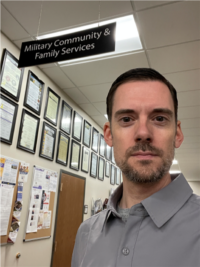
The Military Humanist Paradox

“I’m not religious,” my new Readiness NCO (Non-Commissioned Officer, Sergeant First Class or E-7 in this case) said to me when I asked him about my endorsement form. In response I quipped, “Neither am I!”

Another soldier marveled that though she hasn’t heard of Humanism, Humanist principles are irresistibly compelling. “What is Humanism?” she asked. I answered in part, “It means that we as humans need to show up for each other and take care of each other. It is a human-centered approach to life. We believe in life before death. Functionally, all cultural institutions are Humanist, which means that functionally all humans are humanist, though very few claim that identity, or are even aware of Humanism.”

Jared Anderson

As I have mentioned before, I am deeply gratified by the level to which I have been able to serve as a functional Humanist Chaplain. I can be transparent about my double endorsement and my lack of traditional beliefs. The majority of soldiers I speak with resonate with Humanism and consider themselves either non-religious, spiritual, or at least skeptical of religion. Even the religious soldiers I speak with find my perspective refreshing. As anticipated, Humanist Chaplaincy is desperately needed in the military.

And yet we still have no official Humanist Chaplains in the military, notwithstanding the diligent efforts of the Humanist Society and the Military Association for Atheists and Freethinkers.

The irony becomes even more stark when one realizes that though there are no Humanist Chaplains in the Army, the Army manual section on Spiritual Readiness is explicitly Humanist! “The spiritual readiness domain is inclusive and universally vital to all personnel no matter their background, philosophy, or religion. It applies to both religious and non-religious persons and concepts… Spirituality is often described as a sense of connection that gives meaning and purpose to a person’s life. The spiritual dimension applies to all people, whether religious or non-religious. Identifying one’s purpose, core values, beliefs, identity, and life vision defines the spiritual dimension.

These elements, which define the essence of a person, enable one to build inner strength, make meaning of experiences, behave ethically, persevere through challenges, and be resilient when faced with adversity. An individual’s spirituality draws upon parts of personal, philosophical, psychological, and religious teachings or beliefs, and forms the basis of their character… Understanding the general spiritual readiness enables leaders to encourage personal spiritual readiness in a climate where mutual respect and dignity encourage dialogue, foster team cohesion, and enable healthy free exercise of religion or no religion by all personnel” (FM 7-22, Holistic Health and Fitness, 10-2).

Given that Spiritual Readiness training is mandatory for all Army personnel, and that Chaplains are the obvious ones to teach Spiritual Readiness, it is poignant that there are currently no officially Humanist Chaplains to teach this functionally Humanist training.

I’m curious about how many undercover Humanist Chaplains there are in the United States military. Unitarian Universalism and Buddhism both align well with Humanism (I considered both of those as potential endorsers before finding Unity).

I’ve gone back and forth a bit, but I’m back to envisioning the day when I get to trade out my cross (though I remain grateful for Unity’s radical version of Christianity that teaches there is no God other than us and that we don’t need to be saved) to the Humanist Happy Human. I was inspired and encouraged to have the chance to speak with the Chaplain (Captain) Marie-Claire Khadij, who serves in the Canadian Armed Forces, is currently the only official Humanist military Chaplain in the Americas.

Whether or not I ever get to officially pin the Happy Human on my uniform, I’m deeply grateful to be able to serve soldiers in the US Army, especially the non-religious and those who struggle with traditional religion. I’m currently working on implementing regular Spiritual Fitness teaching and training in the Battalion where I am assigned, with the help of the trusty Humanist Holistic Health and Fitness manual.

-Chaplain Jared Anderson, 1LT


Board Member Lauren O. Florence, MD

When I first came into contact with the tenets of Humanism, I realized I had arrived home intellectually. When I started to meet the individual members of the Utah group, I felt at home socially. I asked if I could serve on the board. When they accepted me, I was clearly in my element and grateful. I finished a Master’s Degree program in Languages and Linguistics at USC. This background in words made me just the right candidate for Secretary. I have taken notes in the meetings as minutes of every meeting is a requirement for non-profits, and I have written an article about the presentation of the speaker at meetings.  (Note: Lauren is looking forward to other roles in HoU as a board member, when Leona takes over as secretary in December.)


Craig Wilkinson, MD

Craig is a retired vascular surgeon. He is married to Devona Wilkinson, approaching their fiftieth wedding anniversary. Their three children are: Jay Wilkinson, BA in graphic design, MBA who works in the tech industry in Lehi;  Margeaux W. Buechel,  PsyD in child psychology and lives in Portland; Brooke Wilkinson, JD a lawyer in Los Angeles. Craig been a board member for ten years and currently the treasurer of the HoU. His hobbies include paleontology and fossil hunting. He loves to hike the numerous nearby trails in Draper, Utah where he currently lives.


AHA Center for Education


October 2023

President’s Message

October is my favorite month, in my favorite season and is all things wonderful in my memories of growing up. Now that the heat has finally subsided and we are in a resting period before the holidays and winter, it is a  great time for reflection and pause.

In my reflections I have been very contemplative over how I present myself to the world.  How do I show up as a humanist, as a mother, as a friend, as a partner, as a citizen, as a leader…you get the picture.

It is easy to get lost in the noise and chaos of life and especially with the political climates we are exposed to, the general angst that is present, and the fast hustle and bustle that has become the tempo for many of our lives.

How do we quiet down without withdrawing from life? How do we hold firm in our convictions and beliefs without losing sense of self and becoming callus? How do you drive and experience your personal life in the style that you want? How do you thrive in all of this without losing peace? Our humanist values are interesting, in that they cover the entire spectrum of peace and fight. Not in the usual thought of those words, but more in alignment with keeping the greater good in mind. This is part of the beauty of who we are as humanists, you can choose at any moment how you want to present your humanistic values. There are times where I have not had the bandwidth to engage very heavily due to circumstances. I live my values always but participation was minimal. There are other times, where I have been heavy in the “good fight” and am very politically active, working toward our cause in helping others know about humanism and mentoring in the philosophies. Wherever you are in your life, you are in full control of how you present yourself to the world. Just to be clear, I am not talking about what others perceive… they are spectators to your life experience. Presenting yourself to the world is a conscious decision (actually many of them) on how you want to live, your values, your humor, your dress, your interactions/ relationships with others and your work.

Last month, we had our first official Humanist meeting at our new location: the Salt Lake City Downtown public library. Our very own Humanist chaplain, Jared Anderson, spoke on Incomparable Good at Inexcusable Cost. It was wonderful to see new faces and experience a room that is comfortable for us all. This month we will hear from Jen Dailey-Provost. She is speaking on “Medical Aid in Dying and Utah Politics”. As always, our meetings are open to the public and free of charge. Invite your family and friends. 

Dearest friends, the time is now to decide how you want to present yourself to the world. It is time to learn more about humanism and how important it is to helping heal the world and its people. One person at a time… even if that person is you. Educate yourself, determine that your individualism is valid and important, and look through eyes of reason to make decisions that will help you and those around you to live their best lives and for our world to literally be on the path to becoming a better place. 

I look forward to seeing you at the library this month for our meeting. My hope is that your fall season is a beautiful and much needed one filled with rest, tranquility and peace. You are strong. You are brave. You are valid. But most of all, you are unique and wonderful.  

Melanie White Curtis, President


Chaplain’s Corner

Incomparable Good as Inexcusable Cost

This past month I have had the chance to give two presentations that distill the past ten years of my life, and describe my passion questions that drive my purpose:

Is it possible to be world class, and remain well?

Is it possible to be world changing, and remain good?

Is it possible to be average, and remain motivated?

I’ve come to these questions after working at the extremes of human experience, studying social science and systems, especially the frustratingly powerful topic of religion. I actually presented down at BYU, on the topic of “Service in extremis: What ministry at the edge of life and death teaches us about wellness day to day”. I’ll share that one with you next month. And the motivation question stems from the problem that we are evolved to survive rather than thrive, so as soon as we stop fearing for our lives, we become complacent.

But first, I’d like to summarize the presentation I gave for our Humanists of Utah event at the Salt Lake Public Library. That presentation broached the question of world-changing institutions, and whether they can remain good. Short answer, no.

Religion is easy to complain about. It is easy to complain about things that we know well and dislike strongly. Or perhaps we’d like to believe that if we ignore religion, it will leave us alone. Unfortunately, that is not the case either. And then we have the puzzle of the fact that virtually all cultural institutions are functionally Humanist, which means that pretty much everyone is functionally humanist (say, all those who use currency, gain education, and are affiliated with governments, all humanist institutions), but precious few humans actually identify as Humanist. Howard Radest in What is Humanism and Why Does it Matter comments that too often, we Humanists are “non-joiners” and “non-givers”. So we have our work cut out for us if we want to do good in the world, which hopefully we do.

One challenge is that with all the problems religion has, it actually does more good than pretty much any other cultural institution. Our society and survival depend on us being able to cooperate, and religion facilitates cooperation better than anything else. Two reasons for this are that religion gets in our head more than anything else (belief in god functions as internalized social norms), and religion is more comprehensive than anything else. Even if you are involved with the sports or military, you aren’t thinking about sports or military all the time. If you are religious, your religion impacts everything you do and even your thoughts. For better and worse, religion behaves as an accelerant to motivation and investment.

Religion helps humans manage their emotions. It provides structures to process guilt, to forgive the self and others. It organizes space and time. God functions as an attachment figure, loving and watching over us even when there is no one else. Prayer focuses us and allows us to tap into memory and wisdom. Religion helps us feel a sense of control in our lives and manage disappointment when we fail to attain it.

Importantly, religion also provides what could be called “prosthetic morality” as well as explanations for the tragedies of life. Questions of right and wrong prove impossibly complex, and even suboptimal ethics, packed over millennia and ready for consumption, fulfill important roles. And to return to my beginning point, for better and worse, religion can push us to heights and depths of human experience we otherwise would not attain. It engages our entire evolutionary brain to motivate us to action.

The runners up for most impactful cultural institutions are likely family, nationalism, and economics. The statistics for domestic violence and war are sobering, and irresponsible economic policies have sparked climate chaos and put civilization at risk. Mao (about 78 million) and Stalin (about 23 million) are responsible for more death than any other leader, and these atrocities were inflicted on their own people, caused by irresponsible economic modernization in order to increase personal status and power.

Religion comes with embedded morality, however faulty; economics has no such checks. In brief, if we are going to critique religion, and we should, we should critique all institutions.

I’m motivated by the saying “revolutionaries make poor plumbers,” a reminder that it is easier to tear down than build up. I’ve worked hard to become relentlessly constructive in my own life. So what do we do with all this? How do we grapple with the inexcusable costs and harms done by the humanist institutions we invest in?

In brief, we do better. We show up. We join the conversations and nurture our communities. We can work to improve ourselves as individuals, as Humanists, in relationship to religion, and as human beings. As Alain de Botton urges us, we Humanists can learn from religion to make our practice more rigorous. We can connect to our values and design rituals, using structure and support to motivate us to follow through on those values. We can get creative and use all our resources to raise the bar.

We can also be better Humanists by investing in and participating in worthwhile programs, projects, and institutions. I have found that the next right step is almost always a healthier version of what we are already doing. Whether it is work, a club, oror local library, we can make these best institutions even better.

And for those of us connected to religion (that’s all of us, even as Humanists), we can do what we can to encourage the healthy, pro-human, pro-wellness aspects of belief and practice.

By taking seriously the fact that all powerful institutions do good at great cost and inescapable tradeoffs, we increase both humility and motivation. We are humans and Humanists, but first and foremost, we are small parts of the powerful systems of which we are a part. I have found that the greatest good can be done by thoughtful, mindful members of large, powerful organizations. We are all connected to those organizations to different degrees (a key part of my motivation to join the military is because there is no more powerful cultural intersection than military Chaplaincy; that’s like cultural impact bingo). We can do better in our individual lives, our relationships, and our systems, becoming a sort of healthy virus that can increase well-being to a disproportionate degree.

Jared Anderson, Humanist Chaplain


Expanding Your Comfort Zone

None of us are born with a guidebook that provides explicit rules for thought and behavior that will enable us to navigate life successfully. To cope with the myriad of complexities to which all of humanity is subject, we each develop a set of habits and routines that ground us, their continuity assuring us that life is progressing normally. Most of us know, whether instinctively or by experience, that transformations can be uncomfortable, but we always learn and gain so much. Any initial discomfort we experience when expanding our comfort zones diminishes gradually as we both become accustomed to change and begin to understand that temporary discomfort is a small price to pay for the evolution of our soul.

Your current comfort zone did, at one time, serve a purpose in your life. But it is representative of behaviors and patterns of thought that empowered you to cope with challenges of days past.

Now this comfort zone does little to facilitate the growth you wish to achieve in the present. Leaving your comfort zone behind through personal expansion of any kind can prepare you to take the larger leaps of faith that will, in time, help you refine your purpose. Work your way outward at your own pace, and try not to let your discomfort interfere with your resolve. With the passage of each well-earned triumph, you will have grown and your comfort zone will have expanded to accommodate this evolution.

Whether your comfort zone is living with your parents, or perhaps being too shy to socialize, or maybe it’s not realizing your spirit self—whatever it is, start small, and you will discover that venturing beyond the limited comfort zone you now cling to is not as stressful an experience as you imagined it might be. And the joy you feel upon challenging yourself in this way will nearly always outweigh your discomfort. As you continue to expand your comfort zone to include new ideas, activities, goals, and experiences, you will see that you are capable of stimulating change and coping with the fresh challenges that accompany it.      -DailyOm

Melanie-White Curtis, President


Favorite Season

I’ve always enjoyed living where the four seasons are distinct from each other.  As a teenager I used to love winter mostly because I skied a lot and winter camped after snowshoeing in the Uintah mountains. It wasn’t until I was an adult growing a garden that I started enjoying spring. As a youth spring was the end of the ski season and a time when my allergies were the worst.  Summer is ok, but the unbearable heat of mid-summer doesn’t appeal much.  At this point in my life Fall has become my favorite season.  I live in Holladay right up at the foot of Mount Olympus on the Wasatch front.  At this time of year, we can watch the colors change, with the yellows, oranges, reds and the dark greens of the pine trees. Add the colors of the rocks and the ruggedness of the peak with an occasional dusting from an early snowfall makes for a sublime view.  Fall is also the time that my efforts growing veggies is paying off.  The harvest from my several tomato plants is more than we can eat, so I make three varieties of spaghetti sauce, salsa and soup to freeze.  Plus, in the fall you can BBQ outside without being BBQed yourself by the sun.  The only problem with fall is that it can be rather short if winter decides to show up a little early.  (Ed note: Fall is the perfect season…if only it wasn’t followed by winter!)

In recent times I’ve been easing myself back from board member duties as have other longtime board members.  I have been on the board for well over twenty years, with 13 years as president.  Having said that, I want to give a shout out to the rest of the board member new and old. The pandemic kind of knocked many things off kilter a bit. But the board is doing a good job getting things up and running by getting our schedule filled in and venues reserved. 

It’s been a number of years since we had regular discussion group meetings, but it was one of the things I enjoyed most about our chapter.  While having one monthly as we use to may be too often, perhaps three or four times a year might be doable.  I think it’s a nice addition to the meetings with speakers.

That’s about it for now.  I hope you’re enjoying the fall season as much as I am. Hope to see you soon.

Robert Lane, Board Member


Brain Help

You can play a part in the science of improving brain health!  The Brain Health Project at the University of Texas at Dallas is enrolling adult volunteers of all ages for a long term project.  Volunteers access brain training at their own pace, and take scheduled assessments to determine changes over time.  Check it out:

https://centerforbrainhealth.org/project


Get Involved!

Plan a Service Project

Plan and organize a HoU service project!  Do you know of an organization that needs help?

Give members, family and friends an opportunity to contribute.  If you are interested in planning or working on a service project, Email

wwison@humanistsofutah.org.

Join a Discussion Group

Start a discussion group on contemporary topics like criminal justice, unhoused people, body autonomy, local climate change, (no religion or politics!) informed by a selected podcast series, film, fiction or non-fiction book.  Be part of a monthly virtual group to share, meet and hear other members.  Email wwison@humanistsofutah.org

 Add to the Newsletter

Write an article or submit an item to include in Utah Humanist.

Email deongines@gmail.com

Suggest a Speaker

Bring a topic to the HoU meeting.  Email

wwison@humanistsofutah.org

HoU Board Office

Play a role in promoting humanism in Utah by serving as a board member.  Email wwilson@xmission.com


Many Thanks, Wayne!

Wayne Wilson has been the Utah Humanist editor and publisher {as well as a lot of other positions) for 12 years and has done a great job in a demanding role.  Wayne is moving onward to other ways to serve.


September 2023

Chaplain’s Corner

Train to Live

For the past seven years, I’ve had the honor of helping people die. I’ve sat in homes as children and grandchildren have shared memories. I have sung childhood songs in Emergency Rooms. I have spent a great deal of time in the ICU with patients of all ages. I attend most meetings where doctors tell family members that their loved ones have no chance of recovery. I do my best to fulfill last requests.

I have also sat with dozens of people during the last years and months of their life. I have validated children and grandchildren whose loved ones no longer recognize them. Recently a wife said, “This person is very nice, but he isn’t my husband.” The term Ambiguous Grief applies well to the challenge of dementia, which is probably the hardest condition to deal with.

I am struck by the power of these final moments. Cliches are annoying because they are easy to say and hard to live, yet it remains a common experience that we are most aware of our life and its value when we are closest to death. I playfully but seriously call my end of life work “death at a discount,” because I have that most precious experience of gaining end of life perspective while I am still relatively young, while I can do something about that perspective I have gained.

I am excited that I get to pivot my work from helping with death to helping with life. I already do that to a large extent, but I can’t think of a more urgent responsibility than the one that I will begin next week, that of the Suicide Prevention Coordinator for the Army National Guard.

I look forward to serving those whose service has cost them so much. However, you feel about the military, and there is plenty to discuss on that topic, the cost of military service is real and urgent. I feel called to serve people at the extremes of human experience for several reasons. It is the best use for my intense brain and intense life experience, and I enjoy both the challenge and fulfillment of being able to do good when the stakes are so high. I also value the clarity that these extreme situations bring. What is true in the extremes is usually true in our day to day lives as well, we just have a harder time feeling them.

One of the greatest challenges of being alive is that we are evolved for survival, not necessarily for thriving. In order to feel motivated when we don’t fear for our lives, we have to functionally trick ourselves, or at least impose a structure and discipline that sustains and elevates us. That’s a key point of civilization.

For this job, I want to shift the focus from Suicide Prevention to Life Training, because I believe that’s the best way to address the challenges and pain that are so intense that people would rather tap out than face it (not to oversimplify the complex dynamics around suicide.)

Here are a few “Train to Live” principles that I would like to share.

Name your reality. First, we have to be aware of our contexts and their impact on us. Our current reality really is a global dumpster fire in many ways. The individually focused wellness industry is unethical in part because it fails to take adequate account of the countless ways our environment challenges our efforts to be well. Once we can name those, we get a sense of our challenges and opportunities.

Craft your life. Once we have a sense of what we are dealing with, we can design the best life possible within those constraints. I love the principle of letting our dreams have their own lives, to not limit our dreams, because our dreams tell us what we value. What makes your life worth living? What is your purpose? These are the big questions, the life quest. When we work towards routine and practice and goals that align with our values, we can feel a plugged connection and meaning that helps us feel.

Find your comforts. The term “Self-care” is thrown around all the time, and there are both gentle and rigorous forms of self-care, and we need both. I like the framework of clarity, comfort, and challenge. Sometimes we need to understand what is going on. Sometimes we are ready to work hard. And other times we just need to rest. When we figure out a list of things that help us feel better quickly, we can push into discomfort more consistently. I personally love good food, clean sheets, journaling, and mobile games, among other things.

Develop your skills. We are evolved to want to avoid pain, and understandably, since pain is an alarm system to tell us to stop doing things that harm us, but the discomfort that relates to growth is different. Leaning into discomfort is one of the most powerful paradigm shifts we can experience. When I am working with extreme challenges as a Chaplain, I have functional limitless emotional endurance, because I recover as quickly as I expend energy. I am aligned with my purpose, and I have developed the skills and practices I need to feel good day to day, even when working with the extremes of human experience. I invite you to figure out what skills and routines you need sufficient to metabolize your feelings and experiences. For example, the practice of gratitude has been shown to decrease our stress levels by about 25%.

Foster your fortitude. This principle belongs at the beginning, end, and every step of the path to wellness. Fortitude is the mother of all virtues because if we cannot endure discomfort, including emotional discomfort, we can’t engage reality productively. I am convinced that the root of all evil (I love grand, sweeping statements) is pain and effort avoidance. We don’t want to hurt. We don’t want to work. We don’t want to face the hard truth about ourselves. Perhaps my most important practice has been the simple but brutally challenging experience of simply sitting with my pain and discomfort, without resistance. Learning to companion my pain gently has strengthened me so that I know I can make it through pretty much anything, and that I’m ok even when I wonder whether I can.

The extremes illuminate the ordinary. You don’t need to be military or a first responder to benefit from these practices. Even lives considered ordinary contain extraordinary challenges. This is the cost of being human, of being alive. The purpose of life is to live it. So might as well train to live well.

—Chaplain Jared Anderson


President’ Message

Happy Fall Y’all!

What a summer this has been! 2023 has not disappointed with the hot weather, the beautiful sunrises and sunsets, life after pandemic becoming more recognizable and our beautiful organization coming back to life in person.

Our annual BBQ was last month and was a blast. It was so nice to see so many friendly faces both familiar and new. Even though we got a big rainstorm, which was awesome, it added to the adventure of the evening. In the upcoming months, we have wonderful speakers and our end of the year Humanlight Celebration. Topics like Death with Dignity, Incomparable Good with Inexcusable Costs, and many more.

I have been thinking very heavily about humanism and humanitarianism. Interestingly, conversations about this topic have organically presented themselves recently more than usual…enough to notice the pattern. For me it is important to pay attention and to notice things like this. As you all know, there is still much disconnection and struggle in our society and the world as a whole. The aftermath of the pandemic isolation and its effects is more clearly visible as we take a look at how we are all going to move forward in our individual lives, our communities, our nation, and our world. Our perceptions are our realities and those can be affected by learning, participation in life, and constantly striving to be better. Ask yourself, often, questions of reflection, of action, of curiosity and of wonder. This will help guide you and empower you to live your life on your terms and in your way.

With our humanistic views of ethics and our beliefs in the principles of affirming human worth, dignity, compassion, morality, reason, critical thinking, scientific inquiry, naturalism, and democracy, it is imperative to work these principles into our daily lives and walk the humanist walk. We are a sound people. We are an empowered people. We are looking for ways to assist in creating a world of compassionate accountability, solid moral ethics and humanitarian assistance in small and large ways. Ask yourself, how does this resonate with you? How are you helping (even in small ways)? What do you believe?

Utah is a beautiful place. One of the best, in my opinion. It is environmentally beautiful, still rather unknown in the larger scale of the planet, so it hasn’t been overrun. The people here are friendly, kind, and helpful, for the most part. But most of all, there is a yearning for growth, connection, and an authentic experience to life. Humanitarian efforts are in need and are literally everywhere if you look. Our active belief in the value of human life enables us to practice benevolent treatment of others and aid help reduce suffering.

I am beyond excited to see you all in the upcoming months. Our community is growing, and all are welcome here. Bring your friends to hear the speakers. Their messages are important for everyone. Knowledge is power and there will be cookies!

Friends, we think about you often. We understand the plight of our world and discuss how we can show up, help, and empower others. You are valued, you are appreciated, and we hope to see you very soon.

—Melanie White-Curtis
President, HoU


The Philosophy Bar

Long time HoU member Granger Peck has published a new novel:

Philosophy Professor Dimitri Solomon, in his  middle years, decides to go into the ‘bar’ business in Salt Lake City Utah. Not a bar that serves alcohol and caters to boisterous social intercourse, but a bar that presents eminent philosophers who are invited to speak to the patrons. While soft drinks, and simple food are enjoyed, the speaker engages the patrons in classroom-like circumstance—they are invited to ask questions and after the lecture and discussion, they gather at tables or at the bar to continue conversations about philosophical issues.

Dimitri is assisted by his elderly mentor, Professor Alexander Von Williams, and his loving friend, the beautiful Anna Carreras. Anna becomes the “bartender in chief.” The three of them surprisingly make a mild success of the Bar and continue to offer philosophy and food four nights a week in the context of Mormon culture and a very perplexing crime and punishment landscape.

A plethora of characters, police, lawyers, authorities of the church, and a variety of sagacious professors,  mix into the drama, which reveals some startling confrontations between what ought to be and what is  the case in the crucible of human life.

For readers who want to be enlightened while they are pulled into some intense drama, The Philosophy Bar will enhance your understanding of many things you may have left behind, and it will surely supplement your understanding of how philosophy will always be the mother of all disciplines and the method that leads to the explanation of all phenomena.

The book is available on Amazon.com in Kindle Edition format.

–Granger Peck, author


Bill of Obligations: Ten Habits of Good Citizens

~Book Review~

This book, written by Richard Haass, begins by delineating how Rights enshrined in the US Constitution have some limits and are affected by democratic deteriorations over time. They are presented as a primer of American democracy. He documents how they came to occupy a central place in our history. The bulk of the book details a list of obligations that citizens are subject to in order to preserve our American way of life. A full chapter in the book is dedicated to each of these obligations.

· Be informed

· Get involved

· Stay open to compromise

· Remain civil

· Reject violence

· Value norms

· Promote the common good

· Respect government service

· Support the teaching of civics

· Put country first

Richard Haass is a long-time public servant who has been president of the Council ono Foreign Relations, policy director for the US Department of State, close advisor to Colin Powell, and has received a State Department Distinguished Service Award. He says that he is neither a Republican nor Democrat now but has spent much of his life as an active Republican. Many of his quotes come Presidents Bush, and Reagan. He makes persuasive arguments for his belief that virtually everyone in the USA should be informed about who we are as a country, be civilized, be involved, reject violence, and put the needs of our country first over political groups. He also advocates for teaching history and civics in all schools. I highly recommend this book.

—Wayne Wilson
HoU Board Member


July 2023

Darwin’s Religious Views

Although it can be done, it is difficult to discover Charles Darwin’s religious viewpoints for three reasons. 1. It changed with time. 2. He was loathe to offend religious people. 3. He was not above appearing religious if it would advance his theory of life’s evolution by natural selection.

Darwin’s family religious heritage was Unitarian. Unitarians, as a group, were the liberal free thinkers of nineteenth century England. Darwin’s great grandfather Erasmus Darwin was the consummate enlightenment skeptic who bordered on atheism. Erasmus, in his evolutionary treatise Zoonomia, did add a whiff of theism. Charles’ father, Dr. Robert Darwin, was also a skeptic and an evolutionist (transmutationist, as it was called) and was agnostic regarding religion.

Darwin’s boyhood interests included horseback riding, hunting, fishing, and shooting. He developed a passion for collecting shells, minerals, and insects. At one point his father told him, “You care for nothing but shooting, dogs, and rat catching, and you will be a disgrace to yourself and your family.” His father was persistent in finding a career for his son. At his father’s request, Darwin tried medical school in Edinburgh, Scotland but dropped out after observing the horror of performing surgery without anesthesia. At this point his disappointed father laid down the law. No more misspent money, no more wasted time: if Charles reckoned that he could fall back on his father’s wealth, he had better think again. In the meantime, Dr. Robert Darwin did not have to be a believer to notice that a salaried gentlemen country parson’s life would fit his aimless son with a penchant for field sports.

In his autobiography, Charles claims that when his father set before him the prospect of becoming an Anglican priest, Charles asked for time to think it over, being somewhat worried about having to declare his allegiance to “all the dogmas of the Church of England, especially since, following upon two generations of freethinkers, he wasn’t all that familiar with them.” So, he read a few theology books, and “as I did not then in the least doubt the strict and literal truth of every word in the Bible, I soon persuaded myself that our Creed must be fully accepted.”

It is hard to take Darwin at his word here. The Darwins were Unitarians and liberal Whigs with three generations of religious skeptics, heirs to the Enlightenment and critics of scriptural literalism and dogmatic belief. Instead of believing Charles had a sudden conversion to biblical literalism and dogmatic Anglican beliefs, it seems more likely that this was just a practical response to his situation. After dropping out of medical school Charles felt that this might be his last chance for a respectable career, as demanded by his father, and was willing to say and do what he thought was necessary. This becomes clear when you concentrate on two italicized words in the phrase, “I persuaded myself that our Creed must be accepted.”

Charles indeed did have a brush with theism during his theological education at Cambridge, given his friendship with Anglican parson-scientists John Henslow and Adam Sedgewick. Required reading for a theology degree included William Paley’s “Natural Theology.” This book which was warmly approved by Henslow and Sedgewick had a basic theme, “nature declared the glory of God in every detail.” But if Darwin was briefly attracted to theism, it did not last long. By the time he was about to marry his cousin Emma Wedgewood at the beginning of 1839 he had to confess to her that, like his own father and her father, he was an agnostic.

After graduation from Cambridge theology college, but before he could accept a parish of his own, Charles was offered a position as the ship’s naturalist on a voyage of the HMS Beagle which was planned by the British Admiralty to map the coastline of South America. At the beginning of this voyage and trying to be true to his recent education he quoted the Bible on authority and looked for “centers of creation” to explain distributions of species that he was observing. Through the five years of the Beagle’s voyage his views on religion changed. Ironically, it was one of his observations about the distribution of varied species of finches on the Galapagos Islands that started to change his mind. Instead of “looking for centers of creation” he began looking for natural phenomenon or a natural law underlying this distribution of bird species. He noted the differing bird beak sizes which seemed associated with the seed size and toughness found on each individual isle. The tougher the seeds the larger the beak. Darwin spent a lot of time on the mainland of South America while Captain Fitzroy completed his coastline mapping survey on the HMS Beagle. He collected many specimens of plants and animals and sent them back to England on merchant vessels that were visiting ports on the South American east and west coasts. He discovered fossils of extinct animals. One, the megatherium was a giant-sized ground sloth. Darwin wondered why a perfect God would create an animal just to see it go extinct. He noted two species of Rhea one in northern South America and one in southern South America differing mostly in size and wondered what purpose God had in creating two species when one would have sufficed. He had many other insights into the laws of nature, but one that repeatedly stood out was the stark randomness and cruelty of nature, underlying its benign façade. For an example, he discovered a parasitic wasp which stung a caterpillar just enough to paralyze it, but not kill it, then lay its eggs inside the poor caterpillar which would then remain alive until the growing larvae could eat it alive from inside out. What is a beneficent God’s purpose here? One needs only to observe a lioness bringing down a baby zebra on the Serengeti plain and then proceed to eat it alive to understand the ubiquitous cruelty in nature that Darwin was noticing and recording over his five years as a dedicated naturalist. At the completion of the HMS Beagle’s voyage most of Charles Darwin’s biographers now agree that he was a confirmed evolutionist and religiously agnostic.

After returning home and marrying Emma he began his studying and writing career. He wrote The Voyage of the Beagle. He gave talks about geology and the natural world that he had observed on his voyage. He began studying what he called artificial selection by corresponding with many animal and plant breeders around the world. He read Malthus’ book on overpopulation, which discussed the disastrous end of unchecked worldwide human population growth. Darwin knew that plants and animals produced more progeny than could possibly survive. He had observed for years the small variations in the immediate descendants of the plants and animals he studied. This led directly to his theory of natural selection. Those offspring that were better adapted to their environment would survive and live to reproduce. Survival of the fittest. Over twenty years he developed this theory more fully and performed many experiments to confirm it. He bred pigeons, studied earthworms, chronicled the life cycles of barnacles, and authored a book about carnivorous plants to name a few. He made friends with eminent scientists like the botanist from Kew Gardens, Joseph Hooker, and the anatomist Thomas Huxley. Both were supportive of his theory and encouraged him to publish. But Darwin was reticent to publish a theory which he knew would be extremely controversial and likely cause a lot of angst among the general public. As Huxley had once told him, “Darwin, don’t you realize that you have killed God and I say good riddance to that vindictive old bastard.” Charles was not sure he wanted to kill God in one fell swoop. For one thing, his loving and caregiving wife Emma remained a true believer.

Another critical event in Darwin’s life that influenced his religious views was the death of his 10-year-old daughter Annie from what is thought now to have been disseminated tuberculosis on 23 April 1851. He said, “I could no longer believe in any loving, beneficent God after Annies death.” Although his wife and family continued intermittent attendance at religious services, Charles never set foot inside an Anglican Church again.

A letter from Alfred Wallace in 1858, another naturalist who noted similar principles of evolution in plant and animals he was studying in Indonesia, surprised and upset Charles because he realized he might be scooped if he did not publish immediately. After a joint paper with Wallace on evolution presented to the Linnaean Society in 1858, Darwin went on to finish and publish “Origin of Species by Natural Selection” in 1859. The first printing sold out immediately and it went into a second printing within weeks. It was a widely discussed book of the times. Darwin’s friends and associates, among them Hooker, Huxley and Robert Grant spread the idea of evolution by natural selection. They used newspaper articles, scientific journals, and speeches. One of note was the well-known debate between bishop Samuel Wilberforce and Thomas Huxley. “Darwinism” became a hot topic discussed in school, at home and in proper social circles. Despite Darwin’s reticence to stir up a nasty controversy and upset a lot of people he had started an avalanche and now he could only stand back and watch.

Some apologists have said Darwin had a deathbed conversion. Nothing could be further from the truth. Darwin had been working assiduously on his entirely materialistic account of evolution for years, methodically squeezing out every place where the divine might enter. That was the account he stuck to and defended all his life. There were several of his friends, notably Charles Lyell, Alfred Russel Wallace and Asa Gray that supported the idea of evolution for most lifeforms but argued that man’s moral and intellectual abilities could not be explained by natural selection. This annoyed Darwin and in response he wrote the Descent of Man. In this book, Darwin argued that not only man’s moral and intellectual capacities are brought about by natural selection, but even religion itself. This was his last word on God.

—Craig Wilkinson, MD
HoU Treasurer


Turning 75

It has been a few months since my last submission to the newsletter, so I thought I would check in and write about a few things that have been on my mind. Having made it to three quarters of a century in June, I’ve spent some time reflecting on several things that have happened in the last few years. I don’t think that thirty years ago I would have ever imagined that we would have a pandemic kill so many people or a person like Donald Trump do so much harm to the United States, or to the whole world for that matter. Nor would I have guessed that a religious group could be so easily fooled by someone like Trump. But a recent poll shows that 80% of Evangelicals would still vote for an immoral, unethical, uncaring man.

So, I was thinking about a scenario for these so-called Evangelical Christians to contemplate. What if Jesus Christ were to come back to earth and it happened to be at a Trump rally. Do you people really think he would put his arm around Trump and say, “I want you to be just like this man. I want you to lie nearly every time you open your mouth. I want you to cheat on your wife, have sex with a porn star and grab women by their privates. I want you to cause more people to die from a pandemic by willfully giving the public bad information and bullshit about this disease. (And the list goes on and on.) Now obviously I’m not a believer, but I was in my youth, and I have read the bible. Nothing I learned or understood about Christ would make me believe that he would have anything to do with Trump. And the support they continue to give to Trump leads me to see Evangelicals (as Trump would put it) as “fake Christians.”

I also would never have thought that fascism could subvert the Republican party the way it has. In the past I would have been hesitant to call a group of people fascists, but I think they are becoming just that, fascists. If you look at the various definitions of fascism you will find some small differences but there are a few key attributes; 1. Rejection of (or weak commitment to) democracy or democratic rules of the game. 2. Denial of the legitimacy of political opponents. 3. Tolerating and or encouraging violence. 4. A readiness to curtail liberties of opponents and the media. I believe that we can ascribe these attributes to the conservative party and not be too far off. Plus, in an expanded discussion we can be more specific about these four key attributes. For example, we can show how the racist things they say in speeches and in print encourages violence. The threat to our democracy is apparent now and has been for a while and it needs to be called out and confronted.

There are other things I’ve been reflecting on, like the environment but I’ll leave that for another time. Our annual BBQ is coming up before too long, so in closing I’ll say I hope to see you there, where we can enjoy good food and good conversation.

—Robert Lane
HoU Board Member