June 2017

Science is a Verb

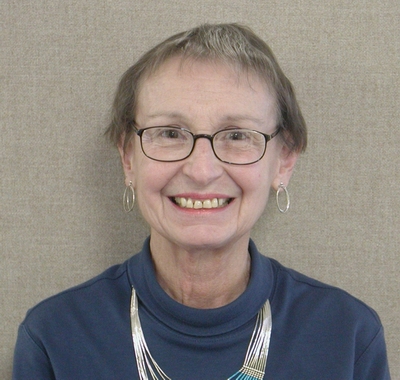
Justin Morath, assistant professor of psychology at Salt Lake Community College and the Associate Director at the SLCC Creative Writing Center, was Humanists of Utah guest speaker at our May general meeting. His training was in animal behavior and human/animal cognition. He was also a co-organizer of the SLC March for Science. He is a social activist in other circles; LGBT+ rights, homeless youth advocacy, animal welfare etc.

As a teacher of the scientific method he became more and more interested in scientific literacy. Especially in the community. And the current Director of the CWC ultimately offered him the AD position. Because they were interested in expanding out of English. And it fit in perfectly with his goals.

He said that if a school board tried to require me to present my art as equally valid as the well refined works of Klimt in a classroom, we would all rightfully cry foul. But the point is, that budding process of the aspiring artist is important to nurture, as is the aspiring scientist.

The originating force behind the CWC is the work of Paulo Freire. Whose main contribution was the book Pedagogy of the Oppressed. Freire was an educator in rural Brazil in the 1960s. Looking through the lens of a Post-Marxist liberation theology, he saw that the education system mirrored the other oppressive systems in place to maintain class hierarchy. And that education was part of the problem, what he termed the “Banking Education” model. Where the teacher holds (or owns) the objective information and the pupil passively accepts this from the teacher as she dumps it into their head. Teacher owns the truth and “gives” it to the pupil to graciously accept. “This is art.” “This is fact” Or to quote the rapper Nelly “I know something you don’t know. And I’ve got something to tell ya…”

He argued that the act of learning does not need to be this way and that education can be a liberating force and does need to come from these gatekeepers of knowledge. Therefore, the CWC’s motto is “Everyone Can Write.”

What does this have to do with science? Because they fall from the same process. A process of discovery and of asking the questions and finding answers.

Science is not a noun; a person place or thing. But a verb. Here’s the thing: once we make it a thing, a noun then it becomes something we can possess. We can own nouns, not verbs. Even in the abstract. A process or an action is a participatory event that all can do- it’s radical and revolutionary. But a noun, can be held by a gatekeeper.

Which is why we have such ridiculous arguments going on in the scientific community about whether Bill Nye is a “scientist” or not. Bill Nye MadLibs. Insert noun here. Arguing whether Bill Nye is a scientist based on his degrees and career is arguing about nouns for the purpose of being a gatekeeper to knowledge. I’m not saying definitions don’t matter, but in this case, it’s a clear example if it being used for the purpose of withholding knowledge in order to “bank” it to the privileged few. “I hold the knowledge that I may grant to you about what is deserving of the scientist nomenclature.”

Whether you are a kid playing in the backyard admiring your sample in a jar, a disheveled post doc, a R01 holding pharmacology P.I. you are doing science. Again, to varying degrees. But that’s fine. We likely all agree.

Here is where the piranhas might come out to get us. Even someone with a blatantly false understanding about something, like an anti-vaxxer is engaging in the same process. They are asking questions and making connections about their world.

We are an inquisitive species. We want to learn and figure out our world just for the sake of it. He went to a Sherlock Holmes immersive exhibit at the Denver Museum of Nature and Science over the holiday break with my family. As a scientist, most interested in our social world, instead of participating in the activity where each person would mill between stations and try to figure out Whodunnit, I sat back and watched the participants. Everyday people were paying very good money to learn and figure out something. They know it is fiction, but they wanted to figure it out and know the ultimate answer.

Of course, the ultimate answers that are found may be completely wrong. So, what do we do in a situation like this…where villains are apparently injecting our vegies with food coloring? Seriously this is like a whole trope—vegies getting injected with scary needles. A google image search for GMOs and half of what pops up is this. There’s clearly an anti-vaxxers undercurrent going on here. But by pitting “science” (as a noun) from the “anti-GMO” or whatever, we are imposing this well entrenched banking model of education onto the debate. We are now claiming to be gatekeepers that simply need to bestow upon the ill-informed the necessary information to fix the problem. This deficiency re: banking model has been shown for the last 40 plus years in psychological research to not work that well. So not only are there implicit issues of class and power in this model (as per Freire) but it’s also not very effective. And in many cases, will actually backfire on you.

This isn’t a controversial statement, but here is a claim that is: Someone who believes in a crackpot conspiracy or bad pseudoscientific claim is also doing just this. They share the same desire to know as the most rigorous scientist. And that’s ok, so long as it is the starting point—not the end point to the question they ask. Because face it; thoughts are cheap and most things we first believe are wrong regardless of your title, status, or expertise.

Most of the time scientists are wrong too. We fail to reject the null hypothesis for a myriad of reasons, and it’s all set up this way on purpose. The difference between science and junk it that the process is set up to tease out the bad and refine the brush strokes to get closer to an objective truth, like a well-trained artist. And ultimately let go of the bad answers.

Because we all do use critical thinking, when it is to our advantage in protecting our preconceived beliefs. We can all do it. It’s not something that can be “banked” onto us. Yes, like art it takes practice and guidance to get better at it. But ….

There are a myriad of ways that we as humans protect ourselves from the fact we have bad answers. Such as to quote Upton Sinclair here or Jim Carrey in Dumb and Dumber when…Science ideally is a systematic set of check and balances to tease these out. But it is still an ultimately human endeavor.

  • Understanding how we prevent change matters:
  • Content is second to process.
  • If you want the facts to matter, don’t worry about them so much.
  • Accept that we are all wrong most of the time.
  • No one should be a gatekeeper.

Banking, or the deficiency model, is problematic and doesn’t really work anyway.

Know that we all have the same reasoning/critical thinking capabilities and we all use them.

—Justice Morath
Salt Lake Community College


What Science Tells Us About Religion

Sharon Nichols wrote a conclusion from her article titled, “What Science Tells Us About Religion.”

I live in the South. Here, the first question people ask you upon meeting you is, “What church do you go to?” I have decided that my blow-away answer is, “Oh, we don’t go to church much,” which lets the asker of the hook without committing me to something I don’t believe in (weddings and funerals are still in churches, after all!” I try not to close the door on the discussion unless someone is being rude. Don’t be afraid to engage the religious in discussion. Don’t debate though, because that only tends to harden already held beliefs on both sides. Prepare a few points ahead of time that you can state in nonjudgmental terms, such as: “I am a naturalist” (and/or humanist, atheist, agnostic, etc.) reflecting your true stance. “I follow science rather than believe in religion” or “I find much greater mystery in science than in religion. “Be true to yourself—without going so far as to place yourself in danger.

How do thinking people who rely on reason counter anti-intellectualism and anti-science, and anti-modernity trends? It is incredibly frustrating to attempt to deal with anti-intellectualism and anti-science; they are so contrary to common sense and reason. A strategy that is less fraught with frustration is that of “planting seeds.” Exploit an opening and use communication skills to plants seeds of reason and doubt. Seeds can crack boulders; surely, they can root out unreason. Have you ever seen a blade of grass growing in concrete? It is the same with doubt. Think of religion as a differential terrain: some of it will “wash away” in the same way that weaker rock layers rode before stronger rock layers will. This can eventually lead to canyons of doubt. Every drop of doubt that is added erodes religion further, until religious belief is no longer tenable.

The more books and articles revealing religions weaknesses, pious lies, and evils, the more likely someone teetering on the edge of doubt will eschew religion, and step into the light of reason. It may happen gradually, much more too slowly for some of us, but it will happen. It is already happening. The spate of religion protection laws in the United States are part of the backlash caused by the religious realizing they are losing ground. Let us hope that we may see the end of religious privilege in American in our lifetimes.

I believe we must be in the real world, and not that of make-believe, wishful thinking and unreason. The alternative is to turn the corner on knowledge itself and I for one do not intend to sit idly by while the human cultural world slides into the abyss of willful ignorance and chaos.

—Craig Wilkinson, MD
Board Member, Humanists of Utah


A Better Life – Film Screening and Discussion

On Friday, June 30, The Humanists of Utah are pleased to invite filmmaker and photographer Chris Johnson, creator of the film, A Better Life: An Exploration of Joy and Meaning in a World Without God, based on the interviews found in his book, A Better Life: 100 Atheists Speak Out on Joy and Meaning in a World Without God. There is no God. Now what? If this is the only life we have, how does that affect how we lives our lives, how we treat each other, and cope with death?

As a follow-up to one of Kickstarter’s most successful publishing projects, photographer and filmmaker Chris Johnson introduces us to some of the many voices from his book. In this fascinating documentary—learn the stories behind the book in interviews with some of our greatest thinkers.

Join Chris as he explores issues of joy and meaning and travels around the globe meeting people from all walks of life and backgrounds who challenge the false stereotypes of atheists as immoral and evil.

From Daniel Dennett and A.C. Grayling, to Julia Sweeney and Robert Llewellyn —learn the various ways many atheists have left religion to a better life filled with love, compassion, hope, and wonder!

Learn about Chris’ project and purchase your copy here:

https://www.theatheistbook.com/

Friday June 30 6:00 PM to 10:00 PM
Salt Lake City Public Library
210 E 400 S, Salt Lake City

— Elaine Stehel


Robert Lane’s President’s Report will resume next month


May 2017

HUMANIST ESSAY

Censorship and Obscenity in the Arts
Is the Cutting Edge Too Sharp?

By M. Ray Kingston FAIAMember
National Council on the Arts
1985 -1991

“Any music banned by the Church is bound to be a lot of fun”

 Occasionally, a piece of music comes along that is so outrageous it is banned from the airwaves. Back before radio, a young composer by the name of Bach, played music so unconventional it earned him severe reprimands from the Protestant Church. Today we call it Classical Music. Experience it for yourself, live at Symphony Hall.”

This tame and slightly humorous quotation from the inside cover of a program of the Utah Symphony, written to entice a new, younger audience to symphonic music, is quietly symbolic of a debate currently raging in America about what constitutes art, what constitutes “acceptable” art, whether our uniquely American form of government should concern itself with art and if so, what kind of art is to be deemed appropriate for government funding. This debate had reached a shrieking crescendo, its noisy volume battering the walls of Congress and the American sensibility with the dark and dangerous politics of intolerance and fear, and with counter-charges of censorship. The combatants in the debate had drawn their battle-lines at the doors of the National Endowment for the Arts, the federal agency whose mission is to support, foster and provide wide access to the arts in America.

The following is in the code of the Declaration of Purpose written into the National Foundation on the Arts and Humanities Act of 1965.

“The Congress hereby finds and declares:

  • that the encouragement and support of national progress and scholarship in the humanities and the arts, while primarily a matter for private and local initiative, is also an appropriate matter of concern to the Federal Government;
  • that a high civilization must not limit its efforts to science and technology alone but must give full value and support to the other great branches of scholarly and cultural activity in order to achieve a better understanding of the past, a better analysis of the present, and a better view of the future;
  • that democracy demands wisdom and vision in its citizens and that it must therefore foster and support a form of education, and access to the arts and the humanities, designed to make people of all backgrounds and wherever located, masters of their technology and not its unthinking servant;
  • that is necessary and appropriate for the Federal Government to complement, assist and add to programs for the advancement of the humanities and the arts by local, State, regional, and private agencies and their organizations;
  • that the practice of art and the study of the humanities requires constant dedication and devotion and that, while no government can call a great artist or scholar into existence, it is necessary and appropriate for the Federal Government to help create and sustain not only a climate encouraging freedom of thought, imagination, and inquiry but also the material conditions facilitating the release of this creative talent;
  • that museums are vital to the preservation of our cultural heritage and should be supported in their role as curator of our national consciousness;
  • that the world leadership which has come to the United States cannot rest solely upon superior power, wealth, and technology, but must be solidly founded upon worldwide respect and admiration for the Nation’s high qualities as a leader in the realm of ideas and of the spirit;
  • that Americans should receive in school, background and preparation in the arts and humanities, to enable them to recognize and appreciate the aesthetic dimensions of our lives, the diversity of excellence that comprises our cultural heritage, and artistic and scholarly expression; and
  • that, in order to implement these findings, it is desirable to establish a National Foundation on the Arts and the Humanities.

The Act further states that:

“In the administration of this act, no department, agency officer, or employee of the United States government shall exercise any direction, supervision or control over the policy determination, personnel or curriculum, the administration or operation of any school or other non-federal agency, institution, organization or association. In implementing its mission, the Endowment must exercise care to preserve and improve the environment in which the arts have flourished. It must not, under any circumstances, impose a single aesthetic standard or attempt to direct artistic content.”

Programs in the Endowment include support to the fields of: Dance, Design Arts, Expansion Arts, Folk Arts, Literature, Media Arts, Museums, Music, Opera-Musical Theater, Theater, Visual Arts, Arts in Education, State and local partnerships.

To accomplish its work, the Endowment utilizes a peer panel review system in which ‘peers’ in each field meet and determine which applications or proposals they deem to have substantial artistic and cultural significance, and which recommends their approval and a funding level to the National Council on the Arts, a group of 26 presidentially-appointed artists, patrons, and citizens. This Council reviews the panel recommendations and after discussion and debate, makes their own recommendations to the Chairman of the Endowment, who makes the final determination.

The budget of the Endowment in l990-91 was $174 million, or approximately 65 cents per American citizen.

When the Endowment was established in 1965, there were very few state arts agencies. Through the catalyst of direct state block grants, there is now an arts agency or council in every state and territory in America. This encouragement of state and local arts agencies has been instrumental in the encouragement of state governmental support of the arts totaling over $220 million dollars in 1989, a figure which, at the time, exceeded the federal arts budget by 50 million dollars.

Taken as a whole, the leveraging effect of NEA support was 10 to 1 in economic impact.

What was the cultural result of the Endowment’s efforts in numerical terms?

  • Theaters:     In l965, there were 56 nonprofit theaters in the U.S. In l988, there were over 400.
  • Dance:        In l965, there were 57 companies, generally located in New York City. In 1988, there were 250 nationwide.
  • Museums:   More than 1/3 of the national sample of art museums in l988, had been founded since l960.
  • Orchestras: In 1965, there were 60 professional orchestras. By 1988, 163 orchestras received funding out of the 212 orchestras which applied.
  • Opera:         From l965, to 1988, professional opera companies had doubled from 45 to over 100.
  • Choruses:   In l965, there was only one professional chorus. By l988, there were 57.
  • Artists-in-Schools: The NEA, through its programming and advocacy, was the re-birth of interest in establishing arts education as basic requirements in our public schools.
  • Local Arts Councils: By l988, there were 3000, created as a direct result of the Endowment’s catalytic financial support.

During its history of the first 25 years, (to FY ‘89-‘90), the Endowment had awarded over 83,000 grants, approximately 3000 per year.

Of this total, 20 grants had raised some form of controversy. However, with the public exhibitions of the work of Andre Serranno, in 1987, and Robert Maplethorpe, in 1989, what had been a minor issue, exploded into major cultural warfare. The issues of government censorship of the arts and what comprises obscenity in the arts became front-page fodder.

Andres Serrano, Artist/Photographer, created “Piss Christ” in l987, which was shown in a competition called “Awards in the Visual Arts”, sponsored and managed by the Southeastern Center for Contemporary Art, in Winston Salem, North Carolina. The competition was funded by Equitable Life Assurance, the Rockefeller Foundation, (a nonprofit philanthropy), and through a general grant from the NEA.

Robert Maplethorpe, Photographer’s work was shown at the “Institute of the Contemporary Art”, on the campus of the University of Pennsylvania. The “Institute” was funded through a general grant from the NEA.

North Carolina Senator Jesse Helms, California Representative Dana Rohrabacher and the “Reverend” Donald Wildmon, founder of the conservative “American Family Association”, in Tupelo, Mississippi, began firing fusillades of invective against the NEA. It is no secret to anyone familiar with this history, that the real agenda of these politicians and their allies was to gain more political and economic power through the destruction and abolition of the National Endowments for the Arts and Humanities, the perceived ‘soft underbellies’ of Federal Government.

During my seven years of service, beginning in l985, on the National Council, I was witness to efforts of a few congressmen, led by Texas Representative Richard Army to find any scrap of material which they could use as the focus of a campaign against the Endowment. They demanded that their respective staffs be allowed to rummage for months on end through the Grant’s files of the Endowment. To their own enormous disappointment, they were unable to locate the piece of “rotting meat” around which to frame their earlier attack – until Serrano and Maplethorpe. One had to question the ETHICS of these pork-barrel politicians, who, while vilifying the National Endowment for the Arts, had, for years, forced down the throats of American taxpayer’s the subsidization of the growing of tobacco, long after it was proved to be one of the great killers of men, women and children throughout the world.

Rev. Wildmon’s behavior also begged credulity. Here was a man who, in the name of Christ and the American family, claims a moral position against obscenity, and at the same time supported full-page advertisements (in U.S.A. Today, and other major publications), filled with inaccuracies, distortions, “Fake News”, and falsehoods depicting a total ignorance of the history and value of the Endowment, and which made statements expressing a maniacal, raging intolerance. He also asked for a $15.00 per person contribution to the “American Family Association” war-chest.

Again, one has to wonder if this is not simply a way for some people to gain notoriety and fortune at the rest of America’s expense. Perhaps this was the evangelist’s and the Christian Broadcasts Network’s way of regaining an income-source to replace possible losses to their cause as a result of the “Great Fall” of Jimmy and Tammy Faye Baker.

These behaviors are the real obscenities, their perpetrators using cold-blooded and calculated deception to advance a personal political and monetary agenda, while at the same time proposing selected censorship and an attendant abrogation of the principles of our Bill of Rights.

These “intellectual terrorists” advocated holding the artists of America hostage as sacrificial offerings to the “pork-barrel gods” of political ineptitude, and to the double standard of political leadership, which has created a climate in America of raging, self-serving intolerance and greed.

Art, as distinguished from the popular culture of entertainment, is nearly always a reflection of the human condition. Artists peer deeply into our world and make observations of what they see. Some artists do their work well, others may miss. But, generally, their work is a series of mirror images of our culture, our value systems, our political, economic, social and environmental agendas. If we don’t like what we see in these reflections, we should take steps to alter the source of their images, our own course and culture as a nation.

These “terrorists of the mind” are telling Americans that art, created in part through support of the National Endowment for the Arts, does not enjoy the protection from censorship provided under the Constitution and Bill of Rights, simply because this support involves “tax-payer’s dollars”. Does this mean that all governmental agencies are free to act outside the limits of these documents? Is this contradiction of law and values what we, as Americans are willing to accept? NO must be our answer to this question.

What can we do? First, we can inform ourselves and others about this debate. We can demand that our elected representatives clear away the intolerant rubbish of this debate and look to long-term values in their votes. Second, we must infuse back into our institutions of higher learning and into our public schools the proper balance of learning in the arts and humanities, a proper balance to the current love affair with scientific research. If the nuclear age has taught us anything, if Hiroshima, the Holocaust and the Joseph Stalins of the world have opened our eyes a little, if Chernobyl has shown us the “black hole’ of the policy of unlimited growth and unbridled energy consumption, if the Savings and Loan’s feeding-frenzy-of-greed has shown how we have robbed our treasury of the potential for education and the expression of human compassion, then, these catastrophic world-altering and crippling atrocities must point out the necessity for a change of course in our educational priorities. Paying cruelly, misleading lip-service to the value of the arts and humanities in our colleges, universities and public schools is no longer sufficient.

What is needed is a re-direction of financial and administrative support for these disciplines, for the re-introduction of required courses in history, philosophy, ethics (particularly ethics), and aesthetics for every student who expects to leave a university or college with a bachelor’s degree, or for students graduating from our secondary schools. It is these disciplines which stimulate creativity, teach basic principles of compassion, of civilized, tolerant human behavior and instill a basic habit in all of us of simple ethics in politics, business, in our professions and all levels of human interaction. Unless we do this, and soon, I fear that the ultimate ‘mirror-image’ depicted of our society by the “ultimate Artist” will reflect the crucifixion of our world on the world’s stage, with the blood of life running off its apron onto all of us who remain as silent spectators of these events.

This would be the ultimate obscenity, and no amount of censorship of this play will alter the finality of the final curtain.


President’s Report

This month I have three items to touch on, one humorous, at least to me, another serious and one about me.

I have mentioned before that for the last twenty-five to thirty years I have not had cable TV What little came over the air was enough for Amy and me. Now that I’m spending much of my time at my mother’s home, I have been watching a lot more TV and the commercials are something else. I think one of the most hilarious is the marketing of razors. I mean really, how many times and ways are there to improve the razor. Have they made one with five blades yet? Soon they’ll be laser guided. I know it’s stupid thing to write about, but I can’t help it.

Speaking of stupid things, I want to get to the serious thing I want to address, that being our new administration. I realize the as a 501c3 organization we must avoid using our resources for political reasons. But I don’t think I’m barred from giving my opinion. I can say what I have on my mind in a few sentences. We have a president who seems to only function in an adversarial mode. That along with the politics of fear and hatred appears to have brought us to a point where the whole world is angry and on edge. All this fear and hatred is not new or all his fault, but this president has added a lot of fuel to the flames. Is this a good way to govern? Where every issue is a battle to always give HIM a chance for a “victory.”

Moving on. Board member Sally Jo asked me help her put together a bio of myself for last month’s newsletter. That didn’t happen so this month I thought I would answer one of the questions she asked me to review. First on the list is where I have lived and my favorite place.

I have lived here in Salt Lake City all my life except for about a year when we moved to California just a mile and a half from Disneyland. I was eight years old then and met a kid who knew how to sneak into Disneyland. But that’s a whole story of its own. However, I did spend four years in the United States Air Force, where I was stationed in Texas, Colorado, Utah, Thailand, New Jersey, California and Oklahoma.

The second part of the question, “my favorite place,” has more than one answer, or at least two. When it comes to cities, there is no doubt it is San Francisco and the bay area. My other favorite place is far different from the highly compact and highly populated streets of San Francisco, and that is the Red Castle area of the High Uintah’s Wilderness Area here in Utah. It is a beautiful area where you will be camping about eight miles from the nearest dirt road at around 10,000 ft. and still be looking up at the top 2 to 3 thousand feet of mountain tops. I could go on and on about the beauty of this area, but there isn’t room.

But there is room for one little anecdote about being an experienced backpacker who meets up with friends who are not so experienced.

Soon after I began backpacking I determined that I was going to always go it alone as far as equipment and meals. Sharing was too problematic and I sometimes went in a day ahead of friends. So, I always packed rather heavy (seventy pounds) with extras like “real food” and a tape player for music and to record notes for my geomorphology studies. The real food I would bring along was a medium size potato, a small onion, a small can of mushrooms, some butter, salt and pepper. Plus, enough Aluminum foil for cooking in the fire. Plus, I also had a flask of B&B.

After setting up camp, I would go fishing first thing and usually catch a nice sized fish for supper. You can imagine the envious looks I got as I stuffed onions and mushrooms in the fish, surrounded it with the cut-up potato added salt pepper and the butter and wrapped it in a few layers of foil. Then after rolling it around in the coals of the fire for about a half hour you open up a real treat, especially welcome after hiking in eight to ten miles. I would share a taste but only a taste to those who came with light packs and nothing but freeze dried meals and granola as they tried to cook freeze dried chili (at 10,000 ft) long enough that the beans weren’t crunchy.

See you at our next meeting.

—Robert Lane
President, HoU


April 2017

March Book Club Discussion

Our March 9th meeting was the second meeting of our book club. For our January meeting each attendee brought a list of books for discussion, and our president, Bob Lane, made an executive decision that we would choose one chapter from Peter Singer’s Ethics in the Real World. We chose the essay The Tragic Cost of Being Unscientific, a three-page description of the terrible consequences of South African president Thabo Mbeki’s rejection of the consensus that HIV causes AIDS. As many as 365,000 people died needlessly during Mbeki’s 9-year presidency, when available anti-retroviral drugs could have treated their disease. When arrogance and ignorance are used as the basis for public governmental policy, the consequences can be devastating. Singer argues that runaway climate change threatens millions, and its denial by today’s policy makers carries far greater risk than Mbeki’s willful ignorance a decade ago.

After the essay was read aloud, the floor was opened for comments. The discussion was wide ranging and lively, lasting over an hour. There isn’t space to describe all of the topics covered, but I can cover some of the more topical and salient points.

Similarities were immediately drawn between Mbeki’s repressive policies and today’s U.S. Administration with its “alternative facts”, bombastic suppression of informed debate, removal of climate change links from government web sites, and its appointment of anti-science ideologues and party hacks to head governmental agencies.

We discussed confirmation bias, the human tendency to search out and favor information that confirms one’s preexisting belief’s and traditions, keeping the believer in the tribe. Hume’s quip “reason is the slave of the passions” was recalled with the observation that people are uncomfortable with uncertainty and take comfort in the unwarranted assurances and promises of religion.

But we also noted that the human ability to ask “why” and question the status quo, coupled with the invention of the scientific method, using experiment and statistics to verify hypotheses, allows us to overcome our genetic dispositions. Education and training in critical thinking can slow the inertia of ignorance and dogma, and we are making progress in spite of our hereditary baggage.

We asked whether scientific training in itself is enough to overcome our human predispositions. Max Planck’s observation that progress is made as the scientific old guard dies off, “one funeral at a time”, was brought forward. Scientists are human too, subject to the same foibles, biases, and hubris as anyone else. But the scientific method demands empirical confirmation, and the influence of our innate arrogance and prejudice is tempered over time.

We were very fortunate to have some younger newcomers attend the meeting, and they were able to comment on the quality and relevance of the current American school system. One of them noted that it was designed to create qualified workers for industry. She would like to see us adopt some of the practices in Europe, where the curriculum is adapted to the individual students. Perhaps tailored and specialized earlier secondary programs for more varied career goals in areas like art, automotive technology, maybe information sciences would be more productive. But these days arts and humanities are being cut due to budgetary pressures. Are we only producing automatons for the benefit of billionaires?

After the discussion, we celebrated Pi (π, approximately 3.14) day, March 14, with apple, cherry, and chocolate cream pies and ice cream. A nice evening indeed.

—Steve Hanka

Want to join the book club?

Send email to wayne@humanistsofutah.org

Make the subject: Book Club

In the body of your message include your name and email address.

This will add you a group email list so that you can receive information and communicate with other club members.


Dogs of War

O, pardon me, thou bleeding piece of earth,
That I am meek and gentle with these butchers!
Thou art the ruins of the noblest man
That ever lived in the tide of times.
Woe to the hand that shed this costly blood!
Over thy wounds now do I prophesy,–
Which, like dumb mouths, do ope their ruby lips,
To beg the voice and utterance of my tongue–
A curse shall light upon the limbs of men;
Domestic fury and fierce civil strife
Shall cumber all the parts of Italy;
Blood and destruction shall be so in use
And dreadful objects so familiar
That mothers shall but smile when they behold
Their infants quarter’d with the hands of war;
All pity choked with custom of fell deeds:
And Caesar’s spirit, ranging for revenge,
With Ate by his side come hot from hell,
Shall in these confines with a monarch’s voice
Cry ‘Havoc,’ and let slip the dogs of war;
That this foul deed shall smell above the earth
With carrion men, groaning for burial.

Julius Caesar
Act 3 scene 1
William Shakespeare

I am quite certain that it was at one of our HoU meetings that I heard a speaker say that it takes a full 100 years to “close the books” on a war. All of the participants are dead, payoffs to widows, children, etc. have been made; it is finally over. The news this week includes remembering that the United States entered World War I, or as it was known at the time, the War to End all Wars, 100 years ago. Imagine that, a war that nobody alive remembers is finally becoming part of dusty history. My mother recently found a picture of her father that had a swastika below the portrait. It is a disturbing image to us today. However, the swastika symbol is ancient dating back at least 11,000 years. It is one of the earliest forms that symbolize movement as it was used to depict flying geese. According to Wikipedia the Sanskrit symbol is a mark made on persons and things to denote auspiciousness, or any piece of luck or well-being. So, in 1912 or so when the picture was taken the meaning was complimentary.

World War II changed the perception of the swastika. The Day of Infamy occurred on December 7, 1941 which means we have another 24 years before the book on WW II will be closed. Many of us will not live to see that day. The men and women who fought in the war are often referred to as the Greatest Generation.

The Korean War began in 1950, the year that I was born. This conflict stands out because it garnered very little media coverage. Much of what we know, or perhaps perceive, of the Korean War comes from the movie and spectacularly popular TV series M.A.S.H.

Vietnam is the war of my generation. Unlike veterans of the two World Wars, Vietnam and Korean war vets were not welcomed home with pomp and circumstance. In fact, Vietnam vets were often reviled and publicly castigated. Thankfully, strides to undo these injustices have been and are continuing to be taken.

George W. Bush ran on a foreign policy plank conceived by the neoconservative wing of the Republican party. It was their idea that a well-armed and trained mobile force could be deployed into troubled regions, topple dictators, and then be welcomed in flower strewn parades by the liberated citizens; a la our WW II soldiers who liberated France. I am not suggesting that they sought the attack on the World Trade Towers, but they certainly took advantage of the opportunity to test their theory by invading Iraq; and that quagmire is nowhere near resolution. PS: a visit to southern France a few years ago, shows that local population still reveres or even loves Americans. They still have streets and annual events to honor the valiant men and women who fought and repelled the Nazis.

Yesterday President Trump launched a missile attack on Syria. It appears that our grandchildren, and even great grandchildren have a zero chance of living in a world where all the war books on have been closed.

Wayne Wilson


President’s Message

Happy Spring everyone, the pleasant temperatures are getting me outside a lot lately. Boy is there a lot to do, but I do love planting time. However, things are different for me this year.

I don’t have much of an appetite for talking politics or issues right now, so I thought I would just ramble a little about what is different for me this year. Suffice it to say I am a full-time care giver for my mother. That has made it necessary for me to move back to the home I grew up in. In as much as I will eventually own the home I have been slowly but steadily moving in, and it is all exhausting.

Going through her things getting rid of this and saving that, then doing the same with my stuff is taxing. But as taxing as it can be, we did have a laugh together the other day. When I got up the other morning, I noticed the carnage she inflicted on the supply of drinks in the refrigerator. My mom still gets around on her feet pretty well and gets up a number of times at night for a drink and sometimes a snack. Anyway, I lined up the drinks she opened the night before and we had a good laugh as we noticed that she had opened three Glucerna, Two Izze juice drinks, Two Pepsi’s and a V-8 for a total of eight. Sometimes there are moments.

I’ve been living, amazingly, for over thirty years at a four-plex. That means, at least for me, without looking like a hoarder there is a lot of stuff that has been “stuffed into closets, containers and anywhere it is out of the way. As you start to box stuff up, it grows and grows because it is not stuffed into closets anymore! So, you begin to realize what a task it will be to move. I have mostly started with books from inside and tools outside. When I stop to think about it, I’m sure we have over three thousand books including paperbacks and all. Some of the old text books from eons ago must go, along with old almanacs and outdated medical books. It also gives me a laugh to find that I have multiple copies of some of my favorites like three of Carl Sagan’s Demon-Haunted World, and several works by and about Charles Darwin. To me, books are friends and my books about science, humanism, by authors like Asimov, Dawkins, Harris, etc. are all going with me.

The one thing I will miss at the old apartment is the large backyard I used and had a garden some 80 by 30 feet. Now I need to scramble to find and prep some areas for tomatoes, peppers, squash and a new planting of herbs.

One last thing before I go. In all the thirty some odd years we’ve lived at this apartment, we have never had cable TV. As I have been watching it more I have been paying more attention to the commercials. They certainly run the spectrum in a way from excellent and funny to really stupid and even offensive. We get talking mucus and fingernail fungus. We get woman’s bladders dragging them off to bathrooms and cannibalistic breakfast cereal. I just hope nobody comes up with a character for Preparation H. More commentary on commercials next Month. Thanks for letting me ramble.

See you at the general meeting, I’ll bring the cookies.

—Robert Lane
President, HoU


March 2017

10th Annual Darwin Day Celebration

This year’s event featured a panel of four scientists, Kristen Hawkes, Distinguished Professor of Anthropology, Alan Rogers, Professor of Anthropology and Adjunct Professor of Biology, Court Strong, Associate Professor of Atmospheric Sciences, and Paul Ricketts, Research Assistant Department of Physics and Astronomy. We had a lively discussion with HoU Vice President Elaine Stehel submitting questions about the importance of science, the veracity of climate change, the future of science funding, etc. All of the panelists had different insights into the state of science in general and climate science in particular. There was unanimous concern about the future of current programs but a generally optimistic feeling that with events like our Darwin Day that we should not give up. After the pre-planned questions, Elaine opened the discussion to comments and questions from the audience. The clock ran out before the questions and enthusiasm did but there was a cake to be cut and consumed and priorities are priorities after all!

—Wayne Wilson

During the Reception Hour, I took the opportunity to mingle with many visitors attending this Darwin Day. In the conversations, many were asked “How did you hear about our Darwin Day Anniversary Event”, and most of the responses were FACEBOOK.
Then, also I spent some time observing the ‘tablers’ who were invited to participate. They were all very pleased with the size of the crowd and the interest and curiosity shown to their displays.

Clark Planetarium – Thomas Quayle, Education Program Specialist and NASA/ JPL Solar System Ambassador, and his assistant, Mark, set up two 32” monitors with hands-on ability to manipulate the different earth models. One model is used for the public by NASA and the other one by the National Oceanic and Atmospheric Administration. They were both impressed by the knowledge and pertinent inquiries posed by the individuals who spent time at these displays. They would like to be included in any of our future events. Thomas would like to invite us all to visit the Planetarium sometime soon and, also, the Salt Lake County Climate Health Symposium on April 5 and 6. This is an all-day event held at the Conservation Garden Park in South Jordan where they will have a similar display.

HEAL Utah – Laura Schmidt, Outreach Coordinator, was kept very busy informing her visitors about what this grassroots advocacy group is about. They engage in legislative and regulatory settings to champion clean air, clean energy, and to protect Utah from nuclear, toxic, and dirty energy threats. She felt they all seemed to understand the need for further research into the changing climate issue.

Natural History Museum of Utah – Matt Whittaker, MPA, BA, Community Outreach Coordinator, relayed to me several times how glad we invited them to attend and to please include them in other programs. Alexandra Coconis sent a memo to me in reply to my Thank You Letter,“I had a great time preparing for this event and speaking with people about her mammologists research at the NHMU. The size of the crowd and the timing was perfect for having substantive conversations. I can’t express how much Matt and I were pleased of with the well-organized event. So, thank you, and, yes please keep us in mind in the future” Ally Tracy Aviary – Jamie Murphy, Marketing and Events Coordinator, sent a delightful pair, Amanda Anderson and Cooper Farr, to share their knowledge and enthusiasm on the variety of birds in their care. Along with the colorful brochures there were flyers about “Skiing and Birds”, an event to be held on Saturday, March 11, beginning at 5:00 p.m., in partnership with Alta Ski Resort and a Citizen Science Program that collects baseline data on Alta’s birds, to inform conservation and stewardship. (See their website for many details). They were so pleased with the response from those who visited their table, they would like to be invited back again.

Citizens Climate Lobby – David Folland, MD, Utah State Coordinator, could not attend as was planned, so sent two volunteers, Jihyun Noh and Margie McCloy, giving them the opportunity to share information about CCL. They did have a very busy time keeping up with all the questions about this advocacy group. I have attended several ‘climate change’ events where David has presented their mission on “Carbon Fee and Dividend” a complicated but needed issue to address. Of course, a more in depth presentation could be in the works.

Thank you, Elaine, Bob, John, Eliot and other committee members for allowing me to be a part of this incredibly successful “10th Darwin Day Anniversary” event. Hopefully, I will be able to be a part of the 2018 celebration.

—Sally Jo Fuller


Some Pictures From the Event

Darwin Day 2107 Cake

Elaine Stehel, Darwin Day Committee Chair

Robert Lane, HoU President

HoU Board Members Left to right: Wayne Wilson, Steve Hanka, Elaine Stehel, Robert Lane, Sally Jo Fuller, Art King, and Leona Blackbird

Atheists of Utah

Citizens Climate Lobby

Humanists of Utah

Natural History Museum

HEAL Utah

Panel of Scientists Left to Right: Cort Strong, Alan Rogers, Paul Ricketts, Kristen Hawkes, and moderator Elaine Stehel

The Audience

Elaine with a Knife!


Practicing What We Preach

~Letter to the Editor~

For ten years Humanists of Utah have sponsored an annual event to honor Charles Darwin and promote science. This year’s celebration was held at the University of Utah’s Officer’s Club at Fort Douglas, a better venue than ever before if only for ease of parking.

Billed as an event of, “Joyful Living, Rational Thinking and Responsible Behavior,” a member of our board used this occasion to express his personal views on science and religion; this after one or more of our guest panelists had expressed their opinion that reasoned inclusive and thoughtful discussion is a more productive form of engagement.

I think that any such comments should have been prefaced with a disclaimer that the views expressed were his own and that he was not speaking on behalf of Humanists of Utah. It would have been easy for an unknowing participant to construe his opinions to be those of The Humanists of Utah.

I am not happy to have been publicly included by inference in a personal rant that has the potential to undo two decades of our chapter’s patiently sown community good will.

Community events held under the auspices of the Humanists of Utah should always be inclusive and strive to never alienate any of our attendees.

—Bob Mayhew


HoU Happenings

March 21 at 5:00 PM
Dinner with Youth Resource Center
This event requires and RSVP and FIRM commitment!

Two shifts:

Meal Prep – 4:30 to 6:30 PM Food drop off/preparation/serve
Cleanup – 6:30 to 7:00 PM
Saturday, April 22—3:30 to 5:00 PM
Deep Cleaning Volunteers of America’s Youth Resource Center

The Youth Resource Center is a drop-in center where homeless and at-risk teens in Utah can come, every day, 365 days a year, for three hot meals a day, and emergency shelter at night, as well as for classes, events, and other resources to improve their lives, provided by licensed clinical social workers, counselors, case workers, lawyers, staff members, and volunteers. All of this is amazing, and life-changing work! We will be doing a deep cleaning, so come dressed to work!

Both events a VOA Youth Resource Center 888 So 400 W, SLC

More information is available at the HoU Facebook page

Contact Elaine Stehel for more info/RSVP elaine@humanistsofutah.org


President’s Report

This month’s general meeting will be sort of a combination book club meeting and a celebration of Pi Day. I’m looking forward to both and I’m hoping more members and guests will join this book club. I especially enjoy meetings where there is a discussion, about a book or something from the news. Books are also one of my favorite things, so discussing books puts two things I enjoy together. So I hope you will join us. Also, to help celebrate Pi Day, we decided to change the usual refreshments and are going to serve Pie.

Our tenth annual Darwin Day celebration was a great success and I again want to thank Elaine, Sally Jo, John and everyone who helped make it a success. The forum about climate change was a welcome change from a single speaker and I think we should use it more often, both for Darwin Day and at times, our regular meetings.

In my opening remarks at Darwin Day, I mentioned the fact that when we discuss and or argue about climate change we are being diverted from the discussion of the fact that the things that humans do that effects climate, is also detrimental in other ways to the environment and toxic to all living organisms. It may be an exercise in stating the obvious, but I want to write a little about why pollution exists rather than how it gets there and what it does.

We humans just don’t want to pay the full price for dealing with our waste products. While it is understandable that our species can never have zero impact on the environment, we could do a lot better. The problem is, that our capitalism and free enterprise systems lends themselves to greed. The number under the bottom line must come first, and one of the first places to cut cost is in disposing of waste products. So, we get toothless regulations or no regulations and as is often the case, health concerns are overridden by the quest for big profits. They really don’t care if they’re killing living creatures, including humans. One example is that the quest for profits keeps us dependent on a technology that is over a hundred years old, the internal combustion engine. All kinds of alternative technologies exist and have existed for quite some time that can reduce our energy consumption, but they are just not profitable enough on their own or they threaten to eliminate the enormous profits of the long-established energy producers and their cohorts in other industries.

Anyway, like I said, I may be stating the obvious, but it worth repeating. So I’ll leave it at that and close by again saying that I hope to see soon at our March meeting.

—Robert Lane
President, HoU


February 2017

Leona Blackbird

~Member Spotlight~

Leona Blackbird was born in New Orleans, grew up in Iowa, went to high school and college in the Carolinas, lived for 20 years, off and on, in Santa Barbara and moved to SLC in 1980. Santa Barbara was lovely, of course, and was her first experience with the West. The “off and on” part is because she was married to a field meteorologist at the time and we spent a few winters in Elko, NV and one in Kalispell, MT.

She has a BA in psychology from Duke–a fairly useless diploma in her opinion. However, it did lead directly to her career. As part of the major requirements, she had to take a course in statistics. When she applied for a job at a weather company in Santa Barbara they asked if she could do a correlation coefficient and she said yes. She was hired on the spot. She started out as a data clerk, learned to program in the 70’s and ended up as systems manager. She worked at that company from 1960 to 1998 and met her husband there. In 1998, after the company had been bought by a large soulless outfit back east, Leona and four others left and started our own company. She retired in 2011, having spent 51 years associated with meteorologists and numbers.

After the husband in question died, she met and married David Blackbird in 1990. It was he who introduced her to humanism. He had read a book by Corliss Lamont and gave it to her, saying that it sounded more like her than him. She read it and immediately joined the AHA. She had not had a religious upbringing, but if you’d asked me if she believed in God when she was 15 or 20 she would have said “Of course–doesn’t everyone?” She had sort of slowly come to realize that she was an atheist, but it wasn’t until she was introduced to humanism that she knew there were others who thought like she did. She didn’t do much with the HoU until they needed a treasurer. She thinks that was in 2002 and she’s been the treasurer ever since.

She is an avid reader. She belongs to two book groups, so she read lots of things that she wouldn’t have picked up otherwise. Right now, she’s reading The Gene–An Intimate History by Siddhartha Mukherjee, which is definitely not something she would have picked up on her own. She reads biographies, novels, mysteries, and anything else that strikes her fancy. She also plays a lot of bridge–not competitively; just for fun and sociability.

She belongs to AAUW (American Association of University Women) both for social reasons and because of their positions on equal rights and educational opportunities for women. She also belongs to Compassion and Choices (the old Hemlock Society) to support death with dignity and aid in dying.

Humanists of Utah is indeed lucky to have Leona as a member!

—Sally Jo Fuller


HoU Happenings

Hope for Humanity

On Sunday, February 12, 2017—the actual date of International Darwin Day, Minister Elaine Stehel, Vice President of the Humanists of Utah, invites you to a guided group meditation and discussion—in lieu of ‘prayer,’ she offers a ‘hope for humanity,’ that we will cultivate loving-kindness and peace, individually and together. Please join us to process through recent feelings of anger and despair, moving toward peace and joy in community. Event will be from 2:00 – 4:00 PM at the Salt Lake City Public Library (210 East 400 South), meeting room to be determined.

Breakfast at The Ronald McDonald House

Sunday Assembly Salt Lake City is a new local secular group building a presence with parties and volunteer activities in our community—we will be partnering with them, the Atheists of Utah, and Salt Lake Oasis more in the coming months. If you’d like to volunteer more with like-minded people in our community, here’s your chance! Join Sunday Assembly to serve breakfast for the Ronald McDonald House Charities of the Intermountain Area (935 East South Temple) on Sunday, February 19th at 7:30 AM Learn more on Facebook, by searching for “Sunday Assembly Salt Lake City.”

Atheists of Utah Great Minds Gala

The Humanists of Utah are a proud sponsor of the Atheists of Utah’s Great Minds Gala, taking place on Saturday, February 25th from 6:00 PM – midnight. In exchange for their generous donation to our December Banquet benefiting the VOA’s Youth Resource Center, and their generous sponsorship of the catering for our 10th Annual Darwin Day Celebration, we provided a gift basket for their Silent Auction, and we hope some of our Humanists of Utah group members will enjoy attending their gala event, and perhaps even bid on and win some great prizes! Event will be held at Church and State (370 South 300 East). Learn more and purchase tickets at http://www.atheistsofutah.org/winter-gala.

Breakfast at the Youth Resource Center

Continuing with our group’s new community partnership with the VOA’s Youth Resource Center, the Humanists of Utah invite you to help provide, prepare, and serve Breakfast for the homeless and at-risk youth in Salt Lake City, at 888 South 400 West on Tuesday, February 28th at 7:30 AM You can donate food before the event; bring food that morning at 7:30 AM; help prepare the food that others provide; help serve the food that morning at 8:00 AM; and/or help clean up and wash dishes at 9:00 AM If you’re interested in any of the above, please email elaine@humanistsofutah.org to coordinate what you’d like to help with!

—Elaine Stehel
Vice President, HoU
Certified Humanist Minister


President’s Report

Every February for the last nine years Humanists of Utah has hosted a “Darwin Day Celebration.” This February naturally marks our tenth annual Celebration and I’m quite proud of the fact that we have sustained this event that long. I also hope that we keep it going for a long time to come. Plus, in this “new era” we are facing now it will be even more important to advocate and even protect science.

In past years, I have been highly involved in the planning of our Darwin Day events. But this year, I had wanted to be even more active in the planning to make sure we had a special tenth year event. But I have been unable to help much this year as my mother’s care needs are increasing and consuming most of my time lately. But the people who are doing the planning and arranging everything have put my mind at ease. They have stepped up and done a great job and have a terrific event in the works. So, I personally want to thank Elaine Stehel, Sally Joe Fuller, and John Welle for their efforts and thanks to all who are helping to make this a great tenth annual Darwin Day with Humanists of Utah.

Before the last board of director’s election, I informed the board that this would be my last term as President. I do plan to remain a board member. But it is time for the change and giving the “keys” to someone else will allow me to concentrate my efforts for HoU in a more focused way. I hope to work more closely on our events like our BBQ, Thomas Paine Day/Founders Day and the rest, but especially our Darwin Day event.

For several years, I have been harboring the idea that Darwin Day needed a Foundation to make it an event that is self-sustaining. I know that’s a tall order, but the process exists and I intend on working toward that end. The ideals of Darwin Day as a celebration of science needs to be sustained and increased, especially in this “new era” I mentioned, where rationality will be in short supply.

I hope you’re planning to come to our Darwin Day celebration coming up shortly. I’m excited and have a few things to say about our subject of climate change and all that that entails. Plus, having a forum for the first time should make for an enjoyable change.

That all for now, see you on the 11th.

Robert Lane
President, HoU