February 2024

Darwin Day!


Doomsday Clock 2024

             “The Doomsday Clock was reset at 90 seconds to midnight, still the closest the Clock has ever been to midnight, reflecting the continued state of unprecedented danger the world faces. The Bulletin of the Atomic Scientists, stewards of the Doomsday Clock, emphasized in their announcement that the Clock could be turned back, but governments and people needed to take urgent action. 

“A variety of global threats cast menacing shadows over the 2024 Clock deliberations, including: the Russia-Ukraine war and deterioration of nuclear arms reduction agreements; the Climate Crisis and 2023’s official designation as the hottest year on record; the increased sophistication of genetic engineering technologies; and the dramatic advance of generative AI which could magnify disinformation and corrupt the global information environment making it harder to solve the larger existential challenges.

Rachel Bronson, PhD, president and CEO, the Bulletin, said: “Make no mistake: resetting the Clock at 90 seconds to midnight is not an indication that the world is stable. Quite the opposite. It’s urgent for governments and communities around the world to act. And the Bulletin remains hopeful—and inspired—in seeing the younger generations leading the charge.”

The Doomsday Clock’s time is set by the Bulletin of the Atomic Scientists’ Science and Security Board (SASB) in consultation with its Board of Sponsors, which includes nine Nobel Laureates. Previously in January 2023, the Doomsday Clock was set at 90 seconds to midnight, the closest to midnight the Clock had ever been. “ Read all about it here.  And read the history of the Doomsday Clock here.


Get Your Bans Off My Books!

Your Legislators need to hear from you!

The Utah House has approved legislation that would potentially make it quicker to pull books with sexual content from school library shelves.  HB29, which passed the House in a 51-16 vote on Tuesday, would also allow for removal of challenged books from schools statewide if officials in three school districts decide the material violates state law and should be removed from their schools. The measure now goes to the Senate for consideration.  Read about HB29 here.


Climate Change and a Shrinking Great Salt Lake

Meeting notes by Lauren Florence, MD

Climate Change and a Shrinking

           David Parrott, PhD, spoke to the Humanists of Utah at their January meeting. He is the Associate Director of the Great Salt Lake Institute and teaches at Westminster University.  His research focuses on the land around the Great Salt Lake and the life that it supports, mostly plants and the halophilic bacteria and fungi with which they share the soil. He is specifically interested in those interactions which might help in better understanding how plants tolerate drought or high salinity.

The Great Salt Lake is more than the land around it. Dr. Parrott said that the lake is Water, Salt, Biology, and Dust. These four aspects of the ecosystem of the lake and its environs must be considered in any discussion of how this ecosystem functions and any practical applications there might be from research. Dr. Parrott then talked through the basics of the Great Salt Lake ecosystem. The water that is in the lake is the bottom of a puddle that was left as Lake Bonneville decreased in size. It has been in its present form for about 20,000 years.

When the causeway was built the north and south arms were separated. There is almost no freshwater inflow into the north arm of the lake. When the north arm started to change to a reddish color due to growth of archaea and become more saline, a trestle was added to allow some free movement of the water between the north and south arms of the lake. Currently the south arm has a 9 —15% salinity. The north arm has 30% salinity. Water can’t hold more than 30% salinity so the salt precipitates  out.

The brine shrimp and brine flies also can’t thrive in water that is hypersalinated. Water is sucked out of their bodies by osmosis. The brine shrimp are food for the shrimp industry worldwide and bring jobs and money into Utah. Brine flies are life-saving food for migrating birds. When the amount of water in the lake decreases, the salinity goes up. Today the lake’s elevation is 4191.8 feet above sealevel (up from a historic low of 4188.5 feet last year). At today’s level there are adverse effects impacting brine shrimp and brine fly viability, recreation, ecosystem health and mineral production.

Air quality is also affected by the fine silt that is raised. Great Salt Lake is a saline terminal lake and all the garbage that we have put into the lake since we arrived is still there. As the lake elevation decreases, the silt is exposed to the wind and storms, which raise dust into the air. This dust blows mostly towards Salt Lake City and the mountains. When the dust falls on the snowpack, it increases the rate of flow of the snowmelt and the runoff goes to the lake in a torrent causing floods and landslides. Usually, direct precipitation adds 3 feet of elevation in winter. Then, over the summer there will be a 3 foot lowering of water level due to loss from evaporation. Thus, the elevation level is usually balanced. When the snowmelt runoff is early and fast, more lake water is available to evaporate at one time and the lake shrinks.

With human intervention, water loss over 150 years has been 63% from agriculture, 14% from mineral extraction, 14% from municipal uses and 12% from industrial uses, 12% was impounded, 10% went to wetlands, and the reservoirs kept 3%. Water availability is not likely to improve. We can’t rely on snow to increase in the long run or for evaporation to change. We have to conserve the water we have or lose the lake. Dr. Parrott worries that we, as a society, will not let the lake get back to where it once was. We want to use the water as we have been.

What is the number one thing we can do? Get educated. Understand what is going on. Look for practical solutions. Get information then talk to people we know and to our legislature. There is hope. We can help the lake recover and balance out the ecosystem. It’s not too late.


Religious Nones in America

Who They Are and What They Believe

A closer look at how atheists, agnostics and those who describe their religion as ‘nothing in particular’ see God, religion, morality, science and more here from the Pew Research Center.

Survey data shows:

Most “nones” believe in God or another higher power. But very few go to religious services regularly.

Most say religion does some harm, but many also think it does some good. They are not uniformly anti-religious.

Most “nones” reject the idea that science can explain everything. But they express more positive views of science than religiously affiliated Americans do.


Solid State Batteries

by Wayne Wilson

There is developing technology that promises to greatly improve batteries that are used in electric vehicles (EVs.) Some of the biggest current problems are that EV batteries are too heavy, expensive, take too long to charge, and can catch fire in a crash. The idea of switching to a “solid state” battery has been around for a while, always with the note that it is just around the corner. Technology holds the promise of batteries that are smaller and lighter while providing more power.

EV batteries work by using an electrolyte, lithium in this case, which is a liquid where the charge is moved across, which makes energy available. Recharging is necessary when much of the electrolyte is on the wrong side of the battery and moves the spent lithium back to being charged. The difference between current EV batteries and solid state batteries is that the electrolyte is a solid instead of a liquid. Solids are generally denser than liquids meaning the electrolyte uses less space and battery cells can be smaller, lighter, and faster charging.

EVs are an essential piece of the puzzle to eliminate the need to burn fossil fuels. Work is feverish and seems to be yielding real progress. Companies like Stellantis, Hyundai, and Volkswagen have very large R&D budgets in place. If you have not yet heard of “solid state batteries,” keep your eyes and ears open and will soon. There are other technologies available and several countries like Portugal and Paraguay have actually spent many days using virtually no fossil fuel generated electricity.


Get Involved

Plan a Service Project

Plan and organize a HoU service project!  Do you know of an organization that needs help?  Give members, family and friends an opportunity to contribute.  If you are interested in planning or working on a service project, contact Wayne at wwilson@xmission.com.

Join a Discussion Group

Start a discussion group on contemporary topics like criminal justice, unhoused people, body autonomy, local climate change, (no religion or politics!) informed by a selected podcast series, film, fiction or non-fiction book.  Be part of a monthly virtual group to share, meet and hear other members.  Contact Wayne at wwilson@xmission.com.

Contribute to the Newsletter

 Write an article or submit an item to be included in Utah Humanist, contact

Deon at deongines@gmail.com.

Suggest a Speaker

Bring a topic to the

HoU meeting.  Talk to Wayne at wwilson@xmission.com.


2024 State of the Secular States

From American Atheists

“Our new 2024 State of the Secular States report sounds the alarm about threats we’re facing this year. See how your state measures up and learn how you can get involved.

The State of the Secular States report identifies four areas of public policy in each state that affect religious equality: Constitutional & Nondiscrimination Protections, Education & Youth, Health Care & Wellness, and Special Privileges for Religion.

We assess more than 50 related law and policy measures in each state as well as Puerto Rico and the District of Columbia. The states have been grouped into three broad categories, but they have not been individually ranked.”  Read about it here.


Humanist Family Life Ceremonies

This free AHA course on family life ceremonies offers purpose, process, and a humanist framework for family rituals and celebrations. Includes:

Introduction to Family Life Ceremonies

Laying Groundwork For Authenticity & Peace

Infusing Daily Practices With Humanist Values

Celebrating “The Spiral of Life” Occasions

Unique Milestone Celebrations

Embedding Humanist Values in Your Calendar

Embedding Nature-Based Values in Your Calendar

A Humanist Guide to Popular Cultural Holidays


January 2024

President’s Message

Greetings Everyone and Happiest New Year!

With the ending of 2023 and the beginning of a new year, my thoughts are heavily focused on hope and possibility. Many of us are happy to see 2023 go. It has been a hard year and it feels like the past several have been on repeat for difficulty. It’s interesting though, for some reason, I feel tremendous hope for this new year. It is an election year which offers opportunity for change and for voices to be heard. It offers the potential for personal changes and growth in our own lives. It offers a hard reset for some in the mindsets they have and want to change. It creates opportunity for reflection, call to action and for reclamation of voice and personal power. Sometimes change of perspective is all that is needed to truly affect how we see the world. 

Friends, we are standing at a pivotal time in history. Really and truly we are. Our country is in political chaos and we are witnessing loud voices of discontent, hatefulness and full blown lies. It is understandably overwhelming. Our call to action is to really pay attention to what is truth and what are lies. To speak reason and truth to those we know and to push for the honesty and integrity in our families, communities, local and state governments and in our country. We need to be the helpers that Mr. Rogers admonished us to look for in times of crisis. We need to raise our voices, even it they shake, so that those who are looking for helpers can find us. 

As always, the moral responsibility is to work toward ethical treatment of all living things, moral accountability and for all of us to strive toward making the world a better place. Work these principles into your resolutions, plans, daily lives and so forth. 2024 is full of possibilities and hope. It really is. We have the choice to show up in this endeavor and the Humanists of Utah will be right in the mix of doing what we can in making the world a better place: one person, one place, one meeting, one message at a time. 

My friends, I see you. I see your happinesses, your wins, your struggles, your pains, your victories and your potentials for a better life in this beautiful world of ours. Even though life is heavy and loud, there is so much beauty and goodness that surrounds us all. Sometimes, we just need to take a quiet walk around to see the scenery.

I invite you all to fight the good fight with me and to cause “good trouble” as beloved John Lewis asked. I would love to see you in person at our monthly meetings at the downtown city library. Bring a friend, everyone is welcome. We have a great year planned ahead for you all – filled with opportunities, fun, friendships, learning, activism and most importantly, connection. 

I send my love and friendship with you into this new year and hope that if finds you healthy, happy and filled with possibilities. 

Kindest regards always,
Melanie White-Curtis


We, as Humanists, Honor Thomas Paine

Thomas Paine

In 1776 the U.S. Continental Congress declared Independence, but didn’t succeed in getting independence. By December, with so many losses and winter weather, the patriots were losing heart. 

Thomas Paine, trying to keep the passion alive, wrote a pamphlet titled The American Crisis  released on Dec. 19, 1776;  from which the familiar words come: “These are the times that try men’s souls…The summer soldier and the sunshine patriot will, in this crisis, shrink from the service of their country; but he that stands by it now, deserves the love and thanks of man and woman.”

The victory of the ensuing Battle of Trenton restored the colonials’ confidence in their cause. 

“Tyranny, like hell, is not easily conquered,” Paine wrote, “yet we have this consolation with us, that the harder the conflict, the more glorious the triumph. What we obtain too cheap, we esteem too lightly: it is dearness only that gives every thing its value.”

–Loren Florence, MD
HoU Board Member


Red and Green

The December 10, 23 edition of 60 Minutes reports that one of our reddest states has some of the most progressive initiatives to ameliorate climate change. Governor Mark Gordon notes that Wyoming currently has some of the country’s largest wind farms and they are planning, with the help of a $500 million investment from Bill Gates, to build a next-generation nuclear reactor. They are also ambitiously working on carbon capture methods.

The project that most interested me is well underway. Flaming is one of the enduring processes that wastes tons of methane (natural gas.) Just driving around, you can see chimney stacks that are continuously flaming. Coal fired power plants, oil refining plants, etc. all have them. If they didn’t burn the natural gas, it would just go into the atmosphere where it is much more powerful greenhouse gas than CO2. Governor Gordan explained that they are building small electrical generators on top of the wells that produce enough electricity to power data centers; large warehouses of computers and network equipment that are then rented out to businesses. They turn out to be very beneficial in several ways: 1) the data centers have a reliable source of electricity, 2) “regular” data centers are a strain on conventional power grids, and 3) the excess natural gas is used instead of just being burned.

Moving away from fossil fuels is a process, not just a flipping of a switch. Careful planning and management of the move makes a lot of sense. You can view the episode and read a transcript here .

–Wayne Wilson
HoU Board Member


Every Person in Utah Should Have the Inalienable Right to Death

Dec. 10 marked the 75th anniversary of the “Declaration of Human Rights,” which enshrines numerous inalienable rights to everyone. One of them is life, as stated in the Declaration of Independence. But what about the right to death? Should a mentally competent adult in pain, dying from a terminal illness, have the right to choose “medical aid in dying” to end suffering? They do in ten states and Washington, D.C. but not Utah, although a 2015 Dan Jones & Associates Survey indicated more than half of Utah residents support this compassionate option.

In January 2022, Rep. Jennifer Dailey-Provost introduced HB0074, legislation seeking to legalize medical aid in dying in Utah. HB0074 had a hearing but despite strong testimony from supporters, did not move forward.

Medical aid-in-dying bills allow “a terminally ill, mentally capable adult with a prognosis of six months or less to live the option to request, obtain and ingest medication — should they choose — to die peacefully in their sleep if suffering becomes unbearable.”

Kathi Geisler

Thanks to numerous core safeguards and restrictions, as well as regulatory and procedural requirements, there has not been a single instance of abuse or coercion in the 25 years since the first such legislation – the Oregon Death with Dignity Act – was enacted.

Since the representative’s work last year, support towards such legislation is growing. She has done presentations about medical aid in dying at the First Unitarian Church and the Humanists of Utah. Additionally, volunteers from Compassion & Choices, the nation’s largest organization working to expand health care options at end of life, have spoken at local community groups to provide information and resources.

I believe every person in Utah should have the inalienable right to death as well as life and urge fellow residents to join this important movement.

This article was originally published in Letters to the Editor, The Public Forum, The Salt Lake Tribune, on December 28, 2023.  Kathi is a member of HoU

On 12/30 the Salt Lake Tribune reprinted an article from the New York Times which told the story of the writer’s personal experience with a family member choosing MAID.  Read the story here.

–Kathi Geisler


Chaplain’s Corner

It’s All Good Enough

I believe that video games have helped save my life. Specifically, mobile games that I play on my phone and tablet. I like the genre called Idle RPGs, beautiful games that include the enjoyment of collecting and improving characters, without taking up too much of my time. I always am playing a few of them, checking in several times a day.

When I was at my most depressed after my second divorce, these games established a pivot point in hard days. I would do different things depending on what I felt up for: my foundation was just holding still, keeping myself safe (I spent a lot of time in bed, and actually still do). I would rest as needed. If I felt good enough, I would watch something. And interestingly, it was playing my mobile games that got me to a point where I could get work done. Play is psychologically powerful because it bridges imagination and reality. Play is productive adjacent, because games have their own rules, so we feel like we’ve done something meaningful while we are also relaxing. Play is especially powerful when we play with others. For me, play that felt productive got my mind ready to do work that was productive.

This is one of the poignant things about being conscious… something seemingly silly and unimportant can be a matter of life and death. One of the most important practices I have developed for my own self-care is to release judgment about what works for me, or about how I work. The secret to change is to realize that change isn’t needed, not exactly. I believe we don’t so much need to become different as much as we need to be the same, differently. Meaning that we can get curious about how we work, and then work to become the healthiest version of how we are naturally.

Healthy behavior isn’t so much about what we like as it is our *relationship* to what we like. We can have healthy habits around pretty much anything. For example, I really enjoy whisky. I enjoy sipping it when I choose, but I never feel the need to drink it. I recently shifted from always having whisky on hand to only buying it for special occasions. I’m currently readying myself to pivot to only buying alcohol one or two times a year.

It is powerful to add accountability and intention to compassionate curious acceptance.

We can get clear about what we value and what we enjoy, and then ask ourselves what we want to do about what we value and what we enjoy. So in my case, I enjoy whisky, and choose mostly not to drink it. I enjoy video games, but choose not to play video games that take hours to play.

I’d like to get back to saving lives, something that is at the forefront of my mind. My greatest passion is the science of well-being and excellence, especially at the extremes of human experience. That’s why I’m so grateful to be able to serve as a Chaplain and Risk Reduction Coordinator in the Army. As I’ve mentioned before, one of the things I most appreciate about serving at the extremes of human experience is how clear everything gets. And here’s the clarity that I want to share in this column: When it comes to saving a life, everything is good enough.

Let’s say you are helping someone work through suicidal ideation, or are struggling yourself. Are you going to judge what stops you? Video game? Good enough. Your favorite snack? Good enough? Stupid television show? Good enough. Tripping over the living room couch? Good enough.  When existing feels the most painful to me, I draw on everything I have access to. When I was at my most depressed, I remember seeing previews for a movie or a show and thinking, “That looks interesting. I’d like to be around for that.” Good enough.

One of the most empowering things I’ve learned about suicide prevention is that we only need to actively practice that prevention for moments at a time. As the Harvard Public Health site summarizes: “Chronic, underlying risk factors such as substance abuse and depression are also often present, but the acute period of heightened risk for suicidal behavior is often only minutes or hours long.” (https://www.hsph.harvard.edu/means-matter/means-matter/duration/)  This is why my depression rituals worked. I established practices that got me through dangerous thoughts. This is more challenging, but I have also trained myself to hold emotional pain gently, without resistance. I can remain calm while in a high degree of distress, because I know I can handle it. I know I’ll be ok.

And again, what is true at the extremes is true in the small moments. What we enjoy is good enough. Yes, it is important to be on a trajectory of sustainable well-being, but we can be gentle about what gets us through hard moments. We can be gentle about what we enjoy. I personally am very good at wonder and delight. I practice gratitude and celebration, and hope we all can get better at it. Gratitude and self-celebration doesn’t cost anything, and dramatically increases the enjoyment of life.

Embracing the whole spectrum of care establishes sustainable and life-giving patterns. With clarity and connection, self-care becomes even more powerful. My highest value is efficient approaches to well-being, which when applied to myself means being put to my best use, which includes training myself so that I can  be put to even better use. So challenge is where I am happiest. At the same time, clarity is important to guide that challenge, and comfort is important to make that challenge sustainable. Even my comfort is guided by efficiency however. My favorite comforts involved presence and mindfulness and gratitude, deeply settling into my day to day life, rather than feeling like I need to escape it. In brief, I value alignment (I have Integritas tattooed to my forearm), and so feel best when my words line up with my actions line up with my values, and when I feel like principles line up with processes. All this adds up to my love for systems theory, seeing the big picture and understanding how the pieces go together, and how they could be tweaked to go better. That’s why I think of myself first and foremost as a wellness engineer, even more than a Chaplain. And lest you feel this is all too aspirational, I just confessed to a friend that “I’m currently in a bourbon sugar cereal candy bar LitRPG nap space”. And it’s good enough.

That’s the delightful complex thing about being human… we humans are all complex and nuanced. One of my favorite assessment questions is what do you think about when you don’t need to think about anything? I personally am obsessed about well-being and what it would take to make civilization sustainable. But I also love the simplicity of a good cup of coffee in the morning (sipping it now as I finish this article).

I share about myself to help you get curious about yourself. What is it like to be you? What do you want to do about it? What do you need? I find it helpful to organize compassionate engagement into three categories: comfort, clarity, and challenge. We humans need all three. We need to feel better. We like to understand better. And we all crave living better, at least in our better moments. This framing invites understanding and action: What comforts you? What are you curious about? Most rewardingly, how do *you* work? Why do you do what you do?

What works for you? What challenges do you enjoy? What do you feel naturally motivated to spend your time doing? How does that natural motivation connect to your larger goals? What is the path to caring about what is good for you? For example, I’ve always wanted to do martial arts, and I’ve established a jiu jitsu practice for most of the past two years. I love jiu jitsu, which then motivates and pushes me to exercise in other ways that will help me practice what I naturally love in sustainable ways. I’m also kind of obsessed with military training, which gives me other goals and targets.

Another thing that I’ve learned is that rest is an act of trust, trust in ourselves and trust in the process of life and recovery. In fact, I submitted this article later than I should have, in part because I was feeling too sad to write it. I have been deeply enjoying a fantasy series called He Who Fights With Monsters (I get my money’s worth from Kindle Unlimited). Get curious about yourself. Be gentle as you are learning. Then apply the discipline and follow through on what you feel is worth investing in. I find it helpful to check in at the level of a week. We all have better and harder days, but it is our week in and week out behaviors and patterns that will both accomplish our goals and establish sustainable patterns of wellness.

I don’t play epic role playing games anymore, though my fifteen year old son does, and one of his favorite things to do together is talk about the games he is playing. He recently convinced me to put Marvel Strike Force back on my phone, and it has been a delight to talk about that game together.

It’s too easy to judge hobbies as a waste of time or comforts as unhealthy. But as long as our enjoyments and habits are ethical and sustainable, it’s all ok, and it’s all good enough. The purpose of life is to live it, and the way to live well is to show up, for our relationships, our goals, and our delights.

I’m so grateful to still be around to enjoy it all, and glad you are too.

–Jared Anderson
HoU Chaplain


December 2023

President’s Message

Dearest Friends,

Warmest wishes as we head into the holiday season and the end of 2023. With this time of year, there are many emotions and feelings that each of us experience: often good but sometimes not so much. Please keep in mind all that are in your social circles who might be struggling. All of us are, in our own ways, but now is a time of year that can be really tough for some. Find ways to reach out: a note, a call, a message or even something more.

I want to express my gratitude to you all and to send my well wishes to you as well. I hope that 2023 can close out the way you would like it to and for there to be hope and prosperity to each of you in 2024. The world is in tremendous transition (obviously) and there is much to be hopeful for. Now is the time for the “Good Trouble” that John Lewis spoke of. It is also the time of being a “helper” as Mr. Fred Rogers encouraged us to find in times of crisis. Find your voice, the world needs you. 

As always, I see you and see your value to this world, this community, to our Humanist organization and to the bigger whole of how we are genuinely trying to make the world a better place. You have my commitment to continue using my voice even until it shakes, if necessary. 

Seasons greetings and we would love to see you at our Humanlight celebration this month. It will be wonderful time for renewal, connection and friendship. Bring a friend with you. 

Kindest regards,
  Melanie White-Curtis,
President


HumanLight


  HumanLight is a Humanist holiday celebrated annually on 23 December, created to provide a specifically Humanist celebration during the western world’s holiday season. The New Jersey Humanist Network founded the holiday in 2001 for secular people to commemorate the December holiday season without encroaching on other adjacent holidays such as Christmas and Winter Solstice. It was recognized by the American Humanist Association in 2004.

   HumanLight is a secular holiday that focuses on “positive, secular human values of reason, compassion, humanity and hope”.

HumanLight at Wiki  

Start your own traditions:  food, candles to symbolize reason, hope, compassion, and humanity, and service projects.


Go Exploring!

The Humanist                 WEBSITE: The Humanist   

                             PODCAST: The Humanist Podcast

THE HUMANIST applies humanism—a natural and democratic outlook informed by science, inspired by art, and motivated by compassion—to broad areas of social and personal concern. In pursuit of alternative ideas, the Humanist airs opinions that may not necessarily reflect those of the editors or the publisher, the American Humanist Association (AHA).

Free Inquiry                    WEBSITE: Secular Humanism

                          PODCAST: Point of Inquiry 

FREE INQUIRY is “the hard-hitting bimonthly journal of the Council for Secular Humanism. From world-class columnists to thought-provoking cover features to commentaries from every branch of the secular humanist movement, FREE INQUIRY has it all … and 70 to 80 percent of each issue is never posted online.”

Skeptical Inquirer              WEBSITE: Free Inquiry

SKEPTICAL INQUIRER is published by the Committee for Skeptical Inquiry (CSI). Its mission is to “critically examine paranormal, fringe science, and other claims.” Some of the founding members of CSI include scientists, academics, and science writers such as Carl Sagan, Isaac Asimov, Paul Kurtz, Ray Hyman, James Randi, Martin Gardner, Sidney Hook, and others.

Skeptic (magazine)           WEBSITE: Skeptic

SKEPTIC is a publication of Michael Shermer’s Skeptics Society. “Some people believe that skepticism is the rejection of new ideas, or worse, they confuse “skeptic” with “cynic” and think that skeptics are a bunch of grumpy curmudgeons unwilling to accept any claim that challenges the status quo. This is wrong. Skepticism is a provisional approach to claims. It is the application of reason to any and all ideas — no sacred cows allowed. In other words, skepticism is a method, not a position. Ideally, skeptics do not go into an investigation closed to the possibility that a phenomenon might be real or that a claim might be true. When we say we are “skeptical,” we mean that we must see compelling evidence before we believe.


Come and See It!  Climate of Hope and Jane Goodall

New permanent exhibit open at the Natural History Museum of Utah

New special exhibit opens early December: Becoming Jane (Jane Goodall Story)

Natural History Museum of Utah


Climate Warming News

   My normal routine is browse news.google.com to check world news. Rarely are there any

encouraging words on the subject of climate change. Canary Media reported that Portugal, a country of 10 million, ran for six days in a row between October 31 through November 6 on renewable energy. The country has no nuclear capacity and has no plans to build any. Portugal shut down it’s last coal plants in 2022 and has imported fossil gas a backstop for on-demand power. 

Jane Goodall

   How did Portugal manage to achieve this milestone? First, they committed to the Paris Agreement to be fossil fuel free by 2050. Next, they chose to begin building renewables early and often. Their geography naturally has a lot of hydro and wave power. They have updated aging water and air generators and are working on innovative ways to fully eliminate the need for petroleum based electrical generation.

   Other news reports detail how public and private enterprises are finding new and innovative ways to capture and store, or in some cases actually use carbon dioxide.

   I think there is hope that humankind might find a way to at least mitigate the damage of burning fossil fuels. We just need to keep working together with the rest of the world on solutions that will benefit everyone.

Canary Media

—Wayne Wilson, HoU Board


Path to Mid-East Peace

Once again the religious are rapidly pulling us into war. It’s easy to condemn Hamas as reactionary theocrats, but much the same can be said of Netanyahu’s coalition.  A quote from Edward Said from 1979 resists the zealots and points the way to getting along:

“No human being should be threatened with ‘transfer’ out of his or her home or land; no human being should be discriminated against because he or she is not a fan of X or Y religion; no human being should be stripped of his or her land, national identity, or culture, no matter the cause.”

Submitted by Lauren Florence, Board Member

“The resumption of hostilities in Gaza is catastrophic.  I urge all parties and states with influence over them to redouble efforts immediately to ensure a ceasefire on humanitarian and human rights grounds.” 

Volker Turk UN High Commissioner on Human Rights.


Greater Good Science Center

The Greater Good Science Center (GGSC) at the University of California, Berkeley, is dedicated to the exploration of human well-being, compassion, and the promotion of a more meaningful and fulfilling life. Established in 2001, the GGSC brings together experts from various fields, including psychology, neuroscience, and sociology, to conduct groundbreaking research on the science of happiness, resilience, and altruism. At its core, the center is committed to advancing the understanding of the factors that contribute to a flourishing and compassionate society. Through a multidisciplinary approach, the GGSC not only conducts cutting-edge research but also translates its findings into practical tools and resources that individuals, educators, and organizations can use to cultivate well-being in their lives and communities. By bridging the gap between scientific research and real-world application, the Greater Good Science Center continues to play a pivotal )role in fostering a world where the pursuit of happiness is intertwined with the promotion of social good.

(This GGSC description was generated by ChatGPT on 12/03/23)

The GGSC offers a free 8 week online course about happiness, as well as podcasts, articles, and other sources of information, at Greater Good Science Center.


Meet your HoU Board Members!

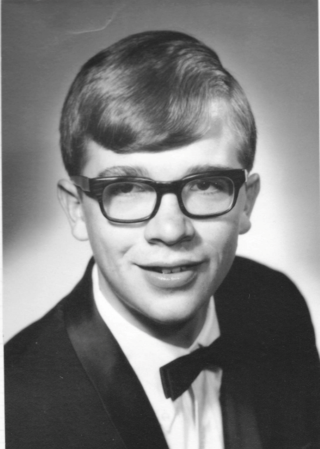
Wayne Wilson

I have experienced several epiphanies, aha moments of clarity, in my lifetime. The first was by far the most

Ready to Graduate High School
Ready to Graduate from High School

influential and long lasting. I was raised in Utah County in a tightly knit Mormon household which taught me that the LDS doctrine was everything a person need to live a happy successful life. Late in my senior year of high school I was walking from the seminary building and the school between periods when the thought occurred to me that there might be alternate explanations to life. This led to a decade long period of discovery and soul searching. Ultimately it led to requesting that my membership in the LDS church be terminated. That took another decade plus.

During this time, I read a lot and did a lot of soul searching. Eventually, I read about humanism and decided that the philosophy was a moral rudder that I could happily adopt. What were the chances that there would be any more humanists deep in the heart of Utah? On January 18, 1992, the Salt Lake Tribune published an article in the Religion section that reported on Humanists of Utah, an active and growing humanist group! I attended the next general meeting and was glad that I brought my checkbook with me because I joined on the spot and have been actively involved in the chapter ever since.

Leona Blackbird

   I came on the board in 2001, when they needed a treasurer.  I filled that position until 2023.  Wayne said I’ll be elected as secretary when we have elections in December. My husband, David Blackbird, was a member of HoU before I married him.  He read Lamont Corliss’ book and said that it sounded more like me than him.  I read it and went right to the computer and joined the AHA.  I didn’t become a member of HoU until 2021, when he came home from a meeting and told me the group needed a treasurer.

   I worked 51 years for two small meteorological companies.  I started as a data clerk, learned programming on the job and ended up as data manager and programmer as well as data reducing tasks that are all done by computer now.  I was 35 years at the first company and when it was bought by a large heartless company, five of us left and started our own company.  The first company was small, the most employees we ever had at one time was 40.  It was a very good place to work; five marriages took place between employees.  One of them was mine, not to David, but to the father of my children.

   As far as hobbies, I play a lot of bridge and read a lot.


November 2023

Greetings from Melanie, HoU President

Welcome to November! Along with it comes the season of gratitude. While Gratitude is not exclusive to this month or season, it becomes more visible and a bigger focus to some and for this, I am grateful. First and foremost, I am grateful for life, liberty and the pursuit of happiness. Even though life can be hard and chaotic, I am truly grateful to be alive. I am grateful for liberty and for living in a society that allows me to live free and to not have the oppressive restrictions imposed that we are witnessing in other parts of the world. This said, I am grateful also for the right to speak, to protest, to vote and to work toward a better future and world for everyone. I am grateful to have the ability to pursue happiness, and what that means for myself, my family, my community and for this organization. Often times, people misunderstand the pursuit of happiness from the right to happiness. Happiness is what you choose to make it. There are so many versions of what it can mean to you. This is important for us to each understand, as it is a personal choice and can be anything you can dream of. With our humanist values and ethics, it is possible for us to make the choices we desire, without threat of hell and damnation and other religious dogmatic beliefs. How do you choose to be happy? Do you behave in a way to help spread peace, kindness and happiness? Do you actively pursue happiness? 

Melanie Curtis 11/2023

While my dad was alive, he was a strong force of good in my life. He taught me from a young age to be a peaceful warrior. This term has had many evolutions in my life due to circumstances and to what was necessary at specific times. Mind you, this did not mean passivity. There have been times I have been the face of revolution, another voice in a crowd, a friend sitting with someone in crisis adding support or even the voice on an injustice in my own world. All of these things added to my pursuit for happiness. 

As president of the Humanists of Utah, it is one my personal missions to bring our messages to everyone. There are those of us in our community who are searching for tools to assist in their pursuit of happiness too. I will be speaking at our November meeting on Humanism and what it means to be a humanist in our world today. Bring family, bring friends, bring anyone who is curious. Everyone is welcome. I genuinely mean this. Every single person on this planet! We are all in this life together. Even though there is a lot to be concerned about, stressed over and even fearful of… happiness is possible. 

My friends, I come with a message of hope, kindness and the fight of a peaceful warrior. I see you. I know that life can be tough. It can also be incredibly beautiful as well. Again I invite you to come to the meeting this month. I would love to see you in person and to meet some of you for the first time. 

Have a beautiful day and month, I am so very grateful for you all. 

–Melanie White-Curtis
President of the Humanist of Utah


Jen Daily-Provost on Medical Aid in Dying

Representative Jennifer Dailey-Provost spoke to the Humanists of Utah on 10/15/23, about her work on medical aid in dying (MAiD). She is a Utah state legislator, currently representing district 22 and is Minority Whip.  Jen grew up in Southern Idaho as a Catholic and now thinks of religion as a lifetime of exploration. On her journey, she discovered a Humanist philosophy, and this has guided her life, how she has raised her children, interacted with her husband, the kinds of education she has sought and the kinds of policy decisions she has made as a legislator as well as the bills she has tried to pass.

Jen Daly-Provost
Jen Daly-Provost

She has worked long and hard for equality, especially universal access to healthcare. She is in the last stages of her Public Health PhD. She teaches at the University of Utah in Human Genetics. She thinks the Utah Legislature is mostly collaborative and she is continuing the collaborative aspect of her work as it’s the most productive. “Rhetorical and strident “ is what Jen wants to avoid.

Medical Aid in Dying Bill

Jen has brought up the subject of MAiD to the Utah Legislature almost every year since she took office in 2019. Her bill has not been able to garner enough support to get a hearing in the Rules committee since, as they said, “it could not pass”. She insists that running a MAiD bill keeps the issue in the public spotlight, which continues to grow support for this aid.

Before 2019, Rebecca Chavez-Houck had been a proponent of MAiD and when Jen came to the legislature, she joined in this work. There was finally a hearing in this last interim session. Still after poignant and touching stories, the members said they still couldn’t vote for the bill due to the attitudes of their constituents and the predominant culture. Two members who said they would vote for the bill didn’t in the end, due to not wanting to suffer politically for a bill that they said wouldn’t pass anyway.  Jen found it horrific that people don’t internalize the pain that the stories presented, and so can ignore the needs of those who could benefit from MAiD.

Legislators have said that their constituents were antagonistic to MAiD. But the data shows community support. A Dan Jones & Associates survey in November 2015, found that 6 in 10 Utah Residents support MAiD. Many arguments against the bill supporting MAiD have been shown to be specious from the sixteen years of Oregon experience. (ed note: Now eleven states and DC have passed MAiD laws.)

Voters can move a complicated issue forward by talking to their legislators. She suggests that we write, email, and call our state legislators to ask them to represent us and give hearing to, then vote fora bill creating MAiD for those who so badly need help. Jen remains confident that a MAiD bill will pass because it’s the right thing to do. For more information go to compassion and choices.org.

Your legislators work for you!

Their contact information is available at le.utah.gov

Call, email, communicate your interests!


The Military Humanist Paradox

“I’m not religious,” my new Readiness NCO (Non-Commissioned Officer, Sergeant First Class or E-7 in this case) said to me when I asked him about my endorsement form. In response I quipped, “Neither am I!”

Another soldier marveled that though she hasn’t heard of Humanism, Humanist principles are irresistibly compelling. “What is Humanism?” she asked. I answered in part, “It means that we as humans need to show up for each other and take care of each other. It is a human-centered approach to life. We believe in life before death. Functionally, all cultural institutions are Humanist, which means that functionally all humans are humanist, though very few claim that identity, or are even aware of Humanism.”

Jared Anderson

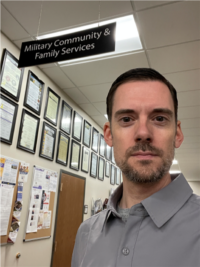
As I have mentioned before, I am deeply gratified by the level to which I have been able to serve as a functional Humanist Chaplain. I can be transparent about my double endorsement and my lack of traditional beliefs. The majority of soldiers I speak with resonate with Humanism and consider themselves either non-religious, spiritual, or at least skeptical of religion. Even the religious soldiers I speak with find my perspective refreshing. As anticipated, Humanist Chaplaincy is desperately needed in the military.

And yet we still have no official Humanist Chaplains in the military, notwithstanding the diligent efforts of the Humanist Society and the Military Association for Atheists and Freethinkers.

The irony becomes even more stark when one realizes that though there are no Humanist Chaplains in the Army, the Army manual section on Spiritual Readiness is explicitly Humanist! “The spiritual readiness domain is inclusive and universally vital to all personnel no matter their background, philosophy, or religion. It applies to both religious and non-religious persons and concepts… Spirituality is often described as a sense of connection that gives meaning and purpose to a person’s life. The spiritual dimension applies to all people, whether religious or non-religious. Identifying one’s purpose, core values, beliefs, identity, and life vision defines the spiritual dimension.

These elements, which define the essence of a person, enable one to build inner strength, make meaning of experiences, behave ethically, persevere through challenges, and be resilient when faced with adversity. An individual’s spirituality draws upon parts of personal, philosophical, psychological, and religious teachings or beliefs, and forms the basis of their character… Understanding the general spiritual readiness enables leaders to encourage personal spiritual readiness in a climate where mutual respect and dignity encourage dialogue, foster team cohesion, and enable healthy free exercise of religion or no religion by all personnel” (FM 7-22, Holistic Health and Fitness, 10-2).

Given that Spiritual Readiness training is mandatory for all Army personnel, and that Chaplains are the obvious ones to teach Spiritual Readiness, it is poignant that there are currently no officially Humanist Chaplains to teach this functionally Humanist training.

I’m curious about how many undercover Humanist Chaplains there are in the United States military. Unitarian Universalism and Buddhism both align well with Humanism (I considered both of those as potential endorsers before finding Unity).

I’ve gone back and forth a bit, but I’m back to envisioning the day when I get to trade out my cross (though I remain grateful for Unity’s radical version of Christianity that teaches there is no God other than us and that we don’t need to be saved) to the Humanist Happy Human. I was inspired and encouraged to have the chance to speak with the Chaplain (Captain) Marie-Claire Khadij, who serves in the Canadian Armed Forces, is currently the only official Humanist military Chaplain in the Americas.

Whether or not I ever get to officially pin the Happy Human on my uniform, I’m deeply grateful to be able to serve soldiers in the US Army, especially the non-religious and those who struggle with traditional religion. I’m currently working on implementing regular Spiritual Fitness teaching and training in the Battalion where I am assigned, with the help of the trusty Humanist Holistic Health and Fitness manual.

-Chaplain Jared Anderson, 1LT


Board Member Lauren O. Florence, MD

When I first came into contact with the tenets of Humanism, I realized I had arrived home intellectually. When I started to meet the individual members of the Utah group, I felt at home socially. I asked if I could serve on the board. When they accepted me, I was clearly in my element and grateful. I finished a Master’s Degree program in Languages and Linguistics at USC. This background in words made me just the right candidate for Secretary. I have taken notes in the meetings as minutes of every meeting is a requirement for non-profits, and I have written an article about the presentation of the speaker at meetings.  (Note: Lauren is looking forward to other roles in HoU as a board member, when Leona takes over as secretary in December.)


Craig Wilkinson, MD

Craig is a retired vascular surgeon. He is married to Devona Wilkinson, approaching their fiftieth wedding anniversary. Their three children are: Jay Wilkinson, BA in graphic design, MBA who works in the tech industry in Lehi;  Margeaux W. Buechel,  PsyD in child psychology and lives in Portland; Brooke Wilkinson, JD a lawyer in Los Angeles. Craig been a board member for ten years and currently the treasurer of the HoU. His hobbies include paleontology and fossil hunting. He loves to hike the numerous nearby trails in Draper, Utah where he currently lives.


AHA Center for Education


October 2023

President’s Message

October is my favorite month, in my favorite season and is all things wonderful in my memories of growing up. Now that the heat has finally subsided and we are in a resting period before the holidays and winter, it is a  great time for reflection and pause.

In my reflections I have been very contemplative over how I present myself to the world.  How do I show up as a humanist, as a mother, as a friend, as a partner, as a citizen, as a leader…you get the picture.

It is easy to get lost in the noise and chaos of life and especially with the political climates we are exposed to, the general angst that is present, and the fast hustle and bustle that has become the tempo for many of our lives.

How do we quiet down without withdrawing from life? How do we hold firm in our convictions and beliefs without losing sense of self and becoming callus? How do you drive and experience your personal life in the style that you want? How do you thrive in all of this without losing peace? Our humanist values are interesting, in that they cover the entire spectrum of peace and fight. Not in the usual thought of those words, but more in alignment with keeping the greater good in mind. This is part of the beauty of who we are as humanists, you can choose at any moment how you want to present your humanistic values. There are times where I have not had the bandwidth to engage very heavily due to circumstances. I live my values always but participation was minimal. There are other times, where I have been heavy in the “good fight” and am very politically active, working toward our cause in helping others know about humanism and mentoring in the philosophies. Wherever you are in your life, you are in full control of how you present yourself to the world. Just to be clear, I am not talking about what others perceive… they are spectators to your life experience. Presenting yourself to the world is a conscious decision (actually many of them) on how you want to live, your values, your humor, your dress, your interactions/ relationships with others and your work.

Last month, we had our first official Humanist meeting at our new location: the Salt Lake City Downtown public library. Our very own Humanist chaplain, Jared Anderson, spoke on Incomparable Good at Inexcusable Cost. It was wonderful to see new faces and experience a room that is comfortable for us all. This month we will hear from Jen Dailey-Provost. She is speaking on “Medical Aid in Dying and Utah Politics”. As always, our meetings are open to the public and free of charge. Invite your family and friends. 

Dearest friends, the time is now to decide how you want to present yourself to the world. It is time to learn more about humanism and how important it is to helping heal the world and its people. One person at a time… even if that person is you. Educate yourself, determine that your individualism is valid and important, and look through eyes of reason to make decisions that will help you and those around you to live their best lives and for our world to literally be on the path to becoming a better place. 

I look forward to seeing you at the library this month for our meeting. My hope is that your fall season is a beautiful and much needed one filled with rest, tranquility and peace. You are strong. You are brave. You are valid. But most of all, you are unique and wonderful.  

Melanie White Curtis, President


Chaplain’s Corner

Incomparable Good as Inexcusable Cost

This past month I have had the chance to give two presentations that distill the past ten years of my life, and describe my passion questions that drive my purpose:

Is it possible to be world class, and remain well?

Is it possible to be world changing, and remain good?

Is it possible to be average, and remain motivated?

I’ve come to these questions after working at the extremes of human experience, studying social science and systems, especially the frustratingly powerful topic of religion. I actually presented down at BYU, on the topic of “Service in extremis: What ministry at the edge of life and death teaches us about wellness day to day”. I’ll share that one with you next month. And the motivation question stems from the problem that we are evolved to survive rather than thrive, so as soon as we stop fearing for our lives, we become complacent.

But first, I’d like to summarize the presentation I gave for our Humanists of Utah event at the Salt Lake Public Library. That presentation broached the question of world-changing institutions, and whether they can remain good. Short answer, no.

Religion is easy to complain about. It is easy to complain about things that we know well and dislike strongly. Or perhaps we’d like to believe that if we ignore religion, it will leave us alone. Unfortunately, that is not the case either. And then we have the puzzle of the fact that virtually all cultural institutions are functionally Humanist, which means that pretty much everyone is functionally humanist (say, all those who use currency, gain education, and are affiliated with governments, all humanist institutions), but precious few humans actually identify as Humanist. Howard Radest in What is Humanism and Why Does it Matter comments that too often, we Humanists are “non-joiners” and “non-givers”. So we have our work cut out for us if we want to do good in the world, which hopefully we do.

One challenge is that with all the problems religion has, it actually does more good than pretty much any other cultural institution. Our society and survival depend on us being able to cooperate, and religion facilitates cooperation better than anything else. Two reasons for this are that religion gets in our head more than anything else (belief in god functions as internalized social norms), and religion is more comprehensive than anything else. Even if you are involved with the sports or military, you aren’t thinking about sports or military all the time. If you are religious, your religion impacts everything you do and even your thoughts. For better and worse, religion behaves as an accelerant to motivation and investment.

Religion helps humans manage their emotions. It provides structures to process guilt, to forgive the self and others. It organizes space and time. God functions as an attachment figure, loving and watching over us even when there is no one else. Prayer focuses us and allows us to tap into memory and wisdom. Religion helps us feel a sense of control in our lives and manage disappointment when we fail to attain it.

Importantly, religion also provides what could be called “prosthetic morality” as well as explanations for the tragedies of life. Questions of right and wrong prove impossibly complex, and even suboptimal ethics, packed over millennia and ready for consumption, fulfill important roles. And to return to my beginning point, for better and worse, religion can push us to heights and depths of human experience we otherwise would not attain. It engages our entire evolutionary brain to motivate us to action.

The runners up for most impactful cultural institutions are likely family, nationalism, and economics. The statistics for domestic violence and war are sobering, and irresponsible economic policies have sparked climate chaos and put civilization at risk. Mao (about 78 million) and Stalin (about 23 million) are responsible for more death than any other leader, and these atrocities were inflicted on their own people, caused by irresponsible economic modernization in order to increase personal status and power.

Religion comes with embedded morality, however faulty; economics has no such checks. In brief, if we are going to critique religion, and we should, we should critique all institutions.

I’m motivated by the saying “revolutionaries make poor plumbers,” a reminder that it is easier to tear down than build up. I’ve worked hard to become relentlessly constructive in my own life. So what do we do with all this? How do we grapple with the inexcusable costs and harms done by the humanist institutions we invest in?

In brief, we do better. We show up. We join the conversations and nurture our communities. We can work to improve ourselves as individuals, as Humanists, in relationship to religion, and as human beings. As Alain de Botton urges us, we Humanists can learn from religion to make our practice more rigorous. We can connect to our values and design rituals, using structure and support to motivate us to follow through on those values. We can get creative and use all our resources to raise the bar.

We can also be better Humanists by investing in and participating in worthwhile programs, projects, and institutions. I have found that the next right step is almost always a healthier version of what we are already doing. Whether it is work, a club, oror local library, we can make these best institutions even better.

And for those of us connected to religion (that’s all of us, even as Humanists), we can do what we can to encourage the healthy, pro-human, pro-wellness aspects of belief and practice.

By taking seriously the fact that all powerful institutions do good at great cost and inescapable tradeoffs, we increase both humility and motivation. We are humans and Humanists, but first and foremost, we are small parts of the powerful systems of which we are a part. I have found that the greatest good can be done by thoughtful, mindful members of large, powerful organizations. We are all connected to those organizations to different degrees (a key part of my motivation to join the military is because there is no more powerful cultural intersection than military Chaplaincy; that’s like cultural impact bingo). We can do better in our individual lives, our relationships, and our systems, becoming a sort of healthy virus that can increase well-being to a disproportionate degree.

Jared Anderson, Humanist Chaplain


Expanding Your Comfort Zone

None of us are born with a guidebook that provides explicit rules for thought and behavior that will enable us to navigate life successfully. To cope with the myriad of complexities to which all of humanity is subject, we each develop a set of habits and routines that ground us, their continuity assuring us that life is progressing normally. Most of us know, whether instinctively or by experience, that transformations can be uncomfortable, but we always learn and gain so much. Any initial discomfort we experience when expanding our comfort zones diminishes gradually as we both become accustomed to change and begin to understand that temporary discomfort is a small price to pay for the evolution of our soul.

Your current comfort zone did, at one time, serve a purpose in your life. But it is representative of behaviors and patterns of thought that empowered you to cope with challenges of days past.

Now this comfort zone does little to facilitate the growth you wish to achieve in the present. Leaving your comfort zone behind through personal expansion of any kind can prepare you to take the larger leaps of faith that will, in time, help you refine your purpose. Work your way outward at your own pace, and try not to let your discomfort interfere with your resolve. With the passage of each well-earned triumph, you will have grown and your comfort zone will have expanded to accommodate this evolution.

Whether your comfort zone is living with your parents, or perhaps being too shy to socialize, or maybe it’s not realizing your spirit self—whatever it is, start small, and you will discover that venturing beyond the limited comfort zone you now cling to is not as stressful an experience as you imagined it might be. And the joy you feel upon challenging yourself in this way will nearly always outweigh your discomfort. As you continue to expand your comfort zone to include new ideas, activities, goals, and experiences, you will see that you are capable of stimulating change and coping with the fresh challenges that accompany it.      -DailyOm

Melanie-White Curtis, President


Favorite Season

I’ve always enjoyed living where the four seasons are distinct from each other.  As a teenager I used to love winter mostly because I skied a lot and winter camped after snowshoeing in the Uintah mountains. It wasn’t until I was an adult growing a garden that I started enjoying spring. As a youth spring was the end of the ski season and a time when my allergies were the worst.  Summer is ok, but the unbearable heat of mid-summer doesn’t appeal much.  At this point in my life Fall has become my favorite season.  I live in Holladay right up at the foot of Mount Olympus on the Wasatch front.  At this time of year, we can watch the colors change, with the yellows, oranges, reds and the dark greens of the pine trees. Add the colors of the rocks and the ruggedness of the peak with an occasional dusting from an early snowfall makes for a sublime view.  Fall is also the time that my efforts growing veggies is paying off.  The harvest from my several tomato plants is more than we can eat, so I make three varieties of spaghetti sauce, salsa and soup to freeze.  Plus, in the fall you can BBQ outside without being BBQed yourself by the sun.  The only problem with fall is that it can be rather short if winter decides to show up a little early.  (Ed note: Fall is the perfect season…if only it wasn’t followed by winter!)

In recent times I’ve been easing myself back from board member duties as have other longtime board members.  I have been on the board for well over twenty years, with 13 years as president.  Having said that, I want to give a shout out to the rest of the board member new and old. The pandemic kind of knocked many things off kilter a bit. But the board is doing a good job getting things up and running by getting our schedule filled in and venues reserved. 

It’s been a number of years since we had regular discussion group meetings, but it was one of the things I enjoyed most about our chapter.  While having one monthly as we use to may be too often, perhaps three or four times a year might be doable.  I think it’s a nice addition to the meetings with speakers.

That’s about it for now.  I hope you’re enjoying the fall season as much as I am. Hope to see you soon.

Robert Lane, Board Member


Brain Help

You can play a part in the science of improving brain health!  The Brain Health Project at the University of Texas at Dallas is enrolling adult volunteers of all ages for a long term project.  Volunteers access brain training at their own pace, and take scheduled assessments to determine changes over time.  Check it out:

https://centerforbrainhealth.org/project


Get Involved!

Plan a Service Project

Plan and organize a HoU service project!  Do you know of an organization that needs help?

Give members, family and friends an opportunity to contribute.  If you are interested in planning or working on a service project, Email

wwison@humanistsofutah.org.

Join a Discussion Group

Start a discussion group on contemporary topics like criminal justice, unhoused people, body autonomy, local climate change, (no religion or politics!) informed by a selected podcast series, film, fiction or non-fiction book.  Be part of a monthly virtual group to share, meet and hear other members.  Email wwison@humanistsofutah.org

 Add to the Newsletter

Write an article or submit an item to include in Utah Humanist.

Email deongines@gmail.com

Suggest a Speaker

Bring a topic to the HoU meeting.  Email

wwison@humanistsofutah.org

HoU Board Office

Play a role in promoting humanism in Utah by serving as a board member.  Email wwilson@xmission.com


Many Thanks, Wayne!

Wayne Wilson has been the Utah Humanist editor and publisher {as well as a lot of other positions) for 12 years and has done a great job in a demanding role.  Wayne is moving onward to other ways to serve.