March 2017

10th Annual Darwin Day Celebration

This year’s event featured a panel of four scientists, Kristen Hawkes, Distinguished Professor of Anthropology, Alan Rogers, Professor of Anthropology and Adjunct Professor of Biology, Court Strong, Associate Professor of Atmospheric Sciences, and Paul Ricketts, Research Assistant Department of Physics and Astronomy. We had a lively discussion with HoU Vice President Elaine Stehel submitting questions about the importance of science, the veracity of climate change, the future of science funding, etc. All of the panelists had different insights into the state of science in general and climate science in particular. There was unanimous concern about the future of current programs but a generally optimistic feeling that with events like our Darwin Day that we should not give up. After the pre-planned questions, Elaine opened the discussion to comments and questions from the audience. The clock ran out before the questions and enthusiasm did but there was a cake to be cut and consumed and priorities are priorities after all!

—Wayne Wilson

During the Reception Hour, I took the opportunity to mingle with many visitors attending this Darwin Day. In the conversations, many were asked “How did you hear about our Darwin Day Anniversary Event”, and most of the responses were FACEBOOK.
Then, also I spent some time observing the ‘tablers’ who were invited to participate. They were all very pleased with the size of the crowd and the interest and curiosity shown to their displays.

Clark Planetarium – Thomas Quayle, Education Program Specialist and NASA/ JPL Solar System Ambassador, and his assistant, Mark, set up two 32” monitors with hands-on ability to manipulate the different earth models. One model is used for the public by NASA and the other one by the National Oceanic and Atmospheric Administration. They were both impressed by the knowledge and pertinent inquiries posed by the individuals who spent time at these displays. They would like to be included in any of our future events. Thomas would like to invite us all to visit the Planetarium sometime soon and, also, the Salt Lake County Climate Health Symposium on April 5 and 6. This is an all-day event held at the Conservation Garden Park in South Jordan where they will have a similar display.

HEAL Utah – Laura Schmidt, Outreach Coordinator, was kept very busy informing her visitors about what this grassroots advocacy group is about. They engage in legislative and regulatory settings to champion clean air, clean energy, and to protect Utah from nuclear, toxic, and dirty energy threats. She felt they all seemed to understand the need for further research into the changing climate issue.

Natural History Museum of Utah – Matt Whittaker, MPA, BA, Community Outreach Coordinator, relayed to me several times how glad we invited them to attend and to please include them in other programs. Alexandra Coconis sent a memo to me in reply to my Thank You Letter,“I had a great time preparing for this event and speaking with people about her mammologists research at the NHMU. The size of the crowd and the timing was perfect for having substantive conversations. I can’t express how much Matt and I were pleased of with the well-organized event. So, thank you, and, yes please keep us in mind in the future” Ally Tracy Aviary – Jamie Murphy, Marketing and Events Coordinator, sent a delightful pair, Amanda Anderson and Cooper Farr, to share their knowledge and enthusiasm on the variety of birds in their care. Along with the colorful brochures there were flyers about “Skiing and Birds”, an event to be held on Saturday, March 11, beginning at 5:00 p.m., in partnership with Alta Ski Resort and a Citizen Science Program that collects baseline data on Alta’s birds, to inform conservation and stewardship. (See their website for many details). They were so pleased with the response from those who visited their table, they would like to be invited back again.

Citizens Climate Lobby – David Folland, MD, Utah State Coordinator, could not attend as was planned, so sent two volunteers, Jihyun Noh and Margie McCloy, giving them the opportunity to share information about CCL. They did have a very busy time keeping up with all the questions about this advocacy group. I have attended several ‘climate change’ events where David has presented their mission on “Carbon Fee and Dividend” a complicated but needed issue to address. Of course, a more in depth presentation could be in the works.

Thank you, Elaine, Bob, John, Eliot and other committee members for allowing me to be a part of this incredibly successful “10th Darwin Day Anniversary” event. Hopefully, I will be able to be a part of the 2018 celebration.

—Sally Jo Fuller


Some Pictures From the Event

Darwin Day 2107 Cake
Elaine Stehel, Darwin Day Committee Chair
Robert Lane, HoU President
HoU Board Members Left to right: Wayne Wilson, Steve Hanka, Elaine Stehel, Robert Lane, Sally Jo Fuller, Art King, and Leona Blackbird
Atheists of Utah
Citizens Climate Lobby
Humanists of Utah
Natural History Museum
HEAL Utah
Panel of Scientists Left to Right: Cort Strong, Alan Rogers, Paul Ricketts, Kristen Hawkes, and moderator Elaine Stehel
The Audience
Elaine with a Knife!

Practicing What We Preach

~Letter to the Editor~

For ten years Humanists of Utah have sponsored an annual event to honor Charles Darwin and promote science. This year’s celebration was held at the University of Utah’s Officer’s Club at Fort Douglas, a better venue than ever before if only for ease of parking.

Billed as an event of, “Joyful Living, Rational Thinking and Responsible Behavior,” a member of our board used this occasion to express his personal views on science and religion; this after one or more of our guest panelists had expressed their opinion that reasoned inclusive and thoughtful discussion is a more productive form of engagement.

I think that any such comments should have been prefaced with a disclaimer that the views expressed were his own and that he was not speaking on behalf of Humanists of Utah. It would have been easy for an unknowing participant to construe his opinions to be those of The Humanists of Utah.

I am not happy to have been publicly included by inference in a personal rant that has the potential to undo two decades of our chapter’s patiently sown community good will.

Community events held under the auspices of the Humanists of Utah should always be inclusive and strive to never alienate any of our attendees.

—Bob Mayhew


HoU Happenings

March 21 at 5:00 PM
Dinner with Youth Resource Center
This event requires and RSVP and FIRM commitment!

Two shifts:

Meal Prep – 4:30 to 6:30 PM Food drop off/preparation/serve
Cleanup – 6:30 to 7:00 PM
Saturday, April 22—3:30 to 5:00 PM
Deep Cleaning Volunteers of America’s Youth Resource Center

The Youth Resource Center is a drop-in center where homeless and at-risk teens in Utah can come, every day, 365 days a year, for three hot meals a day, and emergency shelter at night, as well as for classes, events, and other resources to improve their lives, provided by licensed clinical social workers, counselors, case workers, lawyers, staff members, and volunteers. All of this is amazing, and life-changing work! We will be doing a deep cleaning, so come dressed to work!

Both events a VOA Youth Resource Center 888 So 400 W, SLC

More information is available at the HoU Facebook page

Contact Elaine Stehel for more info/RSVP elaine@humanistsofutah.org


President’s Report

This month’s general meeting will be sort of a combination book club meeting and a celebration of Pi Day. I’m looking forward to both and I’m hoping more members and guests will join this book club. I especially enjoy meetings where there is a discussion, about a book or something from the news. Books are also one of my favorite things, so discussing books puts two things I enjoy together. So I hope you will join us. Also, to help celebrate Pi Day, we decided to change the usual refreshments and are going to serve Pie.

Our tenth annual Darwin Day celebration was a great success and I again want to thank Elaine, Sally Jo, John and everyone who helped make it a success. The forum about climate change was a welcome change from a single speaker and I think we should use it more often, both for Darwin Day and at times, our regular meetings.

In my opening remarks at Darwin Day, I mentioned the fact that when we discuss and or argue about climate change we are being diverted from the discussion of the fact that the things that humans do that effects climate, is also detrimental in other ways to the environment and toxic to all living organisms. It may be an exercise in stating the obvious, but I want to write a little about why pollution exists rather than how it gets there and what it does.

We humans just don’t want to pay the full price for dealing with our waste products. While it is understandable that our species can never have zero impact on the environment, we could do a lot better. The problem is, that our capitalism and free enterprise systems lends themselves to greed. The number under the bottom line must come first, and one of the first places to cut cost is in disposing of waste products. So, we get toothless regulations or no regulations and as is often the case, health concerns are overridden by the quest for big profits. They really don’t care if they’re killing living creatures, including humans. One example is that the quest for profits keeps us dependent on a technology that is over a hundred years old, the internal combustion engine. All kinds of alternative technologies exist and have existed for quite some time that can reduce our energy consumption, but they are just not profitable enough on their own or they threaten to eliminate the enormous profits of the long-established energy producers and their cohorts in other industries.

Anyway, like I said, I may be stating the obvious, but it worth repeating. So I’ll leave it at that and close by again saying that I hope to see soon at our March meeting.

—Robert Lane
President, HoU


February 2017

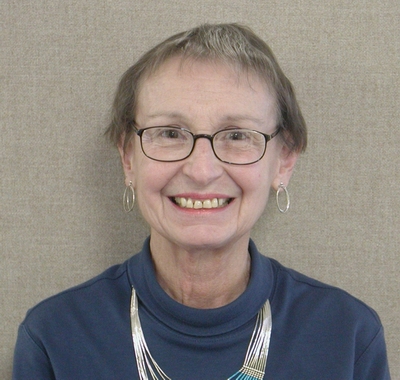
Leona Blackbird

~Member Spotlight~

Leona Blackbird was born in New Orleans, grew up in Iowa, went to high school and college in the Carolinas, lived for 20 years, off and on, in Santa Barbara and moved to SLC in 1980. Santa Barbara was lovely, of course, and was her first experience with the West. The “off and on” part is because she was married to a field meteorologist at the time and we spent a few winters in Elko, NV and one in Kalispell, MT.

She has a BA in psychology from Duke–a fairly useless diploma in her opinion. However, it did lead directly to her career. As part of the major requirements, she had to take a course in statistics. When she applied for a job at a weather company in Santa Barbara they asked if she could do a correlation coefficient and she said yes. She was hired on the spot. She started out as a data clerk, learned to program in the 70’s and ended up as systems manager. She worked at that company from 1960 to 1998 and met her husband there. In 1998, after the company had been bought by a large soulless outfit back east, Leona and four others left and started our own company. She retired in 2011, having spent 51 years associated with meteorologists and numbers.

After the husband in question died, she met and married David Blackbird in 1990. It was he who introduced her to humanism. He had read a book by Corliss Lamont and gave it to her, saying that it sounded more like her than him. She read it and immediately joined the AHA. She had not had a religious upbringing, but if you’d asked me if she believed in God when she was 15 or 20 she would have said “Of course–doesn’t everyone?” She had sort of slowly come to realize that she was an atheist, but it wasn’t until she was introduced to humanism that she knew there were others who thought like she did. She didn’t do much with the HoU until they needed a treasurer. She thinks that was in 2002 and she’s been the treasurer ever since.

She is an avid reader. She belongs to two book groups, so she read lots of things that she wouldn’t have picked up otherwise. Right now, she’s reading The Gene–An Intimate History by Siddhartha Mukherjee, which is definitely not something she would have picked up on her own. She reads biographies, novels, mysteries, and anything else that strikes her fancy. She also plays a lot of bridge–not competitively; just for fun and sociability.

She belongs to AAUW (American Association of University Women) both for social reasons and because of their positions on equal rights and educational opportunities for women. She also belongs to Compassion and Choices (the old Hemlock Society) to support death with dignity and aid in dying.

Humanists of Utah is indeed lucky to have Leona as a member!

—Sally Jo Fuller


HoU Happenings

Hope for Humanity

On Sunday, February 12, 2017—the actual date of International Darwin Day, Minister Elaine Stehel, Vice President of the Humanists of Utah, invites you to a guided group meditation and discussion—in lieu of ‘prayer,’ she offers a ‘hope for humanity,’ that we will cultivate loving-kindness and peace, individually and together. Please join us to process through recent feelings of anger and despair, moving toward peace and joy in community. Event will be from 2:00 – 4:00 PM at the Salt Lake City Public Library (210 East 400 South), meeting room to be determined.

Breakfast at The Ronald McDonald House

Sunday Assembly Salt Lake City is a new local secular group building a presence with parties and volunteer activities in our community—we will be partnering with them, the Atheists of Utah, and Salt Lake Oasis more in the coming months. If you’d like to volunteer more with like-minded people in our community, here’s your chance! Join Sunday Assembly to serve breakfast for the Ronald McDonald House Charities of the Intermountain Area (935 East South Temple) on Sunday, February 19th at 7:30 AM Learn more on Facebook, by searching for “Sunday Assembly Salt Lake City.”

Atheists of Utah Great Minds Gala

The Humanists of Utah are a proud sponsor of the Atheists of Utah’s Great Minds Gala, taking place on Saturday, February 25th from 6:00 PM – midnight. In exchange for their generous donation to our December Banquet benefiting the VOA’s Youth Resource Center, and their generous sponsorship of the catering for our 10th Annual Darwin Day Celebration, we provided a gift basket for their Silent Auction, and we hope some of our Humanists of Utah group members will enjoy attending their gala event, and perhaps even bid on and win some great prizes! Event will be held at Church and State (370 South 300 East). Learn more and purchase tickets at http://www.atheistsofutah.org/winter-gala.

Breakfast at the Youth Resource Center

Continuing with our group’s new community partnership with the VOA’s Youth Resource Center, the Humanists of Utah invite you to help provide, prepare, and serve Breakfast for the homeless and at-risk youth in Salt Lake City, at 888 South 400 West on Tuesday, February 28th at 7:30 AM You can donate food before the event; bring food that morning at 7:30 AM; help prepare the food that others provide; help serve the food that morning at 8:00 AM; and/or help clean up and wash dishes at 9:00 AM If you’re interested in any of the above, please email elaine@humanistsofutah.org to coordinate what you’d like to help with!

—Elaine Stehel
Vice President, HoU
Certified Humanist Minister


President’s Report

Every February for the last nine years Humanists of Utah has hosted a “Darwin Day Celebration.” This February naturally marks our tenth annual Celebration and I’m quite proud of the fact that we have sustained this event that long. I also hope that we keep it going for a long time to come. Plus, in this “new era” we are facing now it will be even more important to advocate and even protect science.

In past years, I have been highly involved in the planning of our Darwin Day events. But this year, I had wanted to be even more active in the planning to make sure we had a special tenth year event. But I have been unable to help much this year as my mother’s care needs are increasing and consuming most of my time lately. But the people who are doing the planning and arranging everything have put my mind at ease. They have stepped up and done a great job and have a terrific event in the works. So, I personally want to thank Elaine Stehel, Sally Joe Fuller, and John Welle for their efforts and thanks to all who are helping to make this a great tenth annual Darwin Day with Humanists of Utah.

Before the last board of director’s election, I informed the board that this would be my last term as President. I do plan to remain a board member. But it is time for the change and giving the “keys” to someone else will allow me to concentrate my efforts for HoU in a more focused way. I hope to work more closely on our events like our BBQ, Thomas Paine Day/Founders Day and the rest, but especially our Darwin Day event.

For several years, I have been harboring the idea that Darwin Day needed a Foundation to make it an event that is self-sustaining. I know that’s a tall order, but the process exists and I intend on working toward that end. The ideals of Darwin Day as a celebration of science needs to be sustained and increased, especially in this “new era” I mentioned, where rationality will be in short supply.

I hope you’re planning to come to our Darwin Day celebration coming up shortly. I’m excited and have a few things to say about our subject of climate change and all that that entails. Plus, having a forum for the first time should make for an enjoyable change.

That all for now, see you on the 11th.

Robert Lane
President, HoU


January 2017

Kate Kelly

Kate Kelly, Esq., human rights attorney, activist, and advocate spoke with our group on Thursday, November 10, 2016. Directly following the election two days earlier, her remarks were nevertheless optimistic, encouraging, and insightful. She spoke with us about our country’s racist and patriarchal structure from the founding days to the present, including her ongoing research relating to Thomas Jefferson’s slave breeding activities and the impact of slavery on our nation’s development. She challenged us all to question the structures of our society that are rarely investigated by those in positions of unearned privilege! Read more about Kate Kelly and her work on Wikipedia—Kate Kelly (feminist)—https://en.wikipedia.org/wiki/Kate_Kelly_(feminist)—or at her own site—http://www.katekellyesq.com/

–Elaine Stehel


10th Annual Darwin Day

Join the Humanists of Utah at the Officer’s Club (150 South Fort Douglas Blvd) at the University of Utah on Saturday, February 11, 2017 from 5:30-8:30 PM to celebrate our 10th Annual Darwin Day Celebration in Utah! From 5:30-6:30 PM, there will be hors d’oeuvres and the opportunity to mingle and peruse tables hosted by community organizations who also love Darwin, gleaning more information about science-loving groups, their upcoming events, and opportunities to get involved. From 6:30-8:00, we will hear our President, Robert Lane’s thoughts relating to the science of climate change and the past 10 years we’ve been celebrating Darwin Day in Utah, then we will host a community discussion with a group of panelists working on various aspects of climate change-related scientific research. Bring your questions and be prepared to engage and leave more informed and energized with new and changing information to share with everyone you know! From 8:00-8:30 PM we will cut into and enjoy the ceremonial Darwin Cake. This event is free and open to the public—please bring your friends and family! We look forward to celebrating with you.


Member Spotlight

John Barnes was born in Kansas City, Missouri, September 15, 1931, but he grew up in Cheyenne, Wyoming. In about 1950 he was called into the National Guard.

In 1956 on to the University of Wyoming where he majored in Business Management attaining his Bachelor of Science Degree after four years. During this time, he met and married Joyce who was attending the University of Colorado’s State Teachers College. They have two daughters who live in California and Montana.

After college, John was employed as a Data System Analyst for The Martin Company in Littleton, Colorado, for five years. Then moved to the Salt Lake area where he worked for Hercules Aerospace as a Data System Analyst for the next thirty years until retirement in 1989.

John and Joyce have done some travelling, but mostly enjoy the local cultural events in Salt Lake City by regularly attending the symphonies, ballets, operas, and theater productions. A great pastime in reading magazine publications, such as; Discover Magazine, National Geographic, The New Yorker, and The Bloomberg News Newspaper.

John has been a member of the Humanists of Utah for twenty years and a Board Member for three years. He says that joining HoU, he has enjoyed the company of developing intelligence of the members. As to his sense of humor which he shares liberally, he believes that he acquired it mostly on his own.

—Sally Jo Fuller


2016

This is my story of twenty-sixteen
when most of my dreams came true
while too many of my hopes were dashed.

‘What were your dreams?’
you may wonder, as do I.

‘Which hopes were dashed,
and how, and why?’

I was raised near poverty
not always knowing when or how
I would eat, or sleep, or study,
or wear clean clothes.

I lived on my hopes, wishes,
dreams, and plans for a better life;
I lived on the generosity
of strangers;
I lived in the throes of gratitude
for what life and love I had.

I have much in common
with the library patrons I serve;
I have the pain of hunger
stamped on my soul
I no longer believe exists.

In twenty-fifteen, I fought;
I listened, I suffered, I cried:
when my big sister found out
in the terror of mania
she had bipolar disorder;
when my best friends’ dogs
all died;
three different friends,
three different dogs, all family,
all gone;
when my step-brother died
within months of my cousin
and six months later another
brother-in-law also died,
all unexpectedly, all young.


When twenty-sixteen began,
I was ready.
I thought life couldn’t get worse,
while simultaneously I knew
my life was better then
than it had ever been.


I saw my LCSW weekly,
and my GP monthly;
I scheduled massages
and chiropractic care;
I lost eighteen pounds,
and I meditated daily;
I learned to sleep,
and began to master self-care.

As I truly learned to care
for my own self above all,
I began to see my influence
on the lives of those around me
continue to grow and expand.

My dreams of changing the world,
beginning by changing myself,
were finally coming true.

Today I teach English
to speakers of other languages;
I serve the public at the library
with passion and creativity;
I celebrate the many successes
and mourn the minor failings
of my teenage siblings
and my young nieces and nephews;
I serve my non-religious community
on the Board of Directors of the
Humanists of Utah.

Every day I interact with Mormons & Muslims,
Atheists & Jews, Liberals & Conservatives,
women & men, adults & youth, people & animals,
good & evil, beauty & sorrow.

My dreams are coming true:
of living, learning, and loving
more and better than my parents
and grandparents;
of applying my education
to my work of changing
and improving my life
and the lives of others.

Yet, even as my dreams become my reality,
my hopeful, incurably optimistic mind
returns repeatedly to feeling bombarded
by the pangs of the hunger
of my childhood years
As the world around me,
and the country I thought I loved,
are changing in ways
I never imagined I’d see.

At times, I find it too difficult to continue to hope;
to continue to feed my mind’s hunger
for truth, justice, fairness, and equality;
to combat my mind’s fears
of loss, sadness, inequality, and pain
with hope for a better future.

So, I ask you, the most curious, hopeful,
educated, and empowering of humans
I know in this city I currently call home:

‘What are your dreams?’

‘How have your hopes been dashed, and why?’

And, perhaps most importantly,

‘How are you renewing your hope?

What are you reading, and why?’

Elaine Stehel


President’s Report

Greetings freethinkers, I hope the holidays were enjoyable for you. As free thinking individuals, it can be hard to be all that “festive” around Christmas time. Not too often, but a few times at party or family gathering I’ve been asked why I celebrate Christmas if I don’t believe in Jesus. I try to be a little humorous by stating that I not going to let Christians have all the fun with the gluttonous materialistic turmoil. It usually works, as they usually must agree when I say that it hasn’t been free thinkers who turned it into the frenzy.

But I had a good time at our Annual Banquet and Business Meeting and we took in a respectable number of donations for the Homeless Youth Resource Center. The Board voted to add enough to the money we took in for the raffle to round it up to $600.00. I always buy more food than we use at the social with because I’m more worried about running out than having too much. So, I also took a couple of frozen turkey breasts, a bunch of extra drinks and a few other things we had left over. Additionally, my brother is associated with an AA fellowship hall which received several cases of pies. They had way more than they could use, so he gave me around twenty pies. I kept two and added the rest to what I took to the Homeless Youth Resource Center. Going to the center also gave me a chance to see their new home and it’s a nice place, far better than their old home on State Street. I want to thank Board of Directors for supporting our renewed commitment to this cause and to especially thank Board members Lauren Florence and Elaine Stehel for taking the lead in helping support this cause.

To start the New Year, the Board of Directors of Humanists of Utah has decided to make our January 12th general meeting into our first book club meeting. Being that it will be the first, it will be one where we will plan how to precede, how often, where to meet and so on. I have never actually been part of a book club, so I hope you’ll come and join in the planning. I suspect some, if not many of you have been in book clubs and can give us some hints on what works. I’m excited to start this group, because one of life’s pleasures is good literature. There are a lot of possibilities we can consider, like whether to meet on a different day say Saturday or Sunday. We can perhaps think about meeting where coffee and refreshments are available.

In regards to the literature to consider, we discussed the idea that we could pick a book for two or three months down the road and some shorter subjects, and even some periodicals monthly subjects. Anyway, I hope a good number of you members and friends come and join us to get this thing off the ground.

Before I say good night, I want to remind everyone that our tenth annual Darwin Day celebration with Humanists of Utah is coming up in February. Keep your eyes open for other announcements regarding the event, and plan to attend and bring a friend or two.

Good Night

—Robert Lane
President, HoU


October 2016


The Changing Roll of Religion in Modern Society

George Pyle, editorial writer and columnist for the Salt Lake Tribune was guest speaker at our September monthly meeting. He began the discussion by describing the situation in which the Salt Lake Tribune finds itself, how it arrived here and what are the plans for its future.georgepyle

After the paper changed hands several times, and there was even consideration given to just letting the paper fold, Paul Huntsman stepped forward to try to save the Tribune. Huntsman doesn’t expect to make a lot of money by owning the Salt Lake Tribune. “We need two voices in our city”, he said and somehow a deal was struck. 40% of the print revenue came back. Alden Capitol gave up control.

Currently, Paul Huntsman is the publisher and on the editorial board. e facilitates getting the visiting politicians to speak to the Tribune editorial board.  The staff talk to Mr. Huntsman 2-3 times per week. He wants the paper to be beholden to no one external to itself and stay independent.

Mr. Pyle then described the changing role of religion in modern society. In the last 7 years, the number of people who admit to having no religious affiliation has gone from 12% to over 30% in the 18-34 year old demographic. When Pew researchers asked the 30% if they are looking for an organized religion, 88% said they were not. Having internet at home and less religious observance have curves which match.

One misty night in London, Mr. Pyle went to Westminster Abbey, and ended up in a service. There were about 20 people there. There he was, in one of the most famous Christian churches in the world on Easter and the great cathedral was empty. It’s happening all over Europe. The support and congregations aren’t there anymore. Religion no longer speaks to people today.

Mr. Pyle sees freedom of religion coming to the fore which means people don’t push their religion on others. He expects that the way thought is moving, there is probably going to be a peaceful change to freedom from religion and towards secular thought. He believes that time is on the side of free thought and personal choice.

There will be more to come from him on the subject of religion in modern society when the book he is writing is published.

We are grateful to George Pyle for taking time to share his brilliant mind with us. We anticipate with pleasure his columns and editorials in the Tribune.

—Lauren Florence, MD


Cleveland Quarry Field Trip

The trip by motor coach down a dirt road to the Cleveland-Lloyd Dinosaur Quarry was as intriguing as it was hot. In a late Jurassic, three-foot layer, of hard sandstone capped with limestone, lie bones so dense and intermingled that local ranchers found them easily while searching for their lost cows.quarry-1

The environs of the quarry near the town of Cleveland, Utah and promulgated by William Lloyd (hence the name Cleveland-Lloyd Dinosaur Quarry) hold many dinosaur digs. The CLDQ is one of the more mysterious. In modern animals and other quarries, 5-10% of the fossils are from predators. Of the bones in CLDQ (six species of carnivores and five herbivorous species) 75% were meat eaters. The paleontologists ask, “Why so many carnivores in this bone bed? Did they hunt in packs? Did they all come attracted to the only water during a drought and get stuck in the mud? Did they prey on infected herbivores and die of the same infection? Did they die upstream and get washed into a spring run-off pool that became the quarry?”

One of the paleontological investigators working in and near the CLDQ rode with us to the quarry and answered our every question. His name is Brian Switek. He notes, in his latest book, My Beloved Brontosaurus, that “The Mesozoic span of the dinosaurs ran for more than 160 million years the world over. The dinosaurian heyday fell across three different geological periods—the Triassic (250 to 200 million years ago), the Jurassic (199 to 145 million years ago), and the Cretaceous (144 to 66 million years ago).” Brian has written for National Geographic, Smithsonian, Nature, Scientific American, among other publications.

Here is Brian in the clutches of an Allosaurus skeleton surrounded by models of modern day theropods, or more in the common vernacular: chickens.

—Lauren Florence, MD


President’s Report

Those of you who joined us for our trip to the Cleveland-Lloyd quarry were treated to a fun and interesting excursion. I won’t go into detail here, as there is a write up elsewhere in the newsletter. But I wanted to say that I think this kind of HoU event is a great idea and should be repeated as often as possible. Along with the educational aspect of the trip and the scenery, you also get a chance to meet and talk with people. And I mean converse rather than just a hello and a hand shake.

Other trips to geologic or geographic excursions could be planned. Perhaps an emphasis on a trip could be to give sort of a basic traveling course in Utah geology. As a University of Utah Geography student, the classes I took that included “Field Seminars” were the most instructive. Going to and studying the actual features you study in the books is most instructive.

We should also consider trips that are just for the fun of it. Wendover now has a really nice concert/theater hall, where Amy and I recently saw a comedian. Perhaps even an overnight trip. Let’s talk about it.

Sometimes it is hard to cover a subject a person writes about in the 500-word article. So I’m going to write about a subject that will need to be continued for a couple of issues.

The issue is race and racism. Or, more specifically, my experiences with people of color in my life. I was born and raised in SLC (Holladay) Utah. Attended Skyline High School where there were no black people at the school and none in my neighborhood. So my contact with black folks was nonexistent. That is until I attended a military school for my junior year in high school. That’s where my first real contact with African Americans occurred. As I recall, even at this California school there was only one black kid. This black student behaved horribly and was gone in a short time. I remember some talk among the students about this kid, mostly negative. But I remember my roommate asking “How would you feel if you were the only white boy at an all-black school?” Makes you think.

When I attended this school in 64-65, I would take the train home for holidays. It was cheap and in that era, while it was a passenger train, it was also known as a mail train, so it stopped everywhere. It was there on the train that at 16, I first shook the hand of a black man.

The train’s restrooms had a lounge area for sitting and smoking. The porters on the train were all black as far as I could tell. While sitting in the lounge area, a couple of porters came in and we shook hands. After a moment, I told the two porters that they were the first black men I had ever met. They were friendly and chuckled at my questions and I believe entertained by my interest.

I think even back then, and probably before I was becoming a rational thinker and started wondering why someone’s skin color mattered, or as I might express it today, “Why would you judge someone or instantly have disdain for a person you don’t even know based on skin color?”

It may seem strange to you that I write about my experiences with black people as events, but it helps show that for many of us we may have had little or no real experiences with other ethnicities and thus have only what we see and hear to make judgements.

My next experience was during four years in the U.S. Air Force. But I will leave that for next month.

In parting I just want to remind you to attend or October meeting where we will present a new video of the life of Thomas Paine. Because this will similar to a movie night, refreshment will be served at the beginning so you can munch while we watch and then discuss the video and Thomas Paine after.

—Robert Lane
President HoU


September 2016


Whose Ground?

Excerpted from Patricia Williams’ article in The Nation (Aug. 29/Sept.5, 2016) of the same name because rational thought should supersede a panic response for all of us, especially humanists.

He looked dangerous. He looked like a suspect. He looked like he was reaching for a weapon. The officer feared for his life.

This familiar litany was recited on the news more than once in this vexed summer—a time weighted with foreboding, anxiety, and grief. We are all afraid of something: terrorism, random outlaws with PTSD, ominous political forces. As a result, gun sales have soared. Paradoxically, rising gun sales mean that it’s increasingly reasonable to suspect that someone pulled over by police to the side of the road will have one. Writes Ted Shaw, director of the Center for Civil Rights at the University of North Carolina, “in a society that worships gun culture and advocates the right to carry weapons, it cannot be that the fact that an individual has a gun automatically justifies shooting him.”

Caroline Light (whose excellent book Stand Your Ground: A History of America’s Love Affair With Lethal Self-Defense is forthcoming from Beacon Press next spring) asserts that current policies, including defunding basic public services, have led to a situation in which “the state’s retreat from protection of its citizens creates a perceived need for (do-it-your)self-defense.”

But “stand your ground” laws are a sub-species of self-defense. The idea is that “ground” is jurisprudentially defined as a space from which one has the reasonable expectation of excluding others—i.e. one’s property. What makes the idea of standing one’s ground so troubling is precisely the question of whose ground it is anyway–yours or mine? What indeed of “our” ground?

If mere experience of fear justifies violence anyplace, anytime, we have set a dangerous precedent regardless of race, gender, or occupation—but especially in the case of police. There are at least some who, in the absence of training, experience, self-restraint, and proper support, may fill that void with assumptions and panic–who would place self-protection so far ahead of the duty to protect the community that they succumb much too easily to an ethic of “Shoot first, ask questions later.”

Nikki Giovanni’s poem “Allowables” bears repeating as a counter-litany in these times of edgy stand-off:

I killed a spider
Not a murderous brown recluse
Not even a black widow
And if the truth were told this
Was only a small
Sort of papery spider
Who should have run
When I picked up the book
But she didn’t
And she scared me
And I smashed her
I don’t think
I’m allowed
To kill something
Because I am
Frightened

—Lauren Florence, MD


President’s Report

In recent conversations with Humanists of Utah board members and regular chapter members the subject of de-baptism events has come up. These happenings have occurred more often lately in part due to the recent pronouncement by the LDS Church concerning children of gay parents needing to reject their parent to become members. You know, that good old Biblical notion of suffering the sins of your father. Since that pronouncement, thousands of members have undergone this ritual to remove themselves as members of the LDS church.

I think it is about time for HoU to host one of these events. I am also willing to be first to undergo this ritual. For quite some time I hav maintained that I am the one who decides whether I am a member or not. But a couple of people point out that regardless of what I say, I am still on the roles and considered a member by the church. This is true of course, because the LDS home teachers stop by every fourth Sunday to say hi and see how we’re doing. They’re nice people and they are actually aware of my humanism and our group, as they are related to former member and one of HoU’s founders Martha Stewart. They will be disappointed, but I can’t let that stop me. So if there are any of you who still need and want to free yourself from the LDS church, let us know, and let’s make plans to do this soon.

Moving to another subject, I want to say something about gun violence. I know I have visited this subject at least a few times in the years I have been writing my report. But sometimes something gets me going again. Actually I don’t want to write about gun violence so much, but more about some statistics.

Gun violence is certainly a horrible problem in this country and I think stricter laws should be written. But recently in the comments thread of an article about gun violence, I got in an exchange with a woman who was so upset that Americans weren’t more outraged about this violence and working to ban guns. What I pointed out was that our society is a little strange to me in that we are outraged about gun violence and rightly so, but not very outraged about other “more deadly” aspects of our society. I then pointed out that while guns had caused 33,000 deaths in a recent year, tobacco cigarette smoking alone accounted for 480,000 deaths in a year. That’s about 15 times more deaths than from guns. So where’s the outrage. They’re both products sold legally in the U.S.

The woman I had the exchange with also felt that the gun manufacturers were criminals and partly responsible for the deaths. So I asked her if tobacco growers and their employees were criminals also, because after all, they are in the business of selling poison. I got no response to that.

I know statistics can be boring and used improperly they can be misleading. But they can also shed light on a subject and cut through some of the emotional response we have to issues such as gun violence and the like. Cold hard facts sometimes in comparison, sometimes in charts, columns, graphs and maps help broaden our perspectives on issues where emotions and media hype fail.

—Robert Lane
President HoU